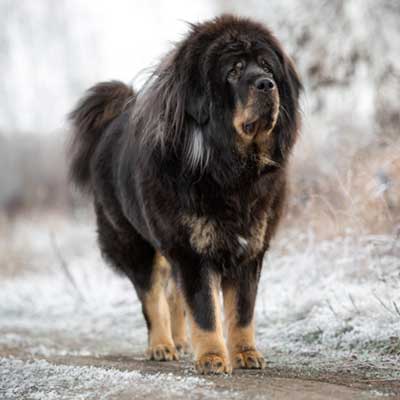
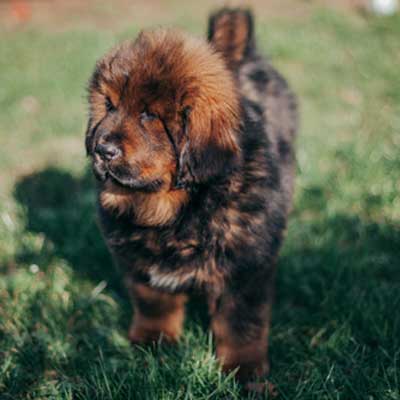
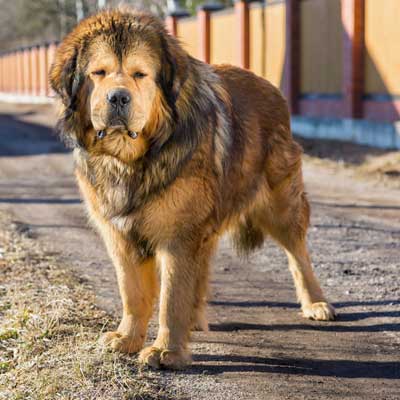
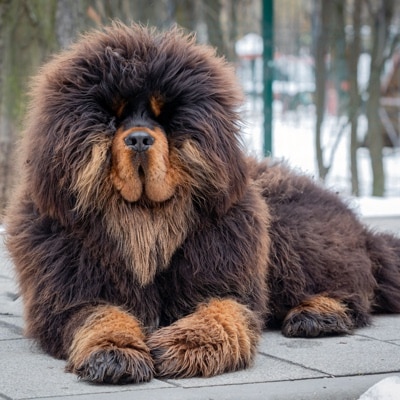
The Tibetan mastiff dog breed combines deep devotion with strong opinions. These dogs were bred to think for themselves, and many still do. Their personality can be summed up as intelligent, self-possessed, independent, reserved, watchful with strangers and affectionate with family. Tibetan mastiffs bond deeply but selectively. They often choose one or two primary humans to shadow and protect, while maintaining a gentle but more reserved affection for the rest of the family. Tibetan mastiffs adore their humans, and they desire to be with those they love. When they are raised with children or exposed to them frequently during the critical socialization period (8 to 15 weeks of age), they do well.
A quirk of this breed is that they tend to be more active in evenings and early morning hours. They don’t tend to bark during the day but may bark at night — a throwback to their guard dog heritage. Their prey drive is moderate to low. These dogs were bred to guard property and stationary herds of sheep and yaks, not to chase squirrels or retrieve birds. That said, motion can still trigger instinct, especially with smaller animals that dart.
Tibetan mastiffs are independent thinkers but surprisingly people-centric once they are bonded. While they are alone, it helps to rotate enrichment toys and turn on calming background sounds.
True aggression is uncommon in well-socialized Tibetan mastiffs, but territorial defensiveness is built into this breed. Over-guarding can be minimized by structured introductions, clear leadership and consistent boundaries from puppyhood onward. Tibetan mastiffs may display dominance behavior over an unfamiliar dog.
Tibetan mastiffs can be destructive when they are young and have very strong jaws. Some have been known to eat through doors and chainlink fences.