Cane Corso Dog Breed Guide

If you want a loyal protector who's as strong as they are devoted, the cane corso might be your perfect match. This large Italian guard dog combines power, intelligence and faithfulness in one impressive package.

Best for: Experienced, confident dog parents who enjoy training, structure and daily engagement.

Less suitable for: First-time dog owners, families with young children, low-structure households.


Energy Level

Energy Level

Prey Drive

Prey Drive

Drooling

Drooling

Shedding

Shedding

Barking

Barking

Trainability

Trainability

The Origins of the Cane Corso Dog Breed

The name cane corso (pronounced kan-neh kor-so) is Latin, translating to ‘dog bodyguard’. The breed hails from Italy, where these dogs were used to guard land, livestock and people. Modern-day cani corsi are descendants of molosser dogs, which were mastiff-like dogs originally bred by the Molossi tribe in ancient Greece. Later, cani corsi accompanied Roman soldiers into battle; later, they were used as versatile working dogs who could protect land, hunt large game and drive cattle. Corsi are powerful, agile dogs with a noble, alert expression that reflects both confidence and intelligence.

Breed AttributeAttribute Details
Group/ClassWorking Group (AKC), Guardian Dog Group (UKC)
Club Recognition American Kennel Club, United Kennel Club, Cane Corso Association of America
Instincts, Function, and PurposeCorsi were originally bred in Italy as guard dogs. They have also been used as war dogs and versatile working dogs.
AdaptabilityCorsi do best with confident dog parents who can provide plenty of structure. They are not appropriate for first-time dog owners.
Breed StandardsCane Corso Association of America, UKC Official Standard

Cane Corso Nutrition

Corsi are large, muscular canine athletes. They need complete and balanced nutrition that supports lean muscle, joint integrity, skin and coat health and long-term mobility. They do best on complete and balanced foods that match their age and level of activity.

Ingredients and Nutrients

Look for a complete and balanced dog food that will provide your corso with all the nutrients they need to suit their lifestyle. Corsi may benefit from foods enriched with omega-6 fatty acids to support their skin and coat, prebiotics to support healthy digestion, and omega-3 fatty acids to support their brain and joints.

In puppy formulas, controlled calcium and phosphorus promote healthy skeletal development. Fermentable fiber and prebiotics encourage healthy digestion, and antioxidants support the immune system and healthy aging.

Life Stage Considerations

Puppies: Corsi puppies can take up to 18 months for their bones and joints to fully mature. During this time, feed them a complete and balanced large-breed puppy food that supports development. It should also provide DHA from fish oil to support healthy brain and eye development. Talk to your veterinarian about when the best time is to transition puppies to adult food. 

Adults: Adult corsi thrive on a complete and balanced dog food formulated for large, active breeds. Protein helps maintain lean muscle, while balanced fat levels and joint-supporting nutrients promote strength and mobility. Feed measured portions twice daily and schedule regular weight checks to keep body condition optimal.

Seniors: Senior corsi benefit from nutrient-dense food that is highly digestible, easily absorbed and supports joint and digestive health and muscle tone. Dog foods that contain omega-3 fatty acids and added antioxidants help maintain mobility, and support brain health and immune function.

Weight or joint support: Unhealthy weight gain results in increased wear and tear on joints which can be a problem for large breeds. Whatever food you feed, always measure the amount and limit treats to less than 10% of the total daily calories. Always consult your veterinarian for personalized nutrition decisions.

Cane Corso Dog Breed Characteristics

The cane corso is bold, intelligent and deeply loyal — a dog that takes both work and family life seriously. Originally bred as a farm and estate guard dog and big-game hunter, they bring focus, courage and determination to everything they do. When mentally challenged and included in daily routines, the corso shows a rare mix of strength, discipline and genuine affection for their people.

Appearance and Physical Traits

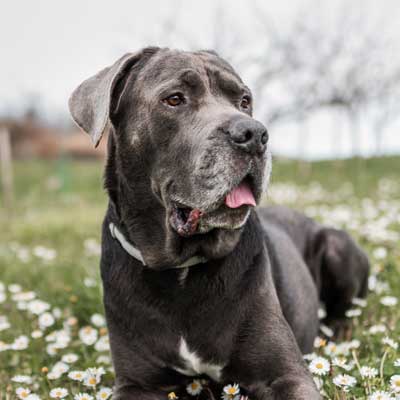
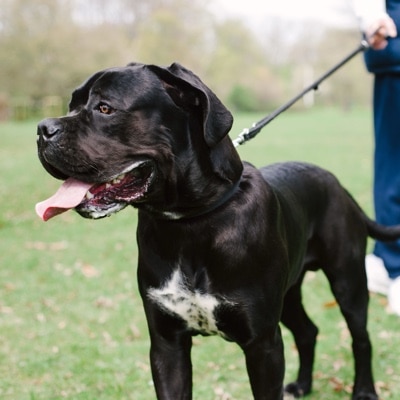
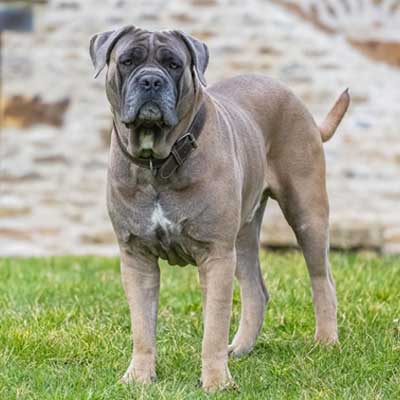
The cane corso is a large, muscular dog with a short, dense coat and a solid, rectangular build. They have a broad head, strong neck, and well-defined chest that show the breed’s working background. Their alert expression and efficient movement reflect a fearless dog who is built for strength, stamina and control.

Physical TraitsTrait Details
Breed SizeLarge
CoatShort, dense topcoat with light undercoat
ColorsBlack, gray, fawn, red or brindle patterns
Tail and EarsLong, straight tail, triangular, medium-sized ears¹
Height23.5 to 27.5 inches (males are taller)¹
Weight90 to 110 pounds (males are heavier)¹
Life Expectancy9 to 10 years¹

Cane Corso Personality and Temperament

Corsi are loyal and brave dogs. They are emotionally tuned in to their people and reserved and suspicious with strangers. They are inherently protective. They were bred to think independently and to guard, so confidence and intelligence are natural to this dog breed. With that can come a stubbornness that requires clear, calm, consistent leadership.

While corsi are not inherently aggressive, they can display dominant, aggressive behavior if not properly trained and socialized. They require extensive socialization. A well-socialized corsi is affectionate, patient and protective without being reactive. They’re not social butterflies like retrievers; rather, they prefer a small circle of trusted human friends. 

Bored, under-exercised, or under-stimulated corsi can become pushy, destructive and anxious. But a mentally fulfilled corso is the kind of dog who melts hearts while scaring away porch pirates.

Personality and Temperament Trait Scale

Traits are on a scale of 1 to 5, with 1 being the least and 5 being the most.

Personality TraitTrait Scale
Energy Level3 - Moderate Energy
Prey Drive2 - Low Drive
Drooling3 - Moderate Drooling
Shedding2 - Low Shedding
Coat Maintenance2 - Low Maintenance
Barking2 - Quiet
Social Tendencies2 - Slightly Reserved
Trainability2 - Somewhat Difficult

Note: These rankings describe general tendencies. Dogs, like people, are individuals and their behavior and personality can vary based on genetics, environment, health, and training.

Lifestyle Compatibility

Before adopting any breed of dog, it's a good idea to speak to a veterinarian to determine if their health and care needs fit with your household, budget and lifestyle. Understanding common veterinary needs can also help you decide if they are a good fit for your home.

Best for: Experienced, confident dog parents who enjoy training, structure and daily engagement.

Good with: Families with older children and well-socialized dogs. Always monitor children around dogs.

Less suitable for: First-time dog owners, families with young children, low-structure households.

Exercise Needs and Appropriate Activities

Corsi need at least an hour of daily activity. They do well with brisk leash walks, obedience drills and mentally challenging work like scent games or trick training. They appreciate variety and will bond more deeply to their humans through shared activities. Avoid repetitive, high-impact exercise in skeletally immature dogs (less than 18 months of age) to protect joints.

Training

It is crucial to start training your dog early. Extensive socialization and learning basic obedience cues are essential to fostering a well-mannered adult corso. They do not respond well to punishment or harsh corrections, which can create conflict in your relationship. Instead, employ positive reinforcement and lead them with confidence and consistency when teaching basic obedience as well as calm leash manners, recall, polite greetings, impulse control and cooperative grooming and veterinary care. 

Corsi learn best through patience, clarity and positive reinforcement with treats or praise. Keep sessions short and reward effort as much as accuracy. A confident, trained corso is a remarkable ambassador for this powerful breed.

Cane Corso Health and Wellness

The health of a cane corso is dependent on appropriate care. Find a trusted veterinarian to help you with early genetic testing, planning annual wellness exams, dental care, parasite prevention and appropriate screening.

Potential Health Issues

Developmental joint disorders: Large breeds in general have an increased risk of developmental joint disorders. Corsi, in particular, have a higher prevalence of genetically related developmental joint problems, reinforcing the importance of supporting healthy growth, exercise moderation in young dogs and weight management.2

Eye disorders: Corsi can be prone to eyelid abnormalities that can irritate the eye surface and impact vision. Early detection is key, so have puppies checked often by your veterinarian. Corrective surgery is available for some issues.

Gastric-dilatation volvulus and dilated cardiomyopathy: Corsi are genetically predisposed to GDV, also known as bloat, and dilated cardiomyopathy. The risk of GDV can be minimized with preventive surgery usually done at the time of spay or neuter.

Grooming Needs

Corsi have relatively low-maintenance grooming needs, but regular care keeps them looking and feeling great. For best results, brush them weekly with a rubber curry or bristle brush to remove loose hair and distribute skin oils. During seasonal shedding, brush more often. Bathe them if they are stinky or dirty using a gentle dog shampoo.

Check ears weekly for redness or odor and clean them only if your veterinarian recommends it. Trim their nails every few weeks to prevent excessively long nails (which are painful!), and brush their teeth daily with an enzymatic toothpaste to reduce dental plaque and tartar. 

Is a Cane Corso Your New Furry Friend?

If you want a loyal bodyguard who looks like a Greek statue come to life, the cane corso might be your kind of dog. These devoted canine companions thrive when their leader is calm and consistent, they are properly socialized and they have structure and daily activity with you. 

This breed isn’t for everyone, but for experienced, confident dog owners who enjoy and have time for daily training, they offer something valuable: a steady, loyal presence that makes you feel safe and loved. Raise them well and you’ll have a ripped best friend who’s all heart.

Resources For New Pet Parents

Get expert tips for a long and happy life with your new best friend.

New dog guide

Cane Corso Breed FAQs

Yes, corsi need at least an hour of structured physical and mental activity every day.

With careful socialization and supervision, corsi can get along with other pets. 

Yes, corsi shed lightly year-round and more heavily during seasonal changes.

Corsi typically don’t bark unless they are alerting you to an intruder.

References

  1. American Kennel Club, “Official Standard of the Cane Corso,” https://images.akc.org/pdf/breeds/standards/CaneCorso.pdf.

  2. Baldinger, A. et al, “Prevalence of Canine Hip Dysplasia in 10 Breeds in France Between 1997 and 2017,” BMC Veterinary Research 16, 2020.

  3. Longeri, M., B. Brunetti, M. Musolino, P. Arrighi, E. Polli, and C. Giudice, “Epidemiology of Ocular Disorders Presumed to Be Inherited in Three Italian Molossoid Breeds," Veterinary Ophthalmology 20, 2017, https://pubmed.ncbi.nlm.nih.gov/27860098/.

Dr. Sarah Wooten Dr. Sarah Wooten

Dr. Sarah Wooten graduated from UC Davis School of Veterinary Medicine in 2002. A member of the American Society of Veterinary Journalists, Dr. Wooten divides her professional time between small animal practice in Greeley, Colorado, public speaking on associate issues, leadership, and client communication, and writing. She enjoys camping with her family, skiing, SCUBA, and participating in triathlons.