Giant Schnauzer Dog Breed Guide

The giant schnauzer is a reserved, athletic, large-breed canine companion whose original function was a loyal bodyguard. These bearded powerhouses are intelligent, composed and naturally protective of their home and people. If you are looking for a loyal furry friend who has a commanding presence and some seriously impressive eyebrows, then this breed might be for you.

Energy Level

Energy Level

Prey Drive

Prey Drive

Drooling

Drooling

Shedding

Shedding

Coat maintenance / grooming needs

Coat maintenance / grooming needs

Barking

Barking

Social tendencies with people

Social tendencies with people

Trainability

Trainability

The Origins of the Giant Schnauzer

The giant schnauzer originated in the mid-1800s, near the Bavarian Alps of southern Germany. Farmers needed a sturdy, versatile dog to drive cattle and protect property. They created the giant schnauzer by crossing standard schnauzers with larger working breeds like the great Dane, Rottweiler and Bouvier des Flandres. This resulted in a large, rugged, weather-resistant working dog who had both brains and brawn.¹

By the early 1900s, the confidence and trainability of the giant schnauzer caught the attention of European police and military forces. During both World Wars, giant schnauzers served as messenger and guard dogs. When peace returned to Europe, the reputation of the giant schnauzer as loyal protectors and committed family companions stayed with them. Today, the giant schnauzer is the largest of the three schnauzer breeds. The breed became a recognized member of the Working Group of the American Kennel Club in 1930 and continues to thrill committed pet parents as a versatile partner in sports, protection and family life.

Group/classWorking Group (AKC), Guardian Dog Group (United Kennel Club)
Club recognitionAKC recognized in 1930; UKC in 1948
Instincts, function and purposeGiant schnauzers were bred to drive cattle and protect property. They are now generally family companions
AdaptabilityGiant schnauzers can be headstrong, but with training and physical activity with pet parents, they can be contented
Breed standardsGiant Schnauzer Club of America, UKC Official Standard

Nutrition for Giant Schnauzers

Giant schnauzers are powerful, large-breed athletes with dense muscle and a deep-chested build. To maintain their peak condition, they benefit from complete and balanced nutrition that supports their specific nutritional requirements and overall vitality. Because they are a large breed, giant schnauzer puppies thrive on a formula that helps support a healthy growth rate for their developing bones and joints. A precise balance of vitamins and minerals is also key; antioxidants like vitamins C and E help support a healthy immune system and overall well-being.

Ingredients and Nutrients

Choosing a food with high-quality ingredients is key to supporting a giant schnauzer's daily wellness. Look for recipes featuring protein sources — like chicken, lamb, or salmon — to help maintain their characteristic lean muscle. To help support a healthy skin and coat, look for omega-6 fatty acids from sources such as vegetable oils and chicken fat.

Fish oil provides the omega-3 fatty acids needed to help nourish their brain, joints, and organs, while prebiotic fibers like fructooligosaccharides (FOS) or beet pulp help support healthy digestion. Finally, balanced levels of calcium and phosphorus help support the strong bone structure this active breed depends on, helping ensure your giant schnauzer stays ready for work or play.

Life Stage Considerations

Puppies

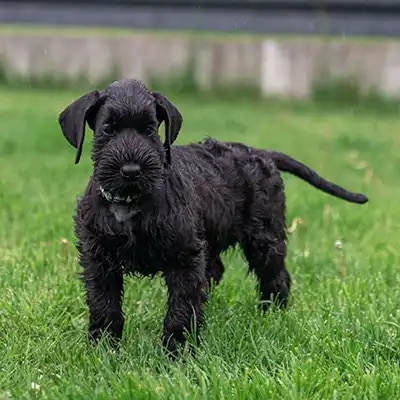
Giant schnauzer puppies take up to two years to fully mature. Feeding them a complete and balanced large-breed puppy food helps support healthy joints.

Adults

Adult giant schnauzers benefit from food that supports a lean body condition, strong muscles and joint health. Their metabolism is fast when they are active but can slow if they are underexercised. Work with your veterinarian to adjust feeding amounts for activity level.

Seniors

Senior giant schnauzers may experience decreased metabolism and muscle tone. Choose a complete and balanced senior formula that supports joints, lean muscles and healthy digestion. Regular veterinary checkups and weight monitoring help keep them comfortable and mobile.

Weight management and joint support

Giant schnauzers that struggle with weight often benefit from eating a therapeutic food formulated to support joints and help dogs lose weight and keep it off. Talk to your veterinarian about food choices for your dog and how to determine a healthy body condition and daily calorie targets. Keep treats under 10% of daily calories and measure food with a kitchen gram scale to control portions. To slow down fast eaters, use slow-feeder bowls or food puzzles.

Giant Schnauzer Dog Breed Characteristics

Giant schnauzers are sturdy, versatile and intelligent athletes, with distinct, thick eyebrows. Their loyalty and protective nature toward pet parents are key identifiers of the giant schnauzer breed.

Appearance and Physical Traits

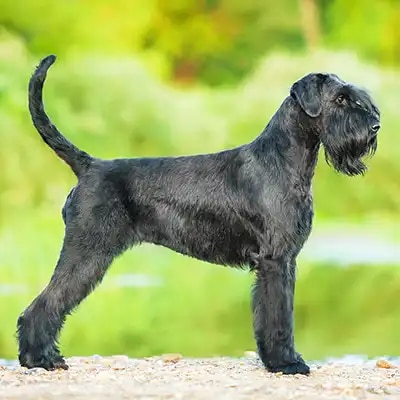
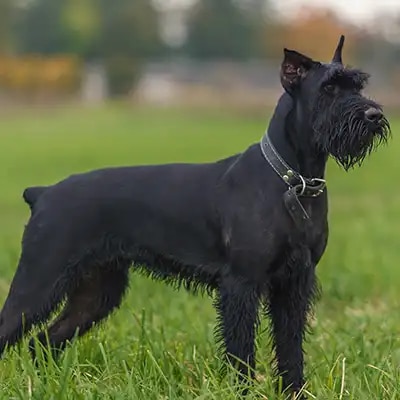
The giant schnauzer’s appearance is defined by a sturdy, square build and a distinctive wiry coat that is water-resistant and dense. Solid black or salt-and-pepper coloring, along with bushy eyebrows and a full beard, give the breed its unmistakable expression. With or without a high-set docked tail (a pointed tail is a breed standard but is not a natural feature,) V-shaped ears and a muscular frame, the giant schnauzer projects power and precision.

Breed OverviewBreed Information
Breed SizeLarge
CoatWiry water-resistant outer coat, dense undercoat
ColorsSolid black or salt and pepper
Tail and EarsTail set high, moderately sized; V-shaped ears set high
Height23.5 to 27.5 inches (males are usually taller than females)
Weight75 to 95 pounds (males are usually heavier than females)
Life Expectancy10 to 13 years

Giant Schnauzer Temperament and Personality Traits

The giant schnauzer is confident, vigilant and deeply attached to their people. They form strong bonds with the whole family and often take their protective role very seriously. With newcomers, this breed tends to be cautious rather than openly friendly, spending time evaluating the new person before offering them acceptance. The giant schnauzer is not inherently aggressive, but they carry strong protective and territorial instincts that, if left unchecked, can escalate into problem behaviors. According to the American Kennel Club, the breed “is intelligent, alert, loyal … and is known to be a protective breed and can often be territorial, so it’s important to work to prevent any less-desirable instincts early.”1

Though they are serious when on duty, giant schnauzers also reveal a playful and affectionate side with their family. They often carry toys or stash them, bounce into a play pose and may be seen nudging small children or pets toward safety in a big-brotherish manner. 

The giant schnauzer is most content when you engage them daily with purposeful activities and enough aerobic exercise to tire them out. They thrive doing things that challenge their body and mind. Without appropriate outlets, their sharp intelligence can turn restless and destructive, reminding everyone that this is a breed meant to do more than simply watch the world go by.

Personality and Temperament Trait Scale

Traits are on a scale of 1 to 5, with 1 being the least and 5 being the most.

Dog TraitTrait Scale Value
Energy Level5 (Very High Energy)
Prey drive/chase instinct4 (High Drive)
Drooling1 (Minimal Drooling)
Shedding3 (Moderate Shedding)
Coat maintenance/grooming needs5 (Very High Maintenance)
Barking4 (Very Vocal)
Social tendencies with people2 (Slightly Reserved)
Trainability4 (Highly Trainable)

Lifestyle Compatibility

Best for

Experienced, proactive dog parents who enjoy daily training and physical activity with their dog.

Good with

Families who provide structure and socialization and include their dog in daily life. Always monitor children around dogs.

Less suitable for

People who lack experience with the breed, sedentary households, those rarely at home, households with small children.

Before adopting any breed of dog, it's a good idea to speak to a veterinarian to determine if their health and care needs fit with your household, budget and lifestyle.


Exercise Needs and Appropriate Activities

Giant schnauzers need 60-plus minutes of combined physical and mental exercise every day. They excel at obedience, tracking, agility and protection sports. Long hikes, runs and structured play sessions help channel their drive. These dogs have a working heritage and prefer purposeful tasks to aimless walks. Variety is key with activities, so switch up what they are doing every day to challenge their body and mind. A tired giant schnauzer is a happy companion. Avoid repetitive high-impact exercise in growing puppies to protect developing joints. 

Training

Because the giant schnauzer is a large, strong-willed, highly intelligent breed with innate guarding instincts, they require more than routine pet care. They need structure, leadership and advanced training to flourish. An experienced pet parent will recognize the need to socialize the dog with many types of people, other dogs and environments. They will understand how to set clear boundaries without turning the breed into a reactive watchdog.

Giant schnauzers learn quickly but will test boundaries if training is inconsistent. Focus on reward-based methods, patience and clear leadership. Training should begin as early as possible, and hiring a professional trainer is recommended. Important skills include basic obedience and calm leash manners before they outweigh you, recall and good manners during grooming or veterinary visits.

Giant Schnauzer Health and Wellness

Giant schnauzers are generally robust but are prone to several inherited health conditions. Responsible breeding, good nutrition and preventive veterinary care are essential for longevity.

Giant Schnauzer Potential Health Issues

Developmental joint disorders

All large-breed dogs, including giant schnauzers, are at risk for developmental joint disorders, including hip and elbow dysplasia and osteochondritis dissecans. Lower risk by screening breeding dogs, maintaining lean body weight, feeding large-breed puppy food and avoiding overexercise during growth. Talk to your veterinarian about the right time to spay or neuter your pet to allow for healthy skeletal growth and maturity.

Thyroid disease

Some giant schnauzers have autoimmune thyroid disease. Signs include weight gain and coat thinning. This condition can be managed with medication.2,3

Gastric dilatation-volvulus, also known as bloat

This life-threatening condition can occur when the abdomen expands and blocks blood flow to the heart. Deep-chested giant dogs have an elevated risk, which increases with age. Discuss risk factors and surgical options (gastropexy) with your veterinarian.

Heart disease

Giant schnauzers have a risk for inherited dilated cardiomyopathy, which can lead to early onset of progressive weakening and enlargement of the heart muscles in affected dogs. Genetic testing is available. Have your dog examined by a veterinarian yearly and see your vet promptly if your dog develops a cough or an exercise intolerance.4

Cancer

Giant schnauzers appear to have a higher rate of certain cancers. Have your dog checked annually by a veterinarian, and have them seen if any abnormal lumps or bumps are noted.5

Retinal disease

Some schnauzers suffer from progressive retinal atrophy, an inherited disorder. Annual eye exams are recommended.6,7

Grooming Needs

The giant schnauzer’s dense, wiry double coat was designed to shed water, repel debris and protect against cold, however, it does require upkeep to stay in good condition. Brush several times a week to remove dirt and loose hair, prevent matting and keep the natural skin oils evenly distributed. To preserve the signature harsh texture, the coat should be hand-stripped every few months by a professional groomer familiar with the breed. The coat can be clipped, but it will result in a softer hair coat.

The breed’s distinctive beard and eyebrows require special attention: Wipe the beard after every meal to prevent staining, odor from bacteria or hidden food particles. 

Baths should be infrequent, only when the dog is truly dirty, and always followed by a thorough rinse and complete drying to prevent soap residue buildup. Trim nails every three to four weeks or as needed, and check ears weekly for odor or redness. Brush teeth every day with a dog-specific toothpaste to maintain oral health and fresh breath.

Is a Giant Schnauzer Your New Furry Friend?

If you want a dog who works hard, loves harder and never misses a beat, the giant schnauzer could be your perfect match. They’ll guard your home, join your adventures and challenge you to improve your training game. If you prefer a low-energy dog, then this breed is not for you. When choosing your giant schnauzer, work with responsible breeders or adoption centers, meet adults when possible and ensure your lifestyle fits their drive. A well-loved giant schnauzer will fill your days with loyalty, intelligence and phenomenal beard drips.

Resources For New Pet Parents

Adopt a pet. Change a life.

Pet adoption

Get expert tips for a long and happy life with your new best friend.

Dog Guide

Giant Schnauzer Dog Breed FAQs

Yes, giant schnauzers can be wonderful with children when socialized early and supervised.

Generally, they coexist well with dogs they are raised with, though same-sex dominance can occur without early socialization.

They are alert and vocal when something seems off, but with training they learn when quiet is appropriate.

Sixty-plus minutes of combined physical and mental exercise every day keeps them balanced and happy.

Not excessively; regular brushing minimizes loose hair.

References

  1. American Kennel Club. “Giant Schnauzer Breed Standard.” Accessed October 23, 2025. https://images.akc.org/pdf/breeds/standards/GiantSchnauzer.pdf.

  2. Ferm, K., S. Björnerfeldt, A. Karlsson, G. Andersson, R. Nachreiner, and A. Hedhammar. “Prevalence of Diagnostic Characteristics Indicating Canine Autoimmune Lymphocytic Thyroiditis in Giant Schnauzer and Hovawart Dogs.” Journal of Small Animal Practice 50, No. 4 (2009): 176–179. https://doi.org/10.1111/j.1748-5827.2008.00696.x.

  3. Wilbe, M., K. Sundberg, I. R. Hansen, E. Strandberg, R.F. Nachreiner, A, Hedhammer, et al. “Increased Genetic Risk or Protection for Canine Autoimmune Lymphocytic Thyroiditis in Giant Schnauzers Depends on DLA Class II Genotype.” Tissue Antigens 75, No. 6 (2010): 712–719. https://doi.org/10.1111/j.1399-0039.2010.01449.x.

  4. Leach, S. B., M. Briggs, L. Hansen, and G. S. Johnson. “Prevalence, Geographic Distribution, and Impact on Lifespan of a Dilated Cardiomyopathy-Associated RNA-Binding Motif Protein 20 Variant in Genotyped Dogs.” Journal of Veterinary Cardiology 40 (April 2022): 119–125. https://doi.org/10.1016/j.jvc.2021.05.002.

  5. Graf, R., A. Pospischil, F. Guscetti, D. Meier, M. Welle, and M. Dettwiler.“Cutaneous Tumors in Swiss Dogs: Retrospective Data From the Swiss Canine Cancer Registry, 2008–2013.” Veterinary Pathology 56, No. 6 (2018): 809–820. https://doi.org/10.1177/0300985818789466.

  6. Chiu, O., B. P. Wilcock, A. E. Wilcock, and A, M. Edwards “Breed Predilections and Prognosis for Subungual Squamous Cell Carcinoma in Dogs.” The Canadian Veterinary Journal 63, No. 11 (2022): 1129–1134. https://pubmed.ncbi.nlm.nih.gov/36325409/.

  7. Hitti, R. J., J. A. C. Oliver, E. C. Schofield, A. Bauer, M. Kaukonen, O. P. Forman, et al. “Whole Genome Sequencing of Giant Schnauzer Dogs with Progressive Retinal Atrophy Establishes NECAP1 as a Novel Candidate Gene for Retinal Degeneration.” Genes 10, No. 5 (2019): 385. https://doi.org/10.3390/genes10050385.