Akita Dog Breed Guide

The Akita is a Japanese dog breed known for its loyalty and courage. Akitas exhibit strength, intelligence and calm confidence. They thrive with consistent training, early socialization, and moderate daily exercise. While their natural guardian instincts are a remarkable asset for those familiar with dog behavior, they may be challenging for first-time dog owners. But for those ready to meet their needs, the reward is a deeply loyal, protective companion with an unwavering heart.

Energy Level

Energy Level

Prey Drive

Prey Drive

Drooling

Drooling

Shedding

Shedding

Barking

Barking

Social tendencies with family

Social tendencies with people

Trainability

Trainability

The Origins of the Akita Dog Breed

Bred in Japan to hunt and guard, Akitas are celebrated there as symbols of protection, good health and long life. In the U.S., they joined the American Kennel Club's (AKC's) Working Group in 1972, with the breed standard approved alongside the Akita Club of America in 1973.

Group/classWorking Group (AKC), Spitz Group (UKC)
Club recognitionAmerican Kennel Club, United Kennel Club, Akita Club of America
Instincts, function and purposeAkitas were originally bred to be guard dogs and to hunt large game. Today, Akitas are valued for companionship, loyalty and protection.
AdaptabilityAkitas are best for experienced pet parents and thrive with consistent training and daily exercise.
Breed standardsAkita Club of America Breed Standard, UKC Breed Standard

Nutrition for Akitas

Akitas have a sturdy frame and fast growth curve that demands thoughtful, intentional nutrition. As soon as they're weaned, they benefit from eating a high-quality, complete and balanced large-breed puppy food. This supports healthy growth and helps reduce the risk of developmental issues, such as joint problems and obesity. Food amounts depend on their individual life stage and weight, but one thing's for certain: each meal is a building block to becoming a strong, dignified pup.

Ingredients and Nutrients

Akitas should be fed a complete and balanced dog food that is appropriate for their life stage. Look for formulas that include omega-3 and omega-6 fatty acids to support a shiny hair coat and healthy joints.

Life Stage Considerations

Puppies

Feed Akita puppies a complete and balanced food formulated for large-breed puppies to support growth and development of bones and joints. Most puppies benefit from eating two to three meals daily with amounts tailored to body condition and energy requirements.

Adults

Feed adult dogs a complete and balanced adult maintenance dog food to sustain energy and musculature. Portion control is key to preventing unhealthy weight gain.

Seniors

Older Akitas may benefit from a senior dog food that is formulated with the energy density to meet their lifestyle, is easily digested and has balanced minerals for heart and kidney health.

Weight Management and Joint Support

Keeping Akitas in optimal body condition reduces wear and tear on their joints and minimizes the risk of other health concerns associated with obesity. Talk to your vet to determine daily energy requirements based on age, weight and activity level.

The best way to choose the right food for your dog is to speak with a trusted veterinarian. They can determine the right food and feeding amount for your new furry friend.

Akita Dog Breed Characteristics

Akitas are a striking breed with a calm temperament that sets them apart from overtly social breeds. But despite their quiet demeanor, they are fiercely loyal to their families and can make excellent companions to experienced dog parents.

Appearance and Physical Traits

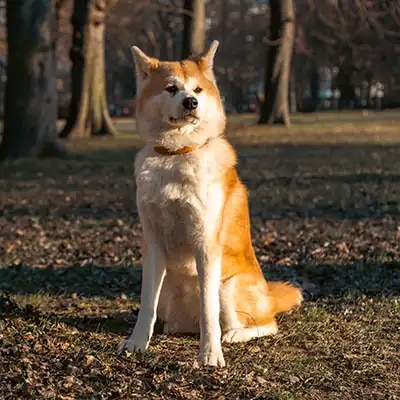
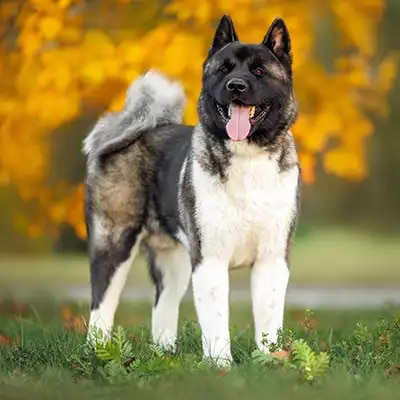
Akitas are built like the bodyguards of the dog world — broad-shouldered, thick-coated, and unmistakably dignified. They carry broad, bear-like heads with small, deep-set eyes that are seemingly sizing up the room at all times. Their erect ears and signature curled tail that arches over the back like a punctuation mark of pride also contribute to their regal stature.

Breed OverviewBreed Information
Breed sizeLarge
CoatDouble hair coat that thins out during the warmer months; outer coat is slightly longer and coarser, and some Akitas have long hair called moku
ColorsWhite, brindle and pinto; white Akitas have no mask; pinto Akitas have a white background with large patches of color covering the body
Tail and EarsErect, triangular ears that are slightly tilted forward
Height24 to 28 inches (males are taller)
Weight70 to 130 pounds (males tend to be larger)
Life Expectancy10 to 14 years

Akita Temperament and Personality Traits

The Akita is known to be deeply loyal, intelligent, dignified and devoted to their family. These dogs possess a strong protective instinct and function best as alert guardians, often watching over their families with calm vigilance. Although Akitas are reserved with strangers and not prone to over-the-top affection, they bond deeply with their caretakers and thrive under consistent, firm leadership.

Akitas are best paired with experienced pet parents who understand their strong prey drive, occasional stubborn streak, and tendency to assert dominance with other dogs. Early socialization and obedience training are a must. Keep in mind, the Akita's adult personality is also shaped by their environment and experiences.

Personality and Temperament Trait Scale

Traits are on a scale of 1 to 5, with 1 being the least and 5 being the most.

Dog TraitTrait Scale Value
Energy Level3 (Moderate Energy)
Prey Drive5 (Very High Drive)
Drooling1 (Minimal Drooling)
Shedding5 (Very High Shedding)
Barking2 (Quiet)
Social tendencies with family4 (Outgoing) - 5 (Extremely Social)
Trainability2 (Somewhat Difficult)

Lifestyle Compatibility

Best for

Experienced pet parents familiar with large, independent breeds who have time to exercise and train their dog every day

Good with

Adults, structured environments and single-dog households

Less suitable for

Families with young children or multiple pets without careful socialization, first-time pet parents and people who live in an apartment. Always monitor children around dogs.

Before adopting any breed of dog, it's a good idea to speak to a veterinarian to determine if their health and care needs fit with your household, budget and lifestyle.

Exercise Needs

Akitas have moderate exercise needs. Daily exercise, such as brisk walks and play sessions, are essential to keeping them healthy. Avoid dog parks due to potential intra-dog aggression.

Training

Akitas are intelligent but also have a strong will, incredible strength, and endurance. The large size of the Akita can make them difficult to control, and so they are not a breed suitable for everyone. Akitas respond best to confident leadership and early structure to manage guarding instincts and their independent nature. They require early socialization, consistent use of positive reinforcement training, and dedicated training to help them properly channel energy.

Akitas can easily become bored with training, and thrive best when challenged and given a job to do. Training sessions should be short, engaging, and firm, and it may be beneficial to work with a certified dog trainer to reduce the likelihood of behavioral problems.

Akita Health and Wellness

Akitas are generally a healthy breed, but like all large-breed dogs, they may be at risk for certain conditions:

Potential Akita Health Issues

Several autoimmune disorders

Akitas can be prone to issues where the immune system gets mixed up and starts affecting the dog's skin or organs. Catching symptoms early makes these conditions much easier to manage.

Endocrine disorders

Problems like hypothyroidism (low thyroid function) show up fairly often and can cause changes in energy, weight or coat quality. These issues are usually controllable with daily medication.

Developmental joint disorders (hip and elbow dysplasia)

These are growth-related problems that can lead to soreness or trouble moving comfortably. Helping them stay lean can help reduce risk.

Developmental eye disease

Some Akitas can inherit eye problems that may affect their vision as they get older. Regular veterinary checkups make it easier to spot these issues early and treat them if needed.

To minimize risk, only adopt Akita puppies from reputable breeders, shelters or rescues with licensed veterinarians on staff to screen for potential health issues. You should also plan to have your dog examined by a vet at least once a year and whenever health concerns arise.

Like other dogs, Akitas can also suffer from dental disease, allergies, and obesity. A trusted veterinarian can help you determine preventative and treatment options for these conditions.

Grooming Needs

Akitas are heavy shedders, and require frequent brushing. While regular grooming is a crucial part of caring for any dog, Akitas need an especially attentive parent to help them care for their heavy coat.

Brushing removes dirt/dander, distributes natural oils, and prevents mats and tangles, which can cause pain and discomfort for your dog. Akitas blow their undercoats twice yearly, requiring daily brushing during shedding seasons; otherwise, they need brushing two to four times per week.

In addition to minimizing shedding and preventing matting, grooming is the best way to get familiar with your dog's coat and skin. It gives you an opportunity to detect potential health concerns, such as abnormal lumps, irritations or parasites.

Trimming nails as needed and brushing teeth daily are also essential parts of caring for an Akita. Overgrown toenails can lead to splitting, breaking, infection, pain and even an altered gait, while regular teeth brushing with a dog-specific toothpaste reduces the risk of periodontal disease and tooth loss.

Is an Akita Your New Furry Friend?

Akitas are an imposing yet loyal breed. Ideal for experienced pet parents, Akitas thrive best in structured environments with early training, proper nutrition, daily exercise, regular grooming and regular veterinary care.

Resources For New Pet Parents

Adopt a pet. Change a life.

Pet Adoption Resources

Get expert tips for a long and happy life with your new best friend.

New dog guide

Akita Dog Breed FAQs

Akitas can be loyal family dogs, but they're best in homes without small children or multiple dogs unless well-socialized and trained early.

Expect heavy shedding from an Akita, especially during "coat blow" seasons. Daily brushing helps manage a loose undercoat.

Akitas can be aggressive toward other dogs. Controlled introductions and socialization are critical. Akitas typically do better in homes where they are the only dog.

Moderate intensity exercise helps meet the energy needs of Akitas, keeping them fit and trim and providing mental stimulation.

Some Akitas can be predisposed to health problems, such as autoimmune conditions, joint disorders, eye issues and bloat. Regular vet check-ups are essential. To minimize risk, only adopt Akita puppies from reputable breeders, shelters or rescues with licensed veterinarians on staff to screen for potential health issues.