Scottish Deerhound Dog Breed Guide

The Scottish deerhound moves with a drifting elegance that feels unique even among sighthounds. Tall, ethereally peaceful and noble, they carry the quiet mystique of a dog built for ancient landscapes. Originally bred to hunt in the Scottish Highlands alongside men in kilts, they still retain a combination of athleticism, sensitivity and an understated charm that's simply magnetic.

If you can see yourself living with a tall, gentle canine companion who seems to glide through life like a spirit of the moor, then the Scottish deerhound could be your gràdhach (darling).


Energy Level

Energy Level

Prey Drive

Prey Drive

Drooling

Drooling

Shedding

Shedding

Grooming needs

Grooming needs

Barking

Barking

Social tendencies with people

Social tendencies with people

Trainability

Trainability

The Origins of the Scottish Deerhound

The origin of the Scottish deerhound dog breed stretches deep into history. They may be the oldest dog breed in the British Isles. The earliest solid evidence of deerhound-ish dogs is the Hilton of Cadboll stone, dated back to the seventh or eighth century. Its central panel shows a deer pursued by two horsemen and two large hounds, widely interpreted as early deerhounds. Nobility treasured the breed so much that, for centuries, owning a deerhound was considered a privilege limited to the Scottish elite. 

The breed almost collapsed after the decline of large-game hunting but was revived in the late 19th century by people dedicated to the breed. Today, breed integrity is maintained by the American Kennel Club (AKC), the United Kennel Club (UKC) and the Scottish Deerhound Club of America.1,2

Group/class Hound Group (AKC), Sighthound and Pariah Dog Group (UKC)
Club recognitionAKC, UKC and Scottish Deerhound Club of America
Instincts, function and purposeThe Scottish deerhound was historically bred to hunt deer, a task that required speed, stamina and reliable focus
AdaptabilityScottish deerhounds are best for spacious homes and yards and people who appreciate gentle, sensitive dogs
Breed standardsScottish Deerhound Club of America Breed Standard, UKC Official Standard

Nutrition for Scottish Deerhounds

Scottish deerhounds are lanky, athletic dogs who flourish on a complete and balanced dog food designed to support lean muscle, joint health and energy supply. Deerhounds are healthiest when kept lean throughout life and benefit from predictable feeding schedules that consist of two to three small meals throughout the day. Work with your veterinarian to determine daily calorie goals and an ideal body condition for your dog. Use a kitchen gram scale to measure meals and keep treats below 10% of their daily calories. 

Ingredients and Nutrients

When choosing a food for your Scottish deerhound, look for a complete and balanced recipe made with high-quality ingredients that deliver precise nutrition. To support their lean muscle, look for foods featuring high-quality protein sources like chicken, lamb or salmon. For healthy skin and a soft coat, ingredients like vegetable oils and chicken fat provide essential omega-6 fatty acids, while fish oil offers omega-3 fatty acids to support their brain, joints and kidneys. To keep their digestion on track, look for prebiotic fibers from ingredients like fructooligosaccharides (FOS) or beet pulp. 

Finally, balanced minerals like calcium and phosphorus help keep their large-breed bones and joints strong, ensuring your Scottish deerhound stays happy, healthy and active by your side.

Life Stage Considerations

Puppies

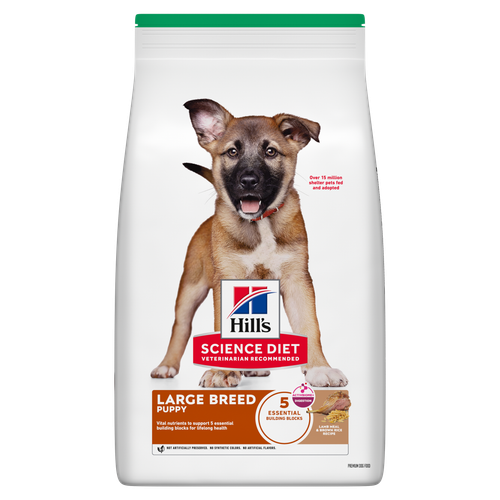
 Scottish deerhound puppies grow rapidly during the first year, sprouting long legs and building significant muscle mass. The breed takes a while to reach skeletal maturity — upward of 18 to 24 months. While growing, feed them complete and balanced large-breed puppy food with tightly managed calcium and phosphorus levels to support healthy skeletal development. Free feeding is not recommended. Work with your vet to choose a high-quality large-breed puppy food, track growth and adjust feeding amounts as needed for growth spurts. 

Adults

Mature Scottish deerhounds thrive on predictable feeding routines that provide energy. Feed a complete and balanced adult large-breed food that maintains lean muscle without adding unnecessary calories. Monthly body condition scoring ensures the dog isn’t gaining or losing weight and you're feeding appropriately based on season, activity and age. Keeping a deerhound lean is one of the most helpful choices for long-term health and comfort.

Seniors

Senior Scottish deerhounds benefit from nutrition that supports mobility, digestion, cellular health and overall comfort. Choose a complete and balanced senior or mature adult food designed for large-breed dogs. Regular body condition scoring continues to be essential in the senior years to keep weight in a healthy range, which is crucial for managing aging joints and detecting any disease issues early. 

Scottish Deerhound Dog Breed Characteristics

A Scottish deerhound has a way of appearing beside you as though they materialized out of thin air. These dogs are quietly observant, and their tall frame, wiry coat and expressive eyes create a presence that's graceful and comforting. Many settle into homelife with a mellow, sensitive disposition and a fondness for soft bedding.

Before adopting any breed of dog, it's a good idea to speak with a veterinarian to determine if their health and care needs fit with your household, budget and lifestyle. 

Appearance and Physical Traits

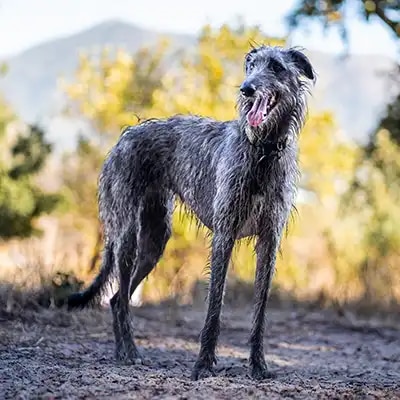
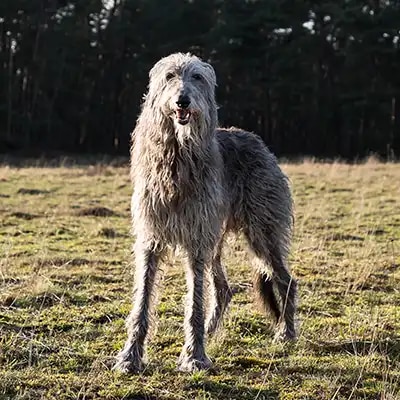
Scottish deerhounds are tall, unmistakable dogs. Their rough, weather-resistant coat echoes the color of the Scottish Highlands. Their long legs and streamlined silhouette give them the look of a creature designed for distance and wind. Even standing still, they look ready to glide across open ground. Their dark eyes carry a soft, thoughtful expression and their entire body seems built for efficient, economical movement.

Breed OverviewBreed Information
Breed SizeLarge
CoatHarsh, wiry outer coat with a softer undercoat
ColorBlue gray, brindle, sandy, red fawn, gray
Tail and EarsTail long and tapering; ears small, folded and carried back greyhound style
Height28 to 32 inches (males are usually taller than females)
Weight75 to 110 pounds (males are usually heavier than females)
Life Expectancy8 to 11 years

Scottish Deerhound Temperament and Personality Traits

Scottish deerhounds are gentle, affectionate companions who bond closely with their families without demanding constant contact. Many choose one human as the center of their universe, but deerhounds still spread their affection in families when they feel secure. Many choose a specific favorite spot in the home where they can rest while still keeping an eye on people. Their interactions tend to be subtle, deliberate and gentle.

Deerhounds can coexist with respectful children when boundaries and supervision are in place. Strangers are usually greeted with polite reserve, warming as the dog becomes comfortable. Most deerhounds do well with calm, polite dogs.

Their prey drive varies from moderate to high — quick movement often flips on their "chase" switch. Squirrels, rabbits and anything darting across a field can trigger instinctive pursuit, so good management and recall work are important for safety. Their mischief is usually soft and strategic: think blanket rearranging, selective sock relocation or a decision to nap on the sofa you didn't intend to share.

In general, deerhounds love when you give them space to make small choices throughout the day. Letting them choose their resting spot or taking them for free-choice sniffing walks help them feel grounded and understood.

Personality and Temperament Trait Scale

Traits are on a scale of 1 to 5, with 1 being the least and 5 being the most.

Dog TraitTrait Scale Value
Energy Level3 (Moderate Energy)
Prey drive5 (Very High Drive)
Drooling1 (Minimal Drooling)
Shedding2 (Low Shedding)
Grooming needs3 (Moderate Maintenance)
Barking1 (Very Quiet)
Social tendencies with people2 (Slightly Reserved)
Trainability1 (Very Difficult)

Lifestyle Compatibility

Best for

Calm households with secure open space and people who appreciate sensitive, gentle dogs.

Good with

Respectful children, calm companion dogs and other pets when socialized early. Always monitor children around dogs.

Less suitable for

Apartment living, chaos, dog parks, small children.

Exercise Needs and Appropriate Activities

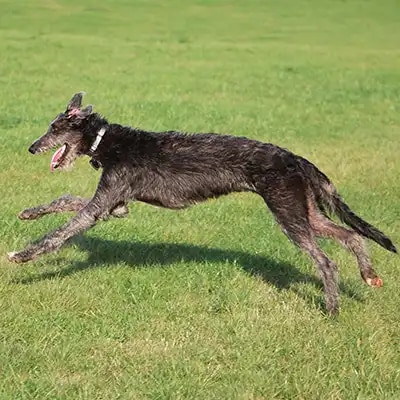
Scottish deerhounds consistently need 45 to 60 minutes of moderate exercise every day. They enjoy long walks, relaxed jogs and occasional sprinting in securely fenced areas. Their bodies are built for long, flowing strides rather than constant high-impact exercise.

Mental enrichment matters, too. Sniff walks, puzzle feeders, snuffle mats and short training games are all good activities for the breed. 

Puppies should avoid excessive running or jumping until growth plates close, and they benefit from gentle exploration and training that builds confidence without stressing developing joints.

Many deerhounds enjoy coursing-inspired games that let them chase a soft lure in a controlled environment. Others appreciate quiet endurance activities, such as hiking on soft terrain, where they can travel with a calm, commanding ease.

Training

Training a deerhound works best when you treat it like a polite conversation rather than a command performance. These hounds respond to calm guidance, predictable cues and meaningful rewards. Keep sessions brief and engaging, as deerhounds learn quickly and may check out when repetition gets dull.

Early socialization is essential. When your vet gives the okay, puppies need exposure to new calm dogs, textures, environments and people of all types so they can build real-world confidence. Start recall early on a long line or in fenced areas, reward loose-leash walking when they match your pace and teach basic cues, like "sit," "stay" and a reliable hand target for redirection

Add simple cooperative care skills, such as standing calmly for brushing, mouth and ear checks and offering a paw for nail trims, as these make grooming and veterinary visits far easier. A stationing cue, like relaxing on a mat during busy moments, helps give them structure when distractions appear.

Scottish Deerhound Health and Wellness

Scottish deerhounds have unique physical characteristics — like their long limbs, deep chest and rapid growth — that require specific care and attention. Understanding these breed-associated medical considerations is the first step in helping your dog thrive throughout every life stage. By prioritizing routine veterinary care, thoughtful nutrition, daily exercise, dental care and proper weight management, you can provide the essential support your Scottish deerhound needs for a long and happy life by your side.

Scottish Deerhound Potential Health Issues

Gastric dilatation-volvulus (GDV)

 Deerhounds are a deep-chested breed at higher risk for this life-threatening emergency. Discuss risk factors and surgical options (gastropexy) with your veterinarian.³

Dilated cardiomyopathy

 Large sighthounds, including deerhounds, are predisposed to heart muscle disease. Signs include weakness, lethargy and coughing. Responsible breeding and early screening help reduce risk. Early detection through veterinary exams and diagnostics helps maintain quality of life.4

Osteosarcoma

Deerhounds show increased risk for bone cancer. Signs include acute limb swelling or lameness in an older dog. Early detection and treatment can improve outcomes.5

Inherited conditions

The Scottish Deerhound Club of America notes additional concerns, including liver shunt, cystine urinary stones, chronic anemia and factor VII deficiency.6

Grooming Needs

Grooming a deerhound is fairly easy. Their rough coat sheds moderately year-round and more during spring and fall seasonal transitions. Brush them a few times a week with a pin brush or comb. During shedding season, daily grooming helps manage loose hair.

Bathing is needed only when necessary. Their coat dries quickly compared to most other double-coated breeds. Trim nails every two to four weeks, check ears weekly for redness and odor and brush teeth daily with a dog-specific toothpaste.

Is a Scottish Deerhound Your New Furry Friend?

If you dream of sharing your home with a gentle, noble sighthound who moves like mist on the moor and naps like it's a second career, the Scottish deerhound may be a perfect fit. Offer them kindness, room to stretch their long legs, good nutrition and reliable veterinary care; in return, you get a companion who slips grace into the simplest parts of the day, the kind that feels like fàilte (a welcome) each time they settle beside you.

Resources For New Pet Parents

Adopt a pet. Change a life.

Pet adoption

Get expert tips for a long and happy life with your new best friend.

Dog Guide

Scottish Deerhound Dog Breed FAQs

Yes. Scottish deerhounds shed moderately throughout the year and more heavily in spring and fall.

With supervision and respectful handling, Scottish deerhounds are often patient, gentle and steady around children.

Most Scottish deerhounds thrive with 45 to 60 minutes of daily exercise, along with a safe space for occasional sprinting.

Scottish deerhounds often coexist well with other calm pets; although, their prey drive means caution is important around small animals.

Scottish deerhounds are usually quiet dogs and tend to bark only when something genuinely deserves their attention.

References

  1. American Kennel Club. “Scottish Deerhound Dog Breed Information.” Last modified 2024. https://www.akc.org/dog-breeds/scottish-deerhound/

  2. The Scottish Deerhound Club of America home page. Accessed November 17, 2025. https://deerhound.org/

  3. American College of Veterinary Surgeons. “Gastric Dilatation-Volvulus in Dogs.” Accessed November 2025. https://www.acvs.org/small-animal/gastric-dilatation-volvulus

  4. Dutton, E., P. Cripps, S. A. F. Helps, J. Harris, and J. Dukes-McEwan. “Echocardiographic Reference Intervals in Healthy UK Deerhounds and Prevalence of Preclinical Dilated Cardiomyopathy: A Prospective, Longitudinal Study.” Veterinary Journal of Cardiology, 40, (April 2022): 142–155. https://doi.org/10.1016/j.jvc.2021.04.001

  5. Dillberger, J. E. and S. A. McAtee. “Osteosarcoma Inheritance in Two Families of Scottish Deerhounds.” Canine Genetics and Epidemiology 4, no. 8 (2017): 3. https://doi.org/10.1186/s40575-017-0042-8

  6. The Scottish Deerhound Club of America. “Health Issues.” Last modified 2025. https://deerhoundhealth.org/health-issues/