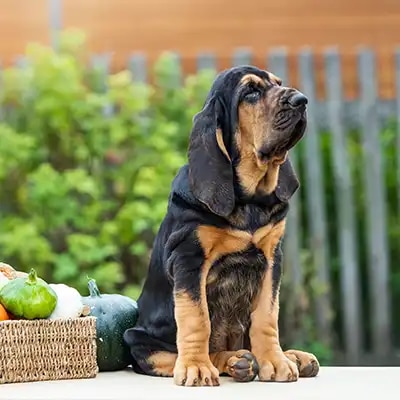
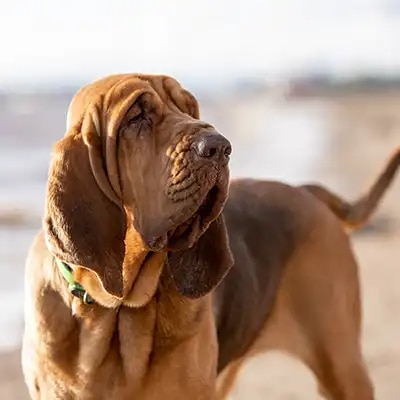
Bloodhounds are affectionate but also independent. They tend to be reserved and patient with children, but their determination can be interpreted as stubborn by people unfamiliar with the breed. Their prey drive and tracking ability can distract them during training sessions, but they make up for that by being eager to please.
They tend to form strong bonds with individuals. Often, one person in the household becomes their best buddy, but they are still warm and tolerant toward the rest of the family. With proper socialization, they generally get along well with children and other pets. Aggression is not typical and well-trained bloodhounds are typically very gentle. They don’t make great watchdogs, and they tend to enjoy sleeping on the couch until an interesting scent comes along.
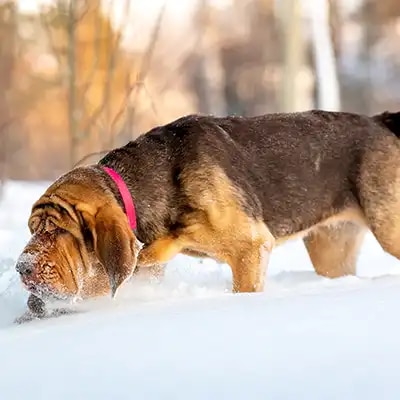
The superpower of the bloodhound is their nose. One study reports that bloodhounds have approximately 230–300 million olfactory (scent) receptor cells, which is among the highest of dog breeds.2 Once they catch an interesting scent, they may enter “follow mode,” which is adorable in a fenced yard.
Personality and Temperament Trait Scale
Traits are on a scale of 1 to 5, with 1 being the least and 5 being the most.
| Dog Trait | Trait Scale Value |
|---|
| Energy Level | 3 (Moderate Energy) |
| Prey Drive | 5 (Very High Drive) |
| Drooling | 4 (High Drooling) |
| Shedding | 3 (Moderate Shedding) |
| Grooming needs | 3 (Moderate Maintenance) |
| Barking | 4 (Very Vocal) |
| Social tendencies with people | 3 (Balanced) |
| Trainability | 1 (Very Difficult) |
Note: Every bloodhound is an individual. Early socialization and obedience training, health, genetics and environment shape behavior.