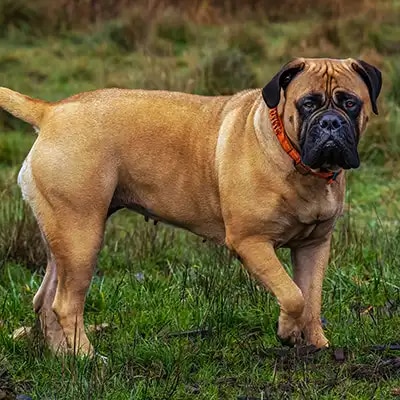
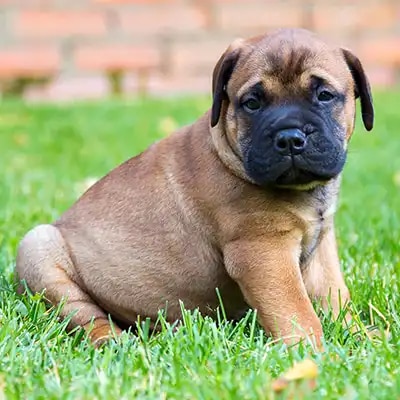
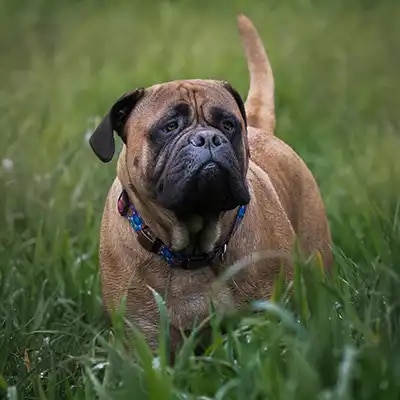
Bullmastiffs are stable, brave and deeply devoted to their family. They often form a particularly strong attachment to one person in the home but remain affectionate and protective toward everyone in their household. With strangers, bullmastiffs are naturally reserved and discerning; they assess before they act. A well-socialized bullmastiff will remain calm and polite but keep a watchful eye on visitors until trust is earned.
Bullmastiffs have daily exercise requirements to support their impressive size. They benefit from a couple of structured walks every day and some light playtime, although they enjoy any chance to stretch their legs and show off their surprising agility. Bullmastiffs prefer predictable routines and quiet homes; they don’t thrive in chaotic or noisy environments.
Food can be a useful motivator for training, though bullmastiffs can be selectively stubborn. Pet parents have noticed that bullmastiffs sometimes pause mid-command, as if to weigh whether your request is worth the treat. Gentle consistency, short sessions and generous praise work far better than harsh correction. When trained with kindness and purpose, they blossom into confident, obedient companions who know exactly when to protect, when to play, and when to drape their 120-pound body across your lap just to remind you who really runs the house.
Personality and Temperament Trait Scale
Traits are on a scale of 1 to 5, with 1 being the least and 5 being the most.
| Dog Trait | Trait Scale Value |
|---|
| Energy Level | 3 (Moderate Energy) |
| Prey drive/chase instinct | 2 (Low Drive) |
| Drooling | 5 (Very High Drooling) |
| Shedding | 3 (Moderate Shedding) |
| Coat maintenance/grooming needs | 2 (Low Maintenance) |
| Barking | 2 (Quiet) |
| Social tendencies with people | 4 (Outgoing) |
| Trainability | 3 (Moderately Trainable) |