Greyhound Breed Guide

While most people associate greyhounds with dog racing, these sleek dogs can also make great family pets! When they're not working on the racetrack, greyhounds are actually relatively low-energy and love to cuddle on the couch. If you're looking for a calm companion who does great with all ages, the greyhound may be for you.

Energy Level

Energy Level

Prey Drive

Prey Drive

Drooling

Drooling

Shedding

Shedding

Coat maintenance / grooming needs

Coat maintenance / grooming needs

Barking

Barking

Social tendencies with people

Social tendencies with people

Trainability

Trainability

The History of the Greyhound

Dogs that look very similar to our modern greyhounds have been depicted in prehistoric art in ancient Egypt, dating back 5,000 years!1 In more recent years, however, greyhounds were bred to be sighthounds. Their speed and agility made them prized animals among hunters, as did their ability to track prey by vision rather than smell, unlike many other hounds. 

During the Industrial Revolution, greyhounds found a new role on the racetrack. But as concerns about the welfare of dogs increased over the years, greyhound racing has gradually been banned in many states, leaving only two tracks open in the country, both in West Virginia.3 Many greyhounds that are pets today are actually retired racing dogs.

Group/classHound Group (AKC), Sighthound and Pariah Group (UKC)
Club recognitionAmerican Kennel Club, United Kennel Club, Greyhound Club of America
Instincts, function and purposeGreyhounds were bred for hunting and tracking game by sight. Later, they were used for racing.
AdaptabilityGreyhounds are highly adaptable and trainable when properly motivated.
Breed standardsUKC Official Standard, Greyhound Club of America Official Standard

Nutrition for Greyhounds

Greyhounds are remarkable athletes with a unique, lean physiology that requires specific nutritional considerations. Whether they are retired racers or active family pets, they benefit from a complete and balanced diet that helps maintain their lean muscle mass. While obesity is less common in greyhounds than in many other breeds, maintaining an ideal weight is still key to their long-term health. Using a kitchen scale to measure their meals is a helpful way to ensure they receive a consistent amount of food and to help manage their body condition throughout their life.

Ingredients and Nutrients

Selecting a food with high-quality ingredients is key to meeting a greyhound’s nutritional requirements. Look for recipes featuring protein sources — like chicken, lamb, or salmon — to help maintain their powerful, lean muscles. To help support a healthy skin and coat, look for omega-6 fatty acids from sources such as vegetable oils and chicken fat.

Fish oil provides the omega-3 fatty acids needed to help nourish their brain, joints, and organs, while prebiotic fibers like fructooligosaccharides (FOS) or beet pulp help support healthy digestion. Finally, balanced levels of calcium and phosphorus help support the strong bone structure needed for their active bursts of energy, helping ensure your]greyhound stays healthy and comfortable.

Life Stage Considerations

Puppies

Greyhound puppies are considered large-breed dogs, so it's important to feed them foods that support healthy joint growth. A large-breed dog food that's formulated for their life stage is a good starting point; your vet can always give you more information based on the individual dog.

Adults

Greyhounds typically stop growing between 12 and 18 months of age, at which point your vet may recommend transitioning from puppy food to adult food. This should happen over the course of a week (even if it's the same brand) to let your dog's digestive system adjust. A large-breed adult maintenance food is generally a good choice.

Seniors

Greyhounds are considered seniors at about 6 years old, even though many are "retired" at a younger age. Senior food is usually lower in calories. Some may benefit from a highly digestible dog food formula, as well.

Weight management

Many greyhounds tend to maintain their sleek athletic builds without much effort. But check in with your vet about your dog's weight. If your greyhound needs to lose a few pounds, your vet can guide you on a feeding plan, which may include a weight control formula dog food.

Greyhound Breed Characteristics

Greyhounds are often loving, calm and intelligent, but they're also athletic. Many have a stoic personality, not getting overly excited nor upset, which makes them easy to live with.

Appearance and Physical Traits

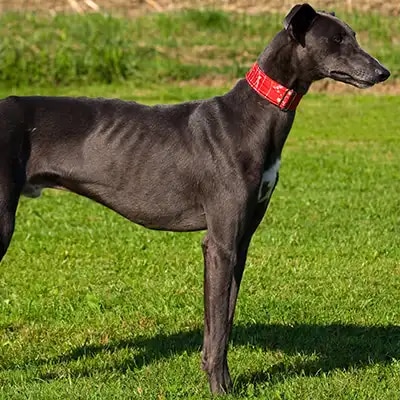
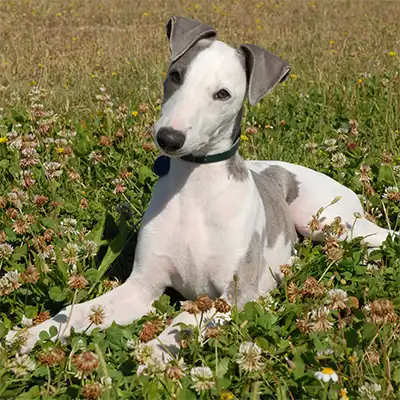
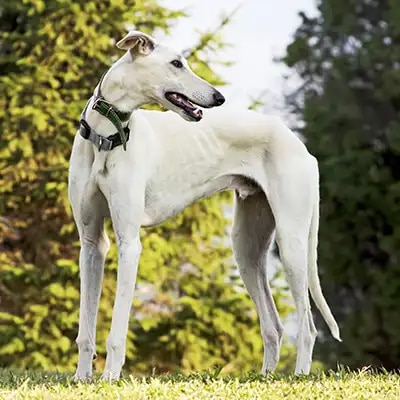
Greyhounds are long and lean, with their appearance fitting their athletic nature. They have a long, aerodynamic nose and a narrow head that is about the same size as their neck. Greyhounds often carry their ears back, but they can be pricked up if something interests them. They have a deep chest and tucked-in waistline. Their short hair coat shows off their muscular long legs that carry them nearly 45 miles per hour.2

Breed OverviewBreed Information
Breed SizeLarge
CoatShort hair of any color
ColorsBlack, white, fawn, red, blue, brindle, or combinations of these; many patterns are possible
Tail and EarsTail is long, fine and carried low with a slight curve; ears are small and folded back against the head and may semi‑prick when alert
Height25 to 30 inches (males are taller)1
Weight60 to 70 pounds (males are heavier)4
Life Expectancy10 to 13 years

Temperament and Personality Traits

Greyhounds may be famous for their speed, yet off the track they’re often happiest stretched out on the couch. While some start out shy, they tend to warm up quickly and form strong bonds with their pet parents. Intelligent by nature, they balance that sharpness with patience and tolerance. Training works best when the reward is worth their effort — many respond eagerly to food, while others thrive on praise and encouragement. They're playful when the mood strikes, but they don’t demand constant entertainment and are content simply watching the world go by. Daily walks aren’t essential, but they’ll always welcome the chance to get outside when offered.

Despite their large size, greyhounds don't make the greatest watch dogs. Sure, they might alert you to the presence of someone, but getting off the couch to assess the situation may depend on their mood at the moment. When you come home, however, they'll happily greet you at the door.

If you have wildlife in your yard, remember that greyhounds are sighthounds by instinct. They will chase and catch squirrels, groundhogs and even birds! On the flipside, they're not usually the type to dig holes or jump a fence.

Personality and Temperament Trait Scale:

Traits are on a scale of 1 to 5, with 1 being the least and 5 being the most.

Dog TraitTrait Scale Value
Energy Level3 (Moderate Energy)
Prey drive5 (Very High Drive)
Drooling1 (Minimal Drooling)
Shedding2 (Low Shedding)
Grooming Needs1 (Very Low Maintenance)
Barking1 (Very Quiet)
Social tendencies with people2 (Slightly Reserved)
Trainability1 (Very Difficult)

Lifestyle Compatibility

Best for

People looking for a dog that is easygoing, but also enjoys the occasional long walk.

Good with

People of all ages, other dogs. Always monitor children around dogs.

Less suitable for

Homes with cats (depends on the individual).

Before adopting any breed of dog, it's a good idea to speak to a veterinarian to determine if their health and care needs fit with your household, budget and lifestyle. 

Exercise Needs and Appropriate Activities

If you are looking for a running or walking buddy, you have found the perfect friend! Greyhounds do best with around 60 minutes of daily exercise, but they likely won't get destructive if you miss a day here and there. They're just as happy to hang out with the family as they are to get outside.

Training Greyhound Dogs

Greyhounds are often food- or praise-motivated, and clicker training tends to work particularly well for this breed. Any rewards-based system is great for these dogs. Some may be fearful or shy in the beginning while they learn your habits and style. 

Remember, greyhounds are very intelligent, and they are studying and learning about you as much as you are learning about them! Positive reinforcement and consistency are key to you and your greyhound understanding each other. When training your greyhound, it's easy to dish out the treats generously! While they are fun, treats shouldn't make up more than 10% of the dog's total daily caloric intake. Praise, affection or even a toy are often good rewards, so it's important to try different things to find out what rewards makes your greyhound the happiest.

Greyhound Health and Wellness

Greyhounds make great pets for many different types of families. However, they do come with some health considerations.

Potential Health Issues

Dental disease

Greyhounds have notoriously bad teeth. Many greyhounds require dental cleanings under anesthesia yearly, and despite best efforts, often require teeth to be extracted because they are so diseased. Gingivitis, tooth decay and foul breath often accompany the dental disease. Talk to your vet about a teeth cleaning regimen for your greyhound, which may involve brushing their teeth daily with a dog-specific toothpaste and providing dental cleaning chews.

Thin skin

Greyhounds' skin is surprisingly thin, despite being a large and athletic dog! Running through brush can cause an open wound requiring stitches in a greyhound! The breed is so stoic, many astute pet parents may not notice anything is even wrong until much later.

Arthritis

As they age, greyhounds can develop arthritis along their back or in their legs. Keeping your dog a healthy weight will not prevent this completely but it can help minimize discomfort.

Anesthesia risk

Greyhounds respond differently to anesthesia drugs than many other breeds. This does not prevent them from undergoing anesthesia successfully, it's just a unique health aspect of the breed.

Grooming Needs

With such a short hair coat, greyhound grooming needs are minimal. They do shed, often seasonally, and once-a-week brushing is typically sufficient. Baths can be given as needed, and they will likely need regular nail trims, depending on their activity level.

Is a Greyhound Your New Furry Friend?

Greyhounds are easygoing, intelligent and overall low-maintenance. Many pet parents of greyhounds realize they can't have just one, and eventually become families of multiple greyhounds. The breed has a tendency to grow on people! Low energy requirements and a loving personality make greyhounds overall great pets for many families.

Resources For New Pet Parents

Adopt a pet. Change a life.

Pet Adoption Resources

Get expert tips for a long and happy life with your new best friend.

New dog guide

Greyhound Dog Breed FAQs

You would think a dog who runs for sport would have lots of energy, but greyhounds are known as the couch potatoes of the dog world. They still need to go for walks and get out of the yard, but their energy needs are average or below average.

Because of their strong prey drive, greyhounds tend to not do well around small animals. Cats, rabbits, or even small dogs can be mistaken as prey. There's no malicious intent; it's what they were bred to do! Greyhounds do great, however, with medium or large dogs.

Oddly, no! Greyhounds are large dogs, but they are sleek and athletic. Many greyhounds are graceful and can navigate spaces efficiently, as long as they can get to their favorite bed.

References

  1. American Kennel Club, "Greyhound," American Kennel Club, 2025, https://www.akc.org/dog-breeds/greyhound/

  2. Elizabeth Heath, "18 of the Fastest Dog Breeds in the World," Reader's Digest, 2024, https://www.rd.com/article/fastest-dog-breed/

  3. Grey2K, "Greyhound Racing Facts," Grey2K USA Worldwide, 2025, https://greyhoundracingfacts.org/

  4. American Kennel Club, "Greyhound Breed Standard," American Kennel Club, 2025, https://images.akc.org/pdf/breeds/standards/Greyhound.pdf