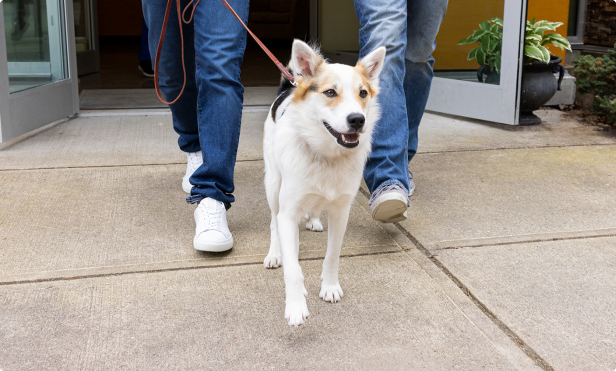
German shepherds are large-breed dogs that are athletic and highly trainable. Great nutrition starts with complete and balanced dog food that supports lean muscle, joint health, skin and coat quality, dental health and a healthy weight.

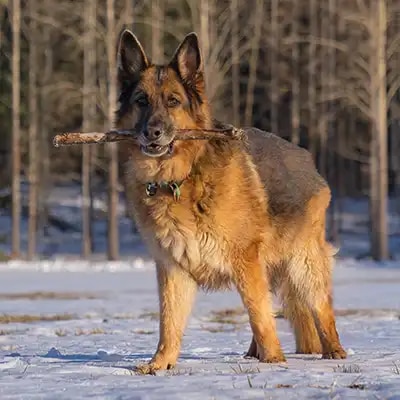
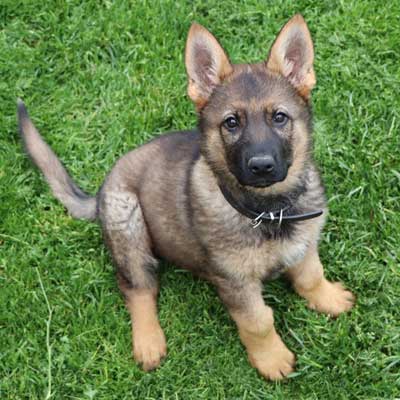
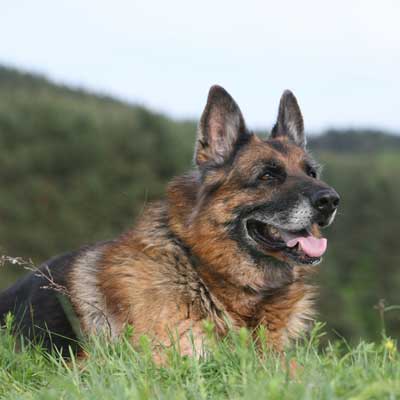
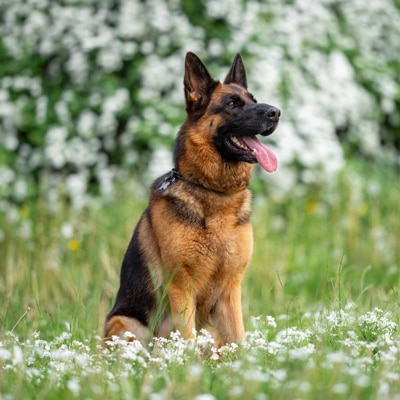
If you want a loyal teammate who reads the room, learns fast and looks amazing while doing it, the German shepherd dog breed may be your match. Think versatile athlete meets honors student, with a heart of gold to boot. Before you adopt, it’s worth learning what makes this breed tick — because once you’ve earned a shepherd’s trust, you’ve got a friend for life.
Best for: Active singles or families who enjoy training, hiking and brain games.
Less suitable for: Families with small children, low activity homes or absent families who do not have time for daily training, exercise and enrichment.

Energy Level

Prey Drive

Drooling

Shedding

Barking

Trainability
The German shepherd originated in the late nineteenth century, where breeders in Germany wanted to design a skillful herding dog that could think independently and manage livestock with confidence. Over time, people realized this dog had the intelligence, athleticism and courage to take on far more, and over time, the German shepherd became a trusted partner in protection, tracking, search and rescue, military and police work and everyday service roles.
Smart, versatile, and deeply bonded to their people, these dogs continue to prove that a working mind and a loyal heart can make an extraordinary companion.
| Breed Attribute | Attribute Details |
|---|---|
| Group/Class | Herding Group (AKC), Herding Dog Group (UKC) |
| Club Recognition | American Kennel Club, United Kennel Club, German Shepherd Dog Club of America |
| Instincts, Function, and Purpose | German shepherds were bred for managing livestock independently, but over time, people came to depend on them for guarding, tracking, police work and more. |
| Adaptability | German shepherds can do well in many different environments, but they require structure, regular exercise and mental stimulation to truly thrive. |
| Breed Standards | UKC Official Breed Standard, German Shepherd Dog Club of America |
German shepherds are large-breed dogs that are athletic and highly trainable. Great nutrition starts with complete and balanced dog food that supports lean muscle, joint health, skin and coat quality, dental health and a healthy weight.
German shepherds require large-breed dog food that’s formulated for their specific life stage. Look for a complete and balanced dog food that will provide your German shepherd with all the nutrients they need to suit their lifestyle. German shepherds may benefit from foods enriched with omega-6 fatty acids to support their skin and coat, prebiotics to support healthy digestion, and omega-3 fatty acids to support their brain and joints. Controlled calcium and phosphorus in puppy formulas help promote healthy skeletal development. Fermentable fiber and prebiotics aid healthy digestion and contribute to healthy stools, and antioxidants support the immune system and healthy aging.
Browse Our Products



Puppies: Large-breed puppies like German shepherds benefit from complete and balanced nutrition that supports healthy growth for healthy skeletal development. Ask your veterinarian about appropriate large-breed puppy formulas and how much to feed.
Adults: Adult German shepherds thrive on food that provides energy and essential nutrients while maintaining a lean body condition. Look for a complete and balanced food to maintain lean muscle and a healthy metabolism.
Seniors: Providing the right nutrition can help older German shepherds enjoy mobility well into their golden years. A complete and balanced food designed for dogs six and older should be highly digestible and include ingredients to support energy as metabolism declines.
Your vet can help you choose the best food, calculate the amount of calories to feed daily and adjust for activity and life stage. To ensure accuracy, weigh your dog’s food on a kitchen gram scale. Treats should constitute less than 10% of daily calories. A lean body condition is one of the simplest ways to support a long, healthy life, so be sure to feed the right amount and monitor their physique monthly.
The German shepherd dog is strength and intelligence in motion, bred to think fast and work hard beside their people. Beneath that confident stance is a loyal heart that craves purpose, partnership and the satisfaction of doing every job, big or small, with precision and pride.
With their noble stance and unmistakable silhouette, German shepherds exude strength, agility and purpose. These dogs boast a powerful build with a vast stride that speaks to their herding heritage. Their double coat comes in a range of classic colors, often with a dramatic mask that gives them a look of pensive intelligence. Upright ears match their watchful personality, and a bushy tail carries low wherever they choose to romp.
| Physical Trait | Trait Details |
|---|---|
| Breed Size | Large |
| Coat | Medium length, double coat, straight to slightly wavy |
| Colors | Black and tan, sable, red, black, bicolor |
| Tail and Ears | Ears are large, upright and pointed; tail is long, bushy and slightly curved at the end |
| Height | 22 to 26 inches (males are taller)¹ |
| Weight | 50 to 90 pounds (males are heavier)¹ |
| Life Expectancy | 7 to 10 years¹ |
German shepherds are intelligent, loyal, and more than ready to roll up their sleeves and get to work. They form strong bonds with their families and prefer to stick close to their people, sometimes choosing a favorite person while still caring deeply for the rest of the household. When meeting strangers, many German shepherds may be reserved at first, watching and deciding if someone is trustworthy before warming up.
Because this breed’s heritage lies in demanding jobs, mental exercise is as important as physical activity. Puzzle toys, scent trails and structured outings keep their minds busy and prevent them from inventing their own creative projects, like digging holes. Their energy level is high enough to keep up with an active lifestyle, yet they can relax when their needs are met.
Prey drive can range from low to moderate, so small pet introductions should be supervised until relationships are solid. Reward-based training with consistent rules helps them thrive, while daily engagement channels their drive into good behavior instead of chaos. When challenge, structure and connection are built into everyday life, a German shepherd can become a devoted partner who brings both brains and heart to everything they do.
Traits are on a scale of 1 to 5, with 1 being the least and 5 being the most.
| Dog Trait | Trait Scale Value |
|---|---|
| Energy Level | 5 - Very High Energy |
| Prey Drive | 4 - High Drive |
| Drooling | 2 - Low Drooling |
| Shedding | 5 - Very High Shedding |
| Coat Maintenance | 3 - Moderate Maintenance |
| Barking | 3 - Moderately Vocal |
| Social Tendencies | 4 - Outgoing |
| Trainability | 5 - Exceptionally Trainable |
Note: These rankings describe general tendencies. Dogs, like people, are individuals and their behavior and personality can vary based on genetics, environment, health, and training.
Before adopting any breed of dog, it's a good idea to speak to a veterinarian to determine if their health and care needs fit with your household, budget and lifestyle. Understanding common veterinary needs can also help you decide if they are a good fit for your home.
Best for: Active singles or families who enjoy training, hiking and brain games.
Good with: Older children and other pets when socialized and supervised. Always monitor children around dogs.
Less suitable for: Families with small children, low activity homes or absent families who do not have time for daily training, exercise and enrichment.
Plan on regular daily exercise, divided into brisk leash walks, focused training sessions and brain exercises like scent work, tracking games and food puzzles. Many German shepherd dogs also enjoy hiking, especially on new trails where they can use their noses and take in the scenery. Some love swimming, which offers a great low-impact workout for joints.
Because German shepherds were bred to work, adding small “assignments” such as carrying a backpack on walks, helping pick up toys or searching for a hidden object gives them the purpose they instinctively crave. Rotate activities through the week to prevent boredom and keep both body and mind sharp. A well-exercised German shepherd is far more likely to relax inside the home rather than lobby for a new career in shoe demolition.
German shepherds are easy to train, but it is still important to start early with basic obedience training and socialization. They thrive on positive reinforcement, consistency, confident leadership and clear communication from you. Training priorities include calm leash manners, reliable recall, polite greetings and cooperative manners for grooming and veterinary care. Start when they are a puppy and practice handling their paws for nail trims and looking in their mouth so it will be easier during vet visits. Short, frequent sessions and treats keep learning fun.
German shepherds are very popular dogs, and while many of them are healthy, some genetic lines are known to have hereditary disorders. If you are getting a puppy, it is very important to have your vet evaluate for conditions such hip and elbow dysplasia, as well as genetic tests for conditions like degenerative myelopathy (DM) and other breed-specific disorders.
Hip and elbow dysplasia: German shepherd dogs may be prone to developmental joint disorders that cause joint pain and arthritis. Keeping dogs lean, feeding appropriate large-breed puppy food and avoiding high-impact exercise in puppies can help support healthy joint development. Discuss with your vet the timing of spay/neuter surgery to allow for normal puberty and bone development.2,3
Degenerative myelopathy: This degenerative disease of the nervous system has been documented. Signs include progressive hind limb weakness. DNA testing is available.4,5
Exocrine pancreatic insufficiency: German shepherds have a well-documented predisposition to a digestive condition called exocrine pancreatic insufficiency (EPI). Signs include weight loss with normal appetite and abnormal stools. Testing and treatment are available.6
Skin allergies: Some German shepherds may suffer from itchy skin and/or ear infections due to skin allergies. Your vet can provide diagnosis and management strategies.7 They may recommend a therapeutic dog food to help manage skin sensitivities or adverse food reactions.
German shepherd dogs have a thick double coat that benefits from brushing several times each week, and daily brushing during heavy shedding seasons. Having a German shepherd professionally groomed during shedding season can be a godsend. Bathing is done only as needed, using a gentle shampoo and thorough rinsing to avoid trapping soap residue. Ears should be checked weekly for redness, debris or odor, and cleaned only when a vet recommends it. Trim nails every three to four weeks, or more often if you hear clicking on the floor. Daily teeth brushing with a dog-specific toothpaste supports good oral health, along with professional cleanings as advised by your vet.
If you want a clever, loyal teammate who’s happiest with a job to do, the German shepherd might be your match. Give them purpose, consistent training and daily movement, and you’ll earn a steady companion who's committed to you for years to come.
Yes, German shepherds need daily, moderate exercise. Plan on 60 to 90 minutes of moderate exercise daily, plus brain work.
They can be good with other pets with proper socialization and management. Prey drive varies within the German shepherd breed, so supervise them around smaller pets.
Yes, German shepherds have year-round moderate shedding plus a heavy shedding seasonal blow. A good brush will be your new best friend with a German shepherd in the house.
German shepherds are moderate barkers. Training, exercise and enrichment help.
American Kennel Club, “Official Standard of the German Shepherd Dog,” American Kennel Club, https://images.akc.org/pdf/breeds/standards/GermanShepherdDog.pdf.
Hedhammar, Å., et al, “Swedish Experiences From 60 Years of Screening and Breeding Programs for Hip Dysplasia,” 2020, https://doi.org/10.3389/fvets.2020.00228.
DeForge, T. L., J. M. Ball, J. V. Mochel, M. A. Conzemius, and A. J. Carr, “Age of Neutering Contributes to Risk of Cruciate Ligament Rupture in Labrador Retrievers,” Journal of the American Veterinary Medical Association 263, no. 3.
Awano, T., et al, “Genome wide Association Analysis Reveals a SOD1 Mutation in Canine Degenerative Myelopathy,” Proceedings of the National Academy of Sciences 106, no. 8, 2009, https://www.pnas.org/doi/10.1073/pnas.0812297106. PNAS+1.
Holder, A. L., et al, “A retrospective study of the prevalence of the canine degenerative myelopathy associated superoxide dismutase 1 mutation (SOD1:c.118G > A) in a referral population of German Shepherd dogs from the UK,” Canine Genetics and Epidemiology 1, 2014, https://www.ncbi.nlm.nih.gov/pmc/articles/PMC4579386/.
Westermarck, E., et al, “Heritability of Exocrine Pancreatic Insufficiency in German Shepherd Dogs,” Journal of Veterinary Internal Medicine 24, no. 2, 2010, https://pubmed.ncbi.nlm.nih.gov/20102502/.
Jaeger, K., et al, “Breed and Site Predispositions of Dogs with Atopic Dermatitis,” Veterinary Dermatology 21, no. 2, 2010, https://pubmed.ncbi.nlm.nih.gov/20187918/.

View Related Breeds