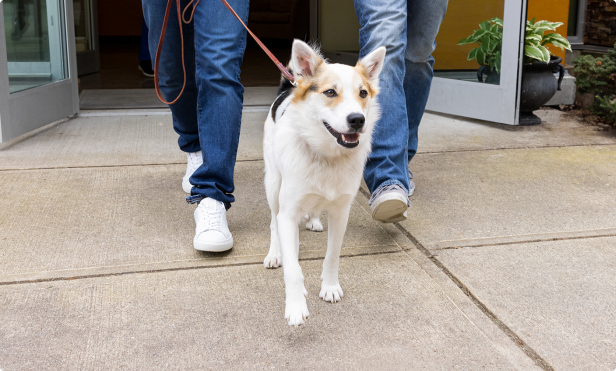
Giant dogs have big nutritional needs. The Neapolitan mastiff dog breed is huge, powerful and slow to mature, taking 3 to 4 years. Complete and balanced large-breed dog food can support their joints, hearts and long-term health.

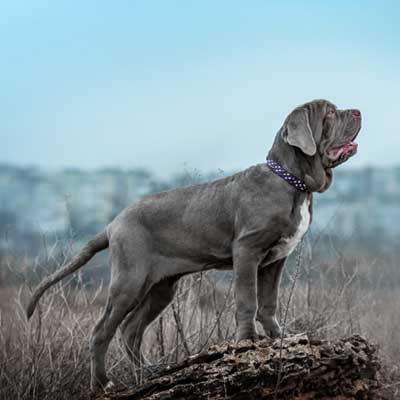
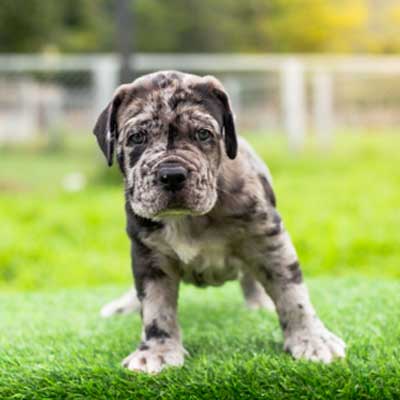
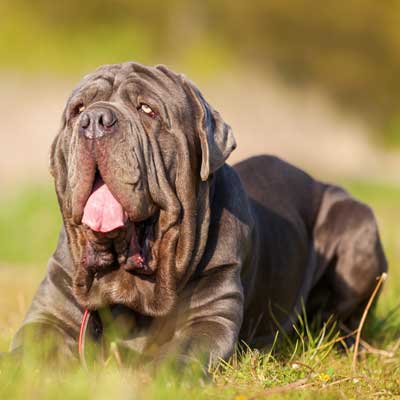
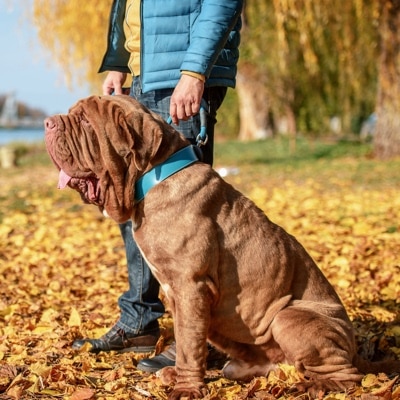
The Neapolitan mastiff dog breed is as ancient as it looks. Picture loose skin folds, solemn eyes and a walk that says, “I’ve seen some things.” Beneath all that grandeur lives a calm, affectionate heart that beats for family. If you want to share your life with a giant dog that lives to lean on and protect you — and you’ve got the time, room, and means to care for them — then the Neapolitan mastiff might be for you.
Best For: Experienced pet parents who understand large guard breeds who are known to drool; value structure, routine and mutual respect; have a secure yard.
Less Suitable For: First-time dog parents, busy households or homes with small kids or fragile pets.

Energy Level

Prey Drive

Drooling

Shedding

Barking

Trainability
The Neapolitan mastiff has guarded Italian estates for centuries. Historical records depict large, mastiff-like dogs guarding ancient civilizations around the Mediterranean. During the Roman Empire, they served as war dogs, guard dogs and gladiators. Their massive frame and intimidating looks weren’t selected for show; they were meant to end fights before they began. It still works today.
By the mid-20th century, the breed nearly disappeared, but passionate Italian breeders worked to restore it. The American Kennel Club welcomed Neapolitan mastiffs, also called mastinos, into the working group in 2004. Today, they are known as a symbol of devotion and strength, a living piece of history that still keeps watch.1,2
| Breed Attribute | Attribute Details |
|---|---|
| Group/Class | Working Group (AKC), Guardian Dog Group (UKC) |
| Club Recognition | American Kennel Club, United Kennel Club, U.S. Neapolitan Mastiff Club |
| Instincts, Function and Purpose | Neapolitan mastiffs have been used throughout history as war dogs, guard dogs and gladiators. |
| Adaptability | Neapolitan mastiffs do best in homes with clear, calm leadership and a routine and structure they can depend on. |
| Breed Standards | United States Neapolitan Mastiff Club Breed Standard, UKC Breed Standard |
Giant dogs have big nutritional needs. The Neapolitan mastiff dog breed is huge, powerful and slow to mature, taking 3 to 4 years. Complete and balanced large-breed dog food can support their joints, hearts and long-term health.
Neapolitan mastiffs thrive eating a large-breed dog food that contain protein to maintain lean mass, support tissue repair and keep the coat glossy. Moderate fat paired with slow-digesting carbohydrates provides steady energy while helping prevent excess weight accumulation on an already heavy frame. Marine-sourced omega-3s, including EPA and DHA, support comfortable joints, skin health and cognitive function. Correct mineral ratios, especially calcium-to-phosphorus, promote strong bones. A balanced mix of vitamins, trace minerals andantioxidants helps reinforce immune defenses and overall wellness
Browse Our Products


Puppies: Neapolitan mastiff puppies can take up to 24 months for their bones and joints to fully mature. During this time, feed complete and balanced nutrition that supports healthy development in large-breed puppies. Feeding a large-breed puppy food helps support slow and steady growth and development. DHA from fish oil can also support healthy brain and eye development. Talk to your veterinarian about when the best time is to transition puppies to adult food.
Adults: Neapolitan mastiffs thrive on food that provides continuous energy and essential nutrients while maintaining a lean body condition. Formulas rich in balanced omega-3 fatty acids support a luxurious coat and healthy joints. Choose a formula that provides complete and balanced nutrition that maintains lean muscle and healthy metabolism.
Seniors: Senior mastiffs may slow down, but they still benefit from eating nutrient-rich foods that support joint comfort, healthy aging and healthy digestion. Fermentable fiber and prebiotics help maintain gut regularity and antioxidants promote immune and cellular resilience. Controlled calories and L-carnitine help prevent age-related weight gain, and omega-3 fatty acids promote joint, skin and coat health.
Weight management and joint support: Unhealthy weight gain results in increased wear and tear on joints, which can be devastating for a giant dog. Choose a formula that delivers appropriate calories and provides joint-supportive nutrients. Whatever food you feed, always measure the amount and limit treats to less than 10% of the total daily calories. Always consult your vet for personalized nutrition decisions, especially for growth, athletic conditioning, weight changes or disease conditions.
The Neapolitan mastiff is powerful, loyal and intensely aware of everything around them. They were bred to guard, and that instinct never left. This is not a beginner’s dog. They need structure, confidence and daily guidance from someone who understands large, independent breeds. In a capable home, they’re calm and devoted companions. In an unprepared one, they can be overwhelming.
The Neapolitan mastiff is instantly recognizable for its massive head, giant body and folds of skin that form wrinkles over the face, legs and body. A broad, square muzzle with droopy lips and a wide nose gives the breed a solemn, statuesque expression. The body is rectangular, powerfully muscled and low to the ground, with a broad chest and a thick, tapering tail that completes the imposing Neapolitan mastiff silhouette.
| Physical Trait | Trait Details |
|---|---|
| Breed Size | Large to Giant |
| Coat | Short, dense and smooth |
| Colors | Blue, black, mahogany or tawny¹ |
| Tail and Ears | Tail is thick at the base, tapering to a point; natural ears are pendant-like |
| Height | 24 to 31 inches (males are taller) |
| Weight | 110 to 150 pounds (males are heavier) |
| Life Expectancy | 7 to 9 years |
The Neapolitan mastiff isn’t your average family dog. Think of them as a 150-pound roommate who takes security seriously and doesn’t do small talk. They usually attach to one person but see the family as their flock, each member under the same invisible shield of protection. They can become overly protective of "their" children. Around children, they can be gentle if raised together, though their size alone means adult supervision is non-negotiable. With strangers, they stay aloof and suspicious. Neapolitan mastiffs can live with one other similarly-sized dog, preferably of the opposite sex, if they are raised together, but supervision is recommended. Dog parks are a hard no for this breed.
Their prey drive is low, but the urge to patrol the yard is high. Their mischief level is moderate if they don’t receive enough attention, exercise and mental stimulation. They’re loyal to the core and smarter than they let on. The Neapolitan mastiff doesn’t seek conflict, but protecting their home and people is hardwired. Without early, careful socialization, that protective drive can turn into reactive aggression, and that’s a problem when a dog weighs as much or more than many people.
Traits are on a scale of 1 to 5, with 1 being the least and 5 being the most.
| Dog Trait | Trait Scale Value |
|---|---|
| Energy Level | 2 - Low Energy |
| Prey Drive | 2 - Low Drive |
| Drooling | 5 - Very High Drooling |
| Shedding | 3 - Moderate Shedding |
| Coat Maintenance | 2 - Low Maintenance |
| Barking | 2 - Quiet |
| Social Tendencies | 2 - Slightly Reserved |
| Trainability | 2 - Somewhat Difficult |
Note: These rankings describe general tendencies. Dogs, like people, are individuals and their behavior and personality can vary based on genetics, environment, health, and training.
Before adopting any breed of dog, it's a good idea to speak to a veterinarian to determine if their health and care needs fit with your household, budget and lifestyle. Understanding common veterinary needs can also help you decide if they are a good fit for your home.
Best for: Experienced, confident pet parents who understand large guard breeds who are known to drool; value structure, routine and mutual respect; and have a secure yard for this dog to patrol.
Good with: Adults or families with older children who can follow rules and interact calmly.
Less suitable for: First-time dog parents, busy households or homes with small kids or fragile pets.
The Neapolitan mastiff lives life in slow motion, and that’s exactly how they like it. They prefer connection over cardio. A couple of walks a day, a little backyard patrol and a good nap afterward keep most content. Mature mastiffs enjoy exploring new scents, short hikes on soft ground and pulling a cart. Many are good swimmers. Avoid fetch marathons or forced runs; that kind of impact can stress joints built for power, not speed.
Mastiff puppies are a different story. Their skeletons can take a long time to mature — some take up to 30 months to reach full adult weight. While they are growing, limit extended jumping, running and high-impact sports. Focus instead on obedience training, leash manners and short confidence-building outings that expose them to new sights and sounds. Rest is as important as movement, and young mastiffs take a lot of naps.
Training a Neapolitan mastiff is about patience, respect and clear communication. Use positive reinforcement, short sessions and plenty of praise. Harsh corrections shut them down. Avoid this by not using stern tones or corrective equipment, such as choke chains or prong collars. A calm “try again” works better than a leash pop or raised voice. When they know what’s expected and the energy stays cool and collected, they cooperate.
Their guarding instinct is quite strong, so early socialization and consistent leadership are essential. This looks like introducing new people, pets and situations gradually so mastiffs learn to be chill about life. Neapolitan mastiffs also need proactive training in cooperative care skills. Get them used to handling while still they are still puppies so grooming, vet visits and nail trims are no big deal.
Like most giant breeds, Neapolitan mastiffs can face structural and genetic challenges. Preventive care, good nutrition, keeping them in a lean body condition and regular veterinary checkups are your best tools for keeping them healthy.
Gastric dilatation-volvulus (GDV): Also known as bloat, GDV is high-risk, emergency condition where the stomach fills with gas and twists. It can be fatal. Owners can opt for a preventive surgery called gastropexy to tack the stomach in place.
Dilated cardiomyopathy: DCM is a serious heart condition where the heart muscle weakens and becomes enlarged.
Cancer: The breed is prone to several types, most notably osteosarcoma (bone cancer), which is a common cause of death in senior mastiffs.
Developmental joint disorders: Like other giant breed dogs, the Neopolitan mastiff has an increased risk of developmental joint disorders, including hip and elbow dysplasia. Early veterinary screening, appropriate exercise and nutrition for puppies and weight management all help support healthy joints.
Eye disorders: Mastiffs can be prone to eyelid abnormalities that can irritate the eye surface and impact vision. Have puppies checked early and often by your vet to detect and treat problems.3,4
Skinfold issues: Mastiffs have heavy skinfolds around their head and lips that can get dirty, irritated or infected. Clean folds regularly with an unscented wipe and dab their massive lips after they drink to avoid lip fold irritations.
Despite their size, Neapolitan mastiffs are relatively simple to maintain. Brush them once a week to remove loose hair, more often during shedding season. Wipe wrinkles daily and bathe only when needed. Trim nails every two to four weeks, brush their teeth every 24 to 72 hours. Clean their ears weekly with your vet's approval. Teaching them to enjoy grooming early makes life easier later — it’s much simpler to clean a cooperative 150-pound dog than one who’s decided bath time is optional.
The Neapolitan mastiff carries history in its bones and devotion in its eyes. They live to be near their people, content to shadow you throughout the day or rest close enough to feel your presence. With structure and trust, they become calm, capable companions who guard what matters most. This breed isn’t for everyone, but for the right people who give them proper care, they'll provide a feeling of safety and a love that won’t quit. And when they sigh heavily and drop their head on your lap after a long day, you’ll understand why people say, "Mamma mia, what a dog."
Neapolitan mastiffs do not need a lot of exercise. Short daily walks and mild activity are enough to keep most healthy and comfortable.
Neapolitan mastiffs can be excellent family dogs with proper socialization and supervision. They’re patient and protective, but their size means they do best with older, respectful children.
Yes, Neapolitan mastiffs shed a little, mostly seasonally. Regular weekly brushing helps keep their coat clean and manageable.
Neapolitan mastiffs are not ideal for beginners. They require confident, experienced pet parents who understand large guardian breeds.
With good care and nutrition, Neapolitan mastiffs typically live between 7 and 9 years.
American Kennel Club, “Neapolitan Mastiff Dog Breed Information,” Accessed November 2025, https://www.akc.org/dog-breeds/neapolitan-mastiff/.
United States Neapolitan Mastiff Club. “About the Mastino.” Accessed November 2025. https://www.mastinoclub.com/.
O'Neill, Dan G., Minna P. Mustikka, Dave C. Brodbelt, David B. Church, and Vilma Vaattovaara. “Conformational Eyelid Disorders in Dogs under Primary Veterinary Care in the UK - Epidemiology and Clinical Management,” PLOS ONE 20, no. 6 (2025): e0326526, https://doi.org/10.1371/journal.pone.0326526.
Guandalini, A., N. Di Girolamo, D. Bentivoglio, and C. Corvi, “Epidemiology of Ocular Disorders Presumed to Be Inherited in Three Large Italian Dog Breeds,” Veterinary Ophthalmology 20, no. 5 (2017): 420–426, https://doi.org/10.1111/vop.12442.

View Related Breeds