Boerboel Dog Breed Guide

If you want a powerful guardian who is deeply bonded to their people and yet tender with their inner circle, the South African boerboel may be your match. This farm dog was bred to make decisions independently and protect. They do best with a clear job, consistent training and daily connection with you. In return, you will get a large shadow that follows you from room to room and a dog who believes your knee is the perfect place to rest their head.

Best for: Experienced dog owners who enjoy training, maintain secure fencing and want a guard dog that lives in the home, not the yard.

Less suitable for: Beginner pet parents, those with other pets, shared living spaces or homes with frequent, unfamiliar visitors.

Energy Level

Energy Level

Prey Drive

Prey Drive

Drooling

Drooling

Shedding

Shedding

Barking

Barking

Trainability

Trainability

The Origins of the Boerboel

The boerboel originated in South Africa, where families needed a dog that could handle the realities of African farm life. The name boerboel comes from the Afrikaans words for farmer (boer) and bulldog (boel), which gives you a clue about their job description. These powerful guard dogs were developed to keep farms and ranches secure and deter predators like lions and hyenas. 

Early South African boerboels are believed to have descended from mastiff-type dogs brought by European settlers, then refined over generations of practical selection. As farms expanded into rugged terrain, people needed a dog that could make quick decisions, protect livestock and still be gentle inside the home. That balance of responsibility and family loyalty became the hallmark of the boerboel breed. Over time, South African breeders focused on preserving the boerboel’s mental stability and physical power while keeping the breed healthy and functional. The breed was recognized by the American Kennel Club (AKC) in 2015 as part of the Working Group, and full breed standards are maintained by the AKC.1

Breed AttributeAttribute Details
Group/ClassWorking Group (AKC), Guardian Dog Group (UKC)
Club RecognitionAmerican Kennel Club, United Kennel Club
Instincts, function and purposeBoerboels were bred to protect livestock yet be mellow with family. They were primarily used as guard dogs.
AdaptabilityBoerboels are the perfect blend of easygoing affection and strong, protective leadership. They do best in active homes with routine and consistency.
Breed standardsAKC Official Standard, UKC Official Standard

Boerboel Nutrition

Large, muscular dogs like boerboels benefit from complete and balanced nutrition that supports lean body condition, joint health and digestive comfort. Excess weight strains hips and elbows, reduces mobility and increases risk for orthopedic disease, which can be devastating for a large dog like a boerboel, so weighing food by the gram using a kitchen scale is recommended. Giant breed puppies need nutrition that supports healthy development and growing joints, so talk to your veterinarian about the best food for your puppy.

Ingredients and Nutrients

Look for a complete and balanced dog food that will provide your boerboel with all the nutrients they need to suit their lifestyle. Boerboels may benefit from foods enriched with omega-6 fatty acids to support their skin and coat, prebiotics to support healthy digestion, and omega-3 fatty acids to support their brain and joints. Antioxidants play a key role in supporting healthy aging and the immune system.

Life Stage Considerations

Puppies: Boerboel puppies take 18 to 24 months to reach full adult size. While they are growing, they need food that promotes controlled growth through precise levels of calcium, phosphorus and calories. Large-breed puppy food is formulated to meet the needs of growing, large-breed dogs. Avoid overfeeding; growth curves and monthly weigh-ins with your vet can help you catch weight drifting early.

Adults: Adult boerboels thrive on complete and balanced nutrition fed in two measured meals per day. Maintain a healthy weight with portion control, consistent exercise and regular veterinary checkups. Monitoring body condition and adjusting portions as needed helps keep energy steady and muscles strong and helps avoid unhealthy weight gain.

Seniors: Senior boerboels may experience a slower metabolism, decreased muscle tone and reduced digestive efficiency. Choose a complete and balanced, highly digestible senior formula with omega-3 fatty acids and antioxidants that support joints and lean muscle. Regular veterinary checkups and weight monitoring help keep them comfortable and mobile.

Weight and joint support: Unhealthy weight gain puts undue stress on a boerboel’s joints. Keep the weight and body condition score in the ideal range, measure meals with a kitchen gram scale and ask your vet to calculate daily calories for your specific dog. Ask your vet for a tailored feeding plan and safe rate of loss. In some cases, your vet may recommend therapeutic food to support a healthy weight.

Boerboel Dog Breed Characteristics

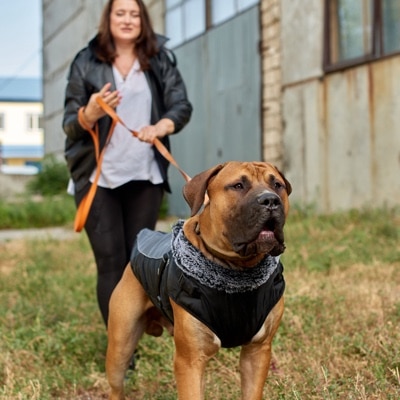
The boerboel is built like a living fortress, broad and powerful enough to command respect without making a sound. Sunlight glints off their short, smooth coat, tracing muscles that look like they could move mountains. Behind that watchful gaze is an intelligent partner, always aware and ready to step in when it counts.

Appearance and Physical Traits

The boerboel dog breed is defined by its powerful, well-muscled build, broad chest and confident, observant expression. Their frame is strong and balanced, with muscular legs and a solid topline that give them an impressive presence. The short, sleek coat fits closely to the body, showing off their stacked physique. There is harmony to the boerboel’s physical design, the result of generations of selective breeding aimed at producing a dog that is protective, athletic and has a cooperative, steady temperament.

Physical TraitsTrait Details
Breed SizeLarge to Giant
CoatShort, dense
ColorsFawn, red, brown, cream, black, brindle
Tail and EarsTail is thick and high-set; ears are medium, set high1
Height22 to 27 inches (males are taller)1
Weight110 to 200 pounds (males are heavier)1
Life Expectancy9 to 11 years

Personality and Temperament

The boerboel is a highly intelligent, powerful guard dog that takes the safety of their home and family seriously. This breed was developed to make decisions independently, which means they often assess situations thoughtfully and act without you telling them to. They are typically reserved and watchful with strangers and should be given space until they decide whether they want to interact with you, or not. Introduce visitors and new dogs gradually with supervision and space. It helps to expect a guardian mindset from a boerboel, especially during adolescence and adulthood, and be prepared to modulate their guarding instincts with clear and consistent training.  

At home, many boerboels are affectionate and calm around the people they trust. They enjoy being near their family and do not do well when separated for long hours. Their instinct is to stay close, supervise activity and step in if they feel someone is threatened. 

Because boerboels are large and strong, consistent leadership and clear rules are essential. A boerboel without guidance can become protective in the wrong moments or overly suspicious of normal daily events. In the wrong setting, a boerboel who lacks mental challenges, structure, and clear, confident guidance often turns to unwanted behaviors such as chewing, digging, guarding gates, excessive barking or being overly suspicious.

These dogs thrive with families that provide structure, a securely fenced yard with controlled access, calm confidence and a predictable routine. Handled fairly and with consistent guidance, the boerboel grows into a reliable, devoted, surprisingly cuddly companion that offers both protection and a strong family bond.

Personality and Temperament Trait Scale

Traits are on a scale of 1 to 5, with 1 being the least and 5 being the most.

Personality TraitTrait Scale
Energy Level3 - Moderate Energy
Prey Drive2 - Low Drive
Drooling2 - Low Drooling
Shedding3 - Moderate Shedding
Coat Maintenance2 - Low Maintenance
Barking2 - Quiet
Social Tendencies2 - Slightly Reserved
Trainability2 - Somewhat Difficult

Note: These rankings describe general tendencies. Dogs, like people, are individuals and their behavior and personality can vary based on genetics, environment, health, and training.

Lifestyle Compatibility

Before adopting any breed of dog, it's a good idea to speak to a veterinarian to determine if their health and care needs fit with your household, budget and lifestyle. Understanding common veterinary needs can also help you decide if they are a good fit for your home.

Best for: Experienced dog owners who enjoy training, maintain secure fencing and want a guard dog that lives in the home, not the yard.

Good with: Families and individuals who are experienced with the breed and committed to early socialization, supervised introductions, daily mental work and the care and feeding of a giant breed dog. Always monitor children around dogs.

Less suitable for: Beginner pet parents, those with other pets, shared living spaces or homes with frequent, unfamiliar visitors.

Exercise Needs and Appropriate Activities

For the boerboel to be happy and healthy, plan on 60 to 90 minutes daily of combined physical exercise and mental work. Brisk leash walks, hill walking, scent games and introductory obedience games such as sit, stay, heel and controlled turns while walking are smart choices. Start the day’s major leash walk early in the day, before the household gets busy. This gives the boerboel a chance to use their alertness outside and helps them be calm throughout the rest of the day. You can also use boundary walk sessions (walk the perimeter of your yard or property) so the dog understands where their job begins and ends, which helps manage guarding instincts.

Until about 18 to 24 months, avoid repetitive jumping, high-impact work, long sessions of running, and aggressive tug games. Instead, engage them with low-impact play like walking on varied surfaces, hill walking, controlled recall in a secure yard, and swimming. Play short sessions of “find the hidden tug toy” or snuffle mat games; these teach focus and problem-solving without excessive physical strain on growing joints. 

Training Tips

Start on day one; the younger, the better, and think guard dog etiquette, not tricks. Consider hiring a professional dog trainer, as accurate, early training makes or breaks their adult behavior. Training priorities include socialization, calm focus, loose-leash walking, rock-solid recall, door and gate neutrality/manners, settling on a mat when asked, drop/leave-it and cooperative care for veterinary visits and grooming. 

Some dogs may require safety skill training, including muzzle training and polite greetings at a distance. Keep sessions short, reward them generously for both tries and accuracy, and end on success. Incorporate “place-on-mat” drills before letting the dog into high-traffic zones (doors, windows) so they learn to relax instead of immediately reacting and guarding when someone arrives. Structured work for adult dogs, like obedience, nose-work trails or supervised farm-style work leverages the boerboel’s heritage. This provides a meaningful daily purpose and can contribute to their overall well-being and, subsequently, their manners.

Boerboel Health and Wellness

Overall, boerboels are robust and generally healthy dogs, but like many large dogs, they carry some risks that require proactive management. Staying lean, planning appropriate exercise feeding good nutrition and scheduling regular veterinary care will serve this breed well.

Potential Health Issues

Developmental joint disease: All large breeds, including the boerboel, are at risk for hip and elbow dysplasia, which can cause osteoarthritis. Pet parents can help support healthy joints by maintaining a healthy weight and managing growth in puppies. Talk to your vet about early screening, nutrition and exercise and appropriate timing for spaying/neutering to allow healthy skeletal growth and maturity. 

Known hereditary concerns: The boerboel breed shows reduced genetic diversity and higher inbreeding than many dog breeds, which may raise its risk of inherited issues. Screening of the parent dogs for hip dysplasia, eye diseases and cardiac disease is strongly recommended. Ask your vet for their recommendations on appropriate health and DNA screening for your dog.4

Grooming Needs

Boerboels have a short coat that requires moderate upkeep. They do shed moderately year-round. Brush weekly with a rubber curry to remove loose hair and distribute skin oils. Bathe as needed with a gentle dog shampoo. Check ears weekly for redness or odor and clean only as directed by your vet. Trim nails every 3 to 4 weeks or as needed. Brush teeth every 24 to 72 hours with enzymatic toothpaste. Wipe mouth folds with a scent-free baby wipe if moisture or debris collects.

Is a Boerboel Your New Furry Friend?

If you want a strong protector who feels like part of the family, the boerboel might be the dog you are looking for. This breed thrives when they have a role in daily life and know exactly what is expected of them. In return, they offer loyalty that does not waver, a reassuring presence close by and a large head resting on your knee as if to say everything is under control. If you enjoy a home that feels safe and a little bit grand, the boerboel is ready to take that job seriously.

Resources For New Pet Parents

Get expert tips for a long and happy life with your new best friend.

New dog guide

Boerboel Breed FAQs

Yes. boerboels need daily physical and mental exercise to stay balanced and confident. Plan for 60 to 90 minutes each day that includes structured leash walks, training games and scent work. boerboel puppies need low-impact, joint-friendly activity.

Some boerboels live peacefully with other dogs and cats when socialized from a young age and managed thoughtfully. But they do need supervision and clear rules around other animals, especially new ones.

Boerboels have short coats that shed year-round. Weekly brushing helps manage loose hair and keeps the coat healthy. 

Boerboels are not usually recommended for first-time owners. These powerful guard dogs do best with experienced handlers who provide structure, training and confident leadership. 

Many boerboels are reserved with unfamiliar people. Proper and early socialization teaches boerboels to remain calm and neutral when meeting visitors. Their instinct is to protect their family and property, so owners must guide those instincts with consistent training and management.

References

  1. American Kennel Club, “Official Standard of the Boerboel,” https://images.akc.org/pdf/breeds/standards/Boerboel.pdf

  2. American Kennel Club, “Boerboel Dog Breed Information,” https://www.akc.org/dog-breeds/boerboel/

  3. Mabunda, Ripfumelo Success, Khathutshelo Agree Nephawe, Bohani Mtileni, and Mahlako Linah Makgahlela, “Pedigree-Based Genetic Diversity in the South African Boerboel Dog Breed.” Animals, 2024, https://doi.org/10.3390/ani1406097

Dr. Sarah Wooten Dr. Sarah Wooten

Dr. Sarah Wooten graduated from UC Davis School of Veterinary Medicine in 2002. A member of the American Society of Veterinary Journalists, Dr. Wooten divides her professional time between small animal practice in Greeley, Colorado, public speaking on associate issues, leadership, and client communication, and writing. She enjoys camping with her family, skiing, SCUBA, and participating in triathlons.