Redbone Coonhound Dog Breed Guide

If you dream of a beautiful dog who's constantly urging you on toward the next great adventure, then the Redbone coonhound could be for you. This dog embodies Southern charm with added doses of courage and stamina. Redbone coonhounds were bred to work, but they also love to snore on the couch when the day’s work is finished.

Best for: Active families, hikers, runners and anyone who enjoys being outdoors and doesn't mind a dog who bays.

Less suitable for: Apartment-dwellers, people who dislike barking, people who do not have adequate time to train and exercise a dog daily.

Energy Level

Energy Level

Prey Drive

Prey Drive

Drooling

Drooling

Shedding

Shedding

Barking

Barking

Trainability

Trainability

The History of the Redbone Coonhound Dog Breed

The story of the Redbone coonhound begins on 18th-century American soil. During this time, Scottish and Irish immigrants brought red foxhounds to the southern United States, where breeders crossed them with bloodhounds and other hunting hounds to create a capable, agile dog that could track and tree anything from raccoons to cougars. 

The hound's name is credited to one of the early breeders, Peter Redbone of Tennessee. By the early 1900s, these dogs were fixtures in hunting camps throughout the South, prized for their ability to track by scent, swim through rivers and climb rough terrain. The breed inspired the children's book, "Where the Red Fern Grows," published in 1961. The American Kennel Club officially recognized the breed in 2009 as part of the Hound Group and keeps the breed standard today.1,2

Breed AttributeAttribute Details
Group/ClassHound Group (AKC) and Scenthound Group (UKC)
Club Recognition American Kennel Club
Instincts, Function, and PurposeRedbone coonhounds were bred for their agility and tracking skills and were regularly used for hunting throughout the 19th and 20th centuries.
AdaptabilityRedbone coonhounds are active dogs with a high prey drive and desire to please. They're social butterflies who adapt easily and love to please.
Breed StandardsNational Redbone Coonhound Club, UKC Official Standard

Redbone Coonhound Nutrition and Dog Food

Redbone coonhounds are medium to large dogs with a lean, athletic, muscular build. They need a complete and balanced dog food that supports muscle tone and joint health. Their high activity level means they burn calories quickly, especially during hunting or extended play.

Nutrients

When looking for dog food for your Redbone coonhound, choose a formula that provides animal- and/or plant-based protein to build and repair muscles along with complex carbohydrates which release glucose gradually. A balanced ratio of omega-6 and omega-3 fatty acids supports healthy skin, a glossy coat, strong joints and internal organ function. Antioxidants play an important role in recovery, healthy aging and immune system strength, while balanced calcium and phosphorus help maintain bone and joint health. Fiber and prebiotics promote good digestive health, ensuring your Redbone coonhound stays active and comfortable.

Life Stage Considerations

Puppies: Redbone puppies can take up to 18 months to reach full maturity, and while they're growing, it’s vital to support healthy skeletal development. Feed them a large-breed puppy food with controlled levels of calcium, phosphorus and calories. Avoid free feeding to support a healthy weight. Complete and balanced nutrition and moderate, low-impact exercise protect their joints while they grow. Talk to your veterinarian about when is the best time to switch to an adult formula and how to adjust feeding amounts as they grow.

Adults: Adult Redbones need fuel for an active lifestyle, but not so many calories that they lose their trim shape. Monitor their body condition and adjust feeding amounts with your vet’s guidance. Choose an adult maintenance dog food that's formulated for large-breed dogs, and consult your vet to help you adjust feeding amounts as activity level changes.

Seniors: Older Redbones often slow down, so they benefit from foods that support joint health, lean muscle and a healthy weight. Look for foods that include antioxidants and joint supportive nutrients, like vitamin E and omega-3 fatty acids. Older dogs may benefit from senior dog food formulas that are easily digested and absorbed.

Weight management: Obesity is an inflammatory disease that stresses joints and shortens a dog’s healthy lifespan. If your Redbone coonhound struggles with excess weight gain, your vet may recommend a therapeutic dog food formulated to support their joints and support a lean body condition. Keep treats under 10% of their total daily calories, and measure food with a kitchen gram scale to control portions.

Redbone Coonhound Characteristics

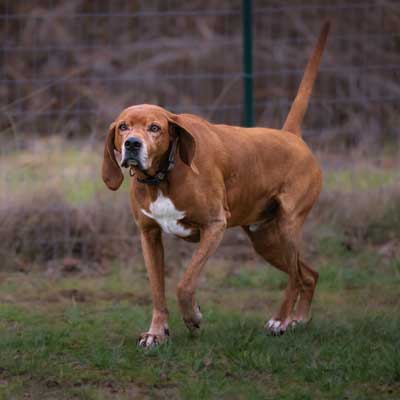
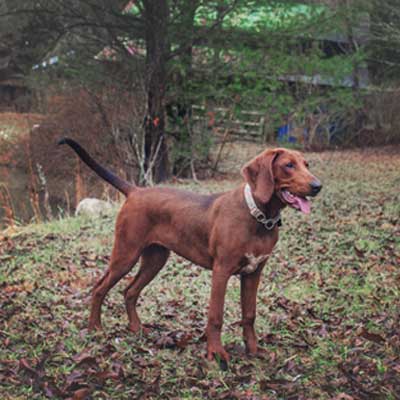
The Redbone coonhound is a medium to large athletic dog with a strong, balanced frame built for endurance and agility. When sunlight hits their deep red coat, it gleams like burnished copper, and those long, velvety ears and twitching nose seem to take in every sound and scent around them. Friendly, eager and endlessly curious, they carry themselves with the easy confidence of a dog who loves to work and live with humans.

Appearance and Physical Traits

The Redbone coonhound looks every bit the part of a classic American hunting dog: athletic, sleek and unmistakably red. Their balanced build and confident stance hint at the endurance and enthusiasm that make them such capable companions both in the field and at home.

Physical TraitTrait Details
Breed SizeMedium to Large
CoatShort, smooth and shiny
ColorsSolid red, occasionally with small white markings on chest or feet
Tail and EarsLong tail tapering to a fine point; broad, low-set, pendulous ears
Height21 to 27 inches (males are taller)1
Weight45 to 70 pounds (males are heavier)1
Life Expectancy12 to 15 years1

Temperament and Personality

The Redbone coonhound is basically an extrovert wrapped in red fur. This isn’t a one-human dog; they're social butterflies disguised as coon dogs. Redbones thrive on belonging to every person in a family, adore attention and tend to assume everyone (strangers included) is a friend.

With children, Redbones are affectionate and tolerant, often choosing to join in games rather than supervise. Strangers are usually greeted with tail wags, not suspicion. Aggression is rare in this breed; they’d rather charm than confront, but their deep bark can make them sound like a bodyguard.

Their nose rules their brain. Once a scent catches them, they typically forget the concept of “come back here.” It’s not disobedience; it’s biology. They were bred to track game for miles, and they’ll happily do the same for a squirrel or yesterday’s dinner crumbs.

Around other pets, early socialization is key for Redbones, whose prey drive is high. They can coexist peacefully with cats if raised together, but their chasing instinct may occasionally win out, so use your best judgment. Another fun fact: Redbones are vocal and are known for their haunting bay and tendency to “talk.”

When it comes to mischief, you can just call it “creative curiosity.” Redbones don’t destroy for fun, but they can be quite inventive in the pursuit of snacks, especially if they're bored or under-exercised. Occupational hazards of the Redbone include counter surfing, sock relocations and an innocent “Was that wrong?” face. Remember a tired Redbone is a happy Redbone.

Personality and Temperament Trait Scale

Traits are on a scale of 1 to 5, with 1 being the least and 5 being the most.

Personality TraitTrait Scale
Energy Level4 - High Energy
Prey Drive4 - High Drive
Drooling2 - Low Drooling
Shedding3 - Moderate Shedding
Coat Maintenance2 - Low Maintenance
Barking5 - Extremely Vocal
Social Tendencies4 - Outgoing
Trainability3 - Moderately Trainable

Note: These rankings describe general tendencies. Dogs, like people, are individuals and their behavior and personality can vary based on genetics, environment, health, and training.

Lifestyle Compatibility

Before adopting any breed of dog, it's a good idea to speak to a veterinarian to determine if their health and care needs fit with your household, budget and lifestyle. Understanding common veterinary needs can also help you decide if they are a good fit for your home.

Best for: Active families, hikers, runners and anyone who enjoys being outdoors and doesn't mind a dog who bays.

Good with: Kids, friendly dogs and extroverted, active households. Always monitor children around dogs.

Less suitable for: Apartment-dwellers, people who dislike barking, people who do not have adequate time to train and exercise a dog daily.

Exercise Needs and Appropriate Activities

Redbones need daily activity. It's not optional, and ideally, it is outdoors. Aim for at least 60 minutes a day of movement, alternating walks, hikes, long, slow jogs and sniff-heavy games.

Redbones are endurance athletes, not sprinters, built to cover ground at a steady trot for hours. They also enjoy swimming. Off-leash time should always be in secure, fenced areas, since their tracking instinct can override even the best recall training. Fetch and agility can also be fun, but the real joy for a Redbone lies in following a scent trail or exploring new terrain.

Variety matters to this breed: scent-related mental stimulation keeps their brilliant noses and curious minds satisfied. You might even choose to help them obtain certification in FEMA Urban Search and Rescue and/or Wilderness Search and Rescue as a fulfilling activity.

Exercise for Redbone puppies should focus on controlled, age-appropriate play that strengthens muscles without straining joints. Several short play sessions a day on soft ground is ideal. Avoid long runs or repetitive high-impact activity until their skeletons have matured (usually around 18 to 24 months). 

Training

Training a Redbone coonhound takes patience, structure and a sense of humor. They’re smart and eager to please, but their nose is the final boss you have to defeat (or better, join forces with). Regular variety, short sessions and positive reinforcement work best; never use harsh corrections.

Redbone puppies are bold and curious, so early socialization is vital. Introduce them to new people, dogs and settings from 8 to 16 weeks to build confidence. Teach leash manners, crate training and basic cues early, as these form the foundation for good behavior later.

Start cooperative care training early: handling paws, ears, looking in their mouths and nail trims. This will keep grooming and vet visits stress-free. Recall, impulse control and calm behavior around distractions are essential skills and may take some time to build. During the teenage stage (8 to 18 months), they’ll test limits and “forget” commands. Stay consistent, keep sessions short, mix mental and physical work, like scent games or basic tracking, and this, too, shall pass. With calm leadership and daily practice, a Redbone grows into a polite, confident partner who listens almost as intently as they follow their nose. Almost.

Health and Wellness

Redbone coonhounds are generally healthy, but like all dogs, they're at risk of dental disease and obesity. Keeping them at a healthy weight, good nutrition, good oral care and preventive regular veterinary care go a long way in supporting their overall health.

Potential Health Issues

Ear infections: The long, floppy ears of a Redbone coonhound trap moisture and debris, which can predispose them to external ear infections. Signs to seek veterinary attention include ear redness, debris, odor or excessive head shaking. Regular at-home ear inspections are essential, but do not treat them unless recommended by your vet.

Developmental joint disorders: Hip and elbow dysplasia is common in large-breed dogs; early screening, appropriate nutrition and exercise in growing dogs, maintaining a lean body condition and treating orthopedic issues early all support healthy joint development.

Coonhound paralysis: An immune-mediated nerve disorder sometimes seen in Redbone coonhounds, coonhound paralysis causes sudden weakness or paralysis after exposure to raccoons. With early supportive care and physical therapy, most affected dogs recover over several weeks.4

Masking: Redbone coonhounds have strong hound instincts that push them to go until they drop. Pet parents should stay alert to subtle changes in recall, performance or stamina, since their drive to track can mask signs of pain, sickness or vision loss.

Grooming Needs

Redbones are generally low-maintenance in the grooming department. They shed a moderate amount year-round despite their short coats, so brush once or twice a week to remove loose hair and redistribute skin oils. Bathe them as needed if dirty or stinky. Check their ears twice a week for redness or odor and, if your vet recommends, clean their ears after swimming. Trim their nails every 2 to 4 weeks or as needed, and brush their teeth daily with a dog-specific toothpaste to reduce plaque and tartar accumulation.

Is a Redbone Coonhound Your New Furry Friend?

Living with a Redbone coonhound is like sharing your house with a four-legged musician who believes every hour is open-mic night. They’re affectionate, energetic and always ready for adventure — or a nap, depending on the weather. Expect laughter, a few muddy pawprints and the occasional operatic "ar-rooooooooooo" when the inspiration strikes.

If you appreciate a curious nose, a velvet red coat and a voice that proudly announces every discovery, the Redbone coonhound may be the dog for you.

Resources For New Pet Parents

Get expert tips for a long and happy life with your new best friend.

New dog guide

Redbone Coonhound Dog Breed FAQs

The Redbone coonhound is known for their affectionate, loyal and people-oriented nature, which makes them an excellent companion for active families who enjoy outdoor time and consistent interaction.

The Redbone coonhound does best with daily physical and mental stimulation and typically needs at least 60 minutes of structured exercise, such as long walks, hiking or scent-based games.

The Redbone coonhound is intelligent and capable but can be independent and scent driven, so they respond best to positive reinforcement, patience and consistent training methods.

With early socialization, the Redbone coonhound can coexist peacefully with other dogs, but a strong prey drive requires careful introductions with smaller animals.

The Redbone coonhound can adapt to apartment life if daily exercise needs are met, but they generally do best in homes with space to roam and regular opportunities to burn energy.

References

  1. American Kennel Club, “Redbone Coonhound Dog Breed Information,” Accessed November 2025, https://www.akc.org/dog-breeds/redbone-coonhound/.

  2. United Kennel Club, “Breed Standards: Redbone Coonhound,” Accessed November 2025, https://www.ukcdogs.com/redbone-coonhound.

  3. American Redbone Coonhound Association. Accessed November 10, 2025, https://www.archa.us/.

  4. Cummings, J. F., D. C. Haas, “Coonhound paralysis. An acute idiopathic polyradiculoneuritis in dogs resembling the Landry–Guillain–Barré syndrome,” Journal of Neurological Sciences 4, no. 1 (1966): 51–81. https://doi.org/10.1016/0022-510x(67)90058-5.

Dr. Sarah Wooten Dr. Sarah Wooten

Dr. Sarah Wooten graduated from UC Davis School of Veterinary Medicine in 2002. A member of the American Society of Veterinary Journalists, Dr. Wooten divides her professional time between small animal practice in Greeley, Colorado, public speaking on associate issues, leadership, and client communication, and writing. She enjoys camping with her family, skiing, SCUBA, and participating in triathlons.