Treeing Walker Coonhound Dog Breed Guide

The treeing Walker coonhound is a dog who has rhythm in their stride and music in their voice. Sleek, powerful and built for the chase, this American-born athlete has a nose for adventure and a heart full of loyalty. At home, they’re charming and affectionate. On the trail, they’re all business: an opera-singing, marathon-running nose detective.

If you like a little quiet with your coffee but don’t mind if the rest of your day comes with sound effects, the treeing Walker coonhound will fit right into your world.

Energy Level

Energy Level

Prey Drive

Prey Drive

Drooling

Drooling

Shedding

Shedding

Coat maintenance / grooming needs

Coat maintenance / grooming needs

Barking

Barking

Social tendencies with people

Social tendencies with people

Trainability

Trainability

The Origins of the Treeing Walker Coonhound Dog Breed

The treeing Walker coonhound’s story starts in colonial America and is shaped by frontier life and rural tradition. Settlers arrived in Virginia and Kentucky and needed a dog that could track game across thick forests and rough hills, day or night. They already had foxhounds but needed a faster, more agile dog. The Walker comes from Thomas Walker, who crossed English foxhounds with Virginia hounds for increased endurance for speed, brains and a distinctive voice. One of his Walkers was bred with a hound of unknown origin named Tennessee Lead, creating the treeing Walker coonhound, fine-tuned to hunt raccoons instead of foxes.

Today, treeing Walker coonhounds are beloved not only by hunters but also by families who appreciate a clever, athletic and deeply affectionate companion.1,2

Group/classHound Group (AKC), Scenthound Group (UKC)
Club recognitionAmerican Kennel Club, United Kennel Club, National Kennel Club (NKC)
Instincts, function and purposeThe treeing Walker coonhound was bred to trail, chase and tree game using a powerful nose and a clear, ringing voice.
AdaptabilityTreeing Walker coonhounds are adaptable with enough exercise and mental outlets, but they thrive in active homes.
Breed standardsAKC Standard, UKC Official Standard

Nutrition for Treeing Walker Coonhounds

Treeing Walker coonhounds are athletic dogs with notable stamina that require precise nutrition to support their active lifestyles and long-term health. Because they often engage in high levels of exercise, they benefit from a complete and balanced diet that provides the energy needed for their daily demands while supporting overall recovery.

Maintaining lean muscle and a healthy skin and coat is a top priority for this breed. A precise balance of vitamins and minerals is also key; clinically proven antioxidants like Vitamins C and E help support a healthy immune system and cellular health. By choosing a reputable brand that provides these nutrients in the correct proportions, you can help support your treeing Walker coonhound’s health so they stay vibrant and active throughout their life.

Ingredients and Nutrients

The right ingredients make all the difference in keeping a high-energy breed like the treeing Walker coonhound in peak condition. When choosing their food, look for a complete and balanced formula featuring high-quality protein—like salmon, lamb or chicken—to help maintain lean muscle. To provide the energy needed for their active days, seek out recipes with carbohydrates from wholesome grains like cracked pearled barley or whole-grain corn.

For a healthy skin and coat, look for omega-6 fatty acids sourced from vegetable oils and chicken fat. Ingredients like fish oil provide the omega-3 fatty acids needed to help nourish their brain, joints and internal organs, while prebiotic fibers like fructooligosaccharides (FOS) or beet pulp work to help keep their digestion on track. Finally, balanced levels of calcium and phosphorus support the bone and joint strength this active breed depends on, helping ensure your dog is ready for every adventure.

Life Stage Considerations

Puppies

Growing treeing Walker coonhound puppies need controlled levels of calcium and phosphorus to support healthy bone and joint growth. Protein is necessary for muscle growth, and DHA for healthy eye and brain development. Using a kitchen scale, feed measured portions of large-breed puppy food and avoid free-feeding (these puppies will eat like they’re prepping for a marathon). Talk to your vet about the best food for your puppy, how much to feed and the appropriate time to switch to an adult formula.

Adults

Adults need complete and balanced nutrition based on their activity level. Working dogs may have different energy needs than companion dogs that enjoy leisurely walks and naps on comfy couches. Smaller treeing Walker coonhounds sit on the cusp of medium and large breeds, but for nutritional and skeletal considerations, still feed them large-breed dog food, with your vet's OK.

Seniors

Senior treeing Walker coonhounds may benefit from extra joint and digestive support. Dog foods rich in antioxidants and omega-3 and omega-6 fatty acids support immune function, healthy aging and skin health, while added fiber in the form of prebiotics support digestion and nutrient absorption.

Weight Management and Joint Support

Obesity stresses joints and can cause secondary problems. If you have a treeing Walker coonhound that struggles with excess weight gain, your vet may recommend a therapeutic dog food formulated to support joints and a lean body condition. Ask your vet about food choices for your dog, how to determine a healthy body condition and daily calorie targets. Keep treats under 10% of total daily calories. Control portions by measuring meals with a kitchen gram scale.

Treeing Walker Coonhound Dog Breed Characteristics

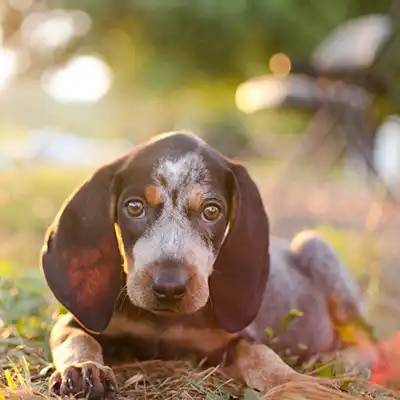
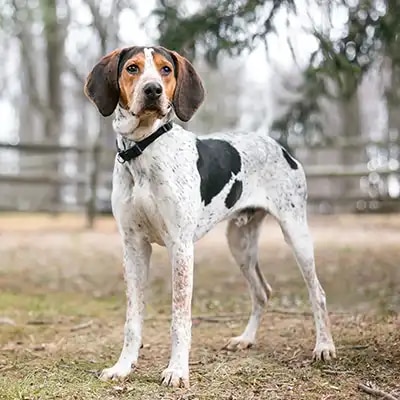
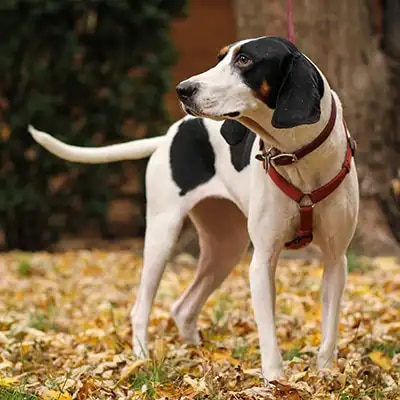
The treeing Walker coonhound embodies athletic grace. They move with smooth efficiency, every muscle built for endurance. Their black, white and tan coat is a nod to their foxhound ancestry. Their eyes glow with intelligence and their long, floppy ears frame a face that looks alert and endlessly good-natured.

Appearance and Physical Traits

The treeing Walker coonhound is a sleek, athletic dog built for endurance and agility. Their strong, balanced frame and glossy coat give them a polished, confident look that reflects their working heritage.

Breed OverviewBreed Information
Breed sizeLarge
CoatShort, smooth, glossy
ColorsTricolor (black, white, tan) or bicolor (white and tan)
Tail and EarsTail carried high with a slight upward curve; ears long, pendulous and low-set
Height20 to 27 inches (males are taller)
Weight50 to 70 pounds (males are heavier)
Life Expectancy12 to 13 years

Treeing Walker Coonhound Temperament and Personality Traits

Treeing Walker coonhounds are furry extroverts with an excellent sense of smell and a tendency to sing about anything they find interesting. Indoors, they'll follow you from room to room, checking that you haven’t lost your way.

Around children, they’re affectionate and patient, though their enthusiasm can sometimes be too much for small children. With proper training and socialization, they are gentle, loyal and playful. 

Treeing Walker coonhounds are typically open and good-natured with strangers and tend to greet visitors with friendly curiosity and confidence rather than suspicion.

Treeing Walker coonhounds are generally sociable and enjoy being with other dogs, especially when raised together. Their hunting background can make smaller pets more tempting to chase, but early, consistent socialization helps them understand household boundaries. A waft of squirrel or raccoon can turn a calm stroll into a detective sprint, though, so a secure, fenced yard is a must. 

They’re charming mischief-makers, too. Treeing Walker coonhounds are smart enough to open doors, steal snacks and look deeply offended when caught. You’ll need to stay one step ahead of this dog.

Personality and Temperament Trait Scale
Traits are on a scale of 1 to 5, with 1 being the least and 5 being the most.

Dog TraitTrait Scale Value
Energy Level4 (High Energy)
Prey Drive5 (Very High Drive)
Drooling2 (Low Drooling)
Shedding3 (Moderate Shedding)
Grooming needs2 (Low Maintenance)
Barking5 (Extremely Vocal)
Social tendencies with people 4 (Outgoing)
Trainability3 (Moderately Trainable)

Note: These rankings describe general tendencies. Dogs, like people, are individuals and can vary based on their training, genetics, health and environment.

Lifestyle Compatibility

Best for

Active families, runners, hikers and anyone who loves the outdoors.

Good with

Children, other dogs and people who enjoy musical canine conversation. Always monitor children around dogs.

Less suitable for

Apartment dwellers, people who prefer silence or low-activity homes.

Before adopting any breed of dog, it's a good idea to speak to a veterinarian to determine if their health and care needs fit with your household, budget and lifestyle.


Exercise Needs and Appropriate Activities

Treeing Walker coonhounds are curious, intelligent endurance athletes who need daily exercise and a variety of activities. Aim for 60-plus minutes of active movement each day. We're talking long walks, hikes, jogs or fetch sessions. They adore open spaces and love to run. They do best in well-fenced dog parks with plenty of space to move, ideally during less-crowded hours. 

Where treeing Walker coonhounds really shine is scent-based activities: tracking, nose work and hide-and-seek keep them engaged and fulfilled. Even non-hunting families can tap into their instincts by creating scent trails in the backyard or offering them a puzzle feeder or snuffle mat. They're also stars in agility, coursing and Fast CAT.

Because they’re sensitive to temperature and can overheat on long summer runs, stick to early morning or evening exercise when it's hot outside. Don’t forget to provide water on long runs — a coonhound’s scent drive is so intense they may forget to hydrate themselves.  

Treeing Walker coonhound puppies are curious explorers. Offer short, gentle play and socializing sessions several times a day, allowing time for them to rest between. Avoid long runs or jumping while joints are still developing.

Training

Treeing Walker coonhounds are bright, motivated and sometimes single-minded. They respond best to short, reward-based sessions with treats or praise. Harness their scent drive by channeling their tracking instincts into games or structured nose work. When they’re allowed to use their superpower constructively, they become calmer, more well-behaved companions.

Socialization should begin early and include introductions to all kinds of people, other dogs (as soon as the vet says okay) and varied sounds, sights, textures and environments. Cooperative care training is a must. Get them comfortable early with brushing, ear and mouth inspections, nail trims and gentle restraint. Praise them for calm participation and use plenty of rewards. It will save you and the veterinary staff from loud wrestling matches later.

Treeing Walker Coonhound Health and Wellness

The treeing Walker coonhound is overall an impressively healthy breed. Like all breeds, they're at risk of dental disease and obesity. Their large frames present a few additional health concerns. Keeping them at a healthy weight and providing complete and balanced nutrition, good oral care and regular veterinary care go a long way in supporting a healthy life.

Potential Health Issues

Ear infections

The long, floppy ears of a treeing Walker coonhound trap moisture and debris, which can predispose them to external ear infections. Ticks like to hide in and behind ears, so be sure to check after time in the wilderness and talk to your vet about flea and tick prevention. Signs to seek veterinary attention include ear redness, debris, odor or excessive head shaking. Regular at-home ear inspections are essential (but don't clean them unless directed to by your vet).

Developmental joint disease

Hip and elbow dysplasias are common in large-breed dogs; early screening and appropriate nutrition and exercise in growing dogs, maintaining a lean body condition and addressing orthopedic issues early all help support healthy joints.

Coonhound paralysis

An immune-mediated nerve disorder sometimes seen in treeing Walker coonhounds, this paralysis causes sudden weakness or stiffness after exposure to raccoons. With early supportive care and physical therapy, most affected dogs recover over several weeks.

Masking

Because treeing Walker coonhounds have strong hound instincts that push them to go until they drop, pet parents should stay alert to subtle changes in recall, performance or stamina since their drive to stay on the scent trail can mask signs of pain, illness or loss of vision.

Grooming Needs

Treeing Walker coonhounds have refreshingly low-maintenance grooming needs. Their short, shiny coat needs a quick brush once or twice a week to remove loose hair and dirt. Bathe as needed — only if they are stinky, muddy or otherwise dirty. Check their ears weekly for redness, odor or debris (call your vet if you witness these), trim their nails every two to four weeks or as needed and brush their teeth daily.

If your treeing Walker coonhound spends a lot of time with you in wilderness areas that contain ticks, fleas and other external parasites. Ask your vet about the best way to keep parasites off and out of your dog.

Is a Treeing Walker Coonhound Your New Furry Friend?

If you want a companion who’s athletic, clever and just the right amount of trouble, the treeing Walker coonhound is your dog. They’ll keep you laughing, moving and guessing what they smelled this time. Life with one isn’t quiet, but it’s also never boring. Just be ready for the day they outsmart your baby gate and come trotting back, proud as ever, with your pajama pants as evidence of a successful mission.

Resources For New Pet Parents

Adopt a pet. Change a life.

Pet adoption

Get expert tips for a long and happy life with your new best friend.

Dog Guide

Treeing Walker Coonhound Dog Breed FAQs

Yes, treeing Walker coonhounds are famously vocal. They use their deep, musical bark to communicate excitement, make announcements or narrate whatever just caught their attention.

Yes, treeing Walker coonhounds make affectionate and social family companions. They thrive on inclusion and enjoy being part of daily household life. Children and dogs should be supervised, no matter the breed.

Absolutely. Treeing Walker coonhounds are energetic dogs who need daily activity to stay content, focused and well-behaved.

Some treeing Walker coonhounds can live peacefully with cats if introduced early and supervised carefully. Their strong prey drive means boundaries must be taught and reinforced.

Treeing Walker coonhounds typically live 12 to 13 years with good nutrition, consistent exercise and regular veterinary care.

References

  1. American Kennel Club, “Treeing Walker Coonhound Dog Breed Information,” Accessed November 2025, https://www.akc.org/dog-breeds/treeing-walker-coonhound/

  2. United Kennel Club, “Breed Standards: Treeing Walker Coonhound,”  Accessed November 2025, https://www.ukcdogs.com/treeing-walker-coonhound

  3. Cummings, J. F. and D. C. Haas, “Coonhound Paralysis. An Acute Idiopathic Polyradiculoneuritis in Dogs Resembling the Landry-Guillain-Barré Syndrome,” Journal of the Neurological Sciences 4, no. 1 (1967): 51–81, https://www.sciencedirect.com/science/article/abs/pii/0022510X6790058