


Golden Retriever Breed Guide

The golden retriever consistently ranks in the top five of the American Kennel Club's (AKC) most popular breed rankings, and for good reason.1 Golden retrievers are loving, smart, athletic, and all around easy-going. Here's everything you need to know about one of America's favorite breeds of dog.

Energy Level

Energy Level

Prey Drive

Prey Drive

Drooling

Drooling

Shedding

Shedding

Coat maintenance / grooming needs

Coat maintenance / grooming needs

Barking

Barking

Social tendencies with people

Social tendencies with people

Trainability

Trainability

The History of the Golden Retriever

Golden retrievers were originally bred in Scotland as bird-hunting dogs in the mid-1800s, and many working dogs still perform those activities today. As the name implies, retrievers have a strong instinct to retrieve — they will willingly run, wade or swim to fetch prey and bring it back to the hunter.

Although they were popular as hunting dogs, golden retrievers didn't appear officially in a British dog show until 1908.1 Their attractive looks, desirable temperament and reliable hunting ability led to an immediate rise in popularity. It wasn't long before the breed made its way to the United States, where it became fashionable both as a pet and as a hunting dog.

Group/classSporting (AKC), Gun Dog (UKC)
Club recognitionAmerican Kennel Club, United Kennel Club
Instincts, function and purposeGolden retrievers were originally used for hunting and retrieving. Today, they also function as assistance dogs and companions.
AdaptabilityGolden retrievers are highly adaptable and trainable.
Breed standardsGolden Retriever Club of America Breed Standard, UKC Breed Standard3

Nutrition for Golden Retrievers

The nutritional needs of a golden retriever depend greatly on the dog's lifestyle. Many golden retrievers are family pets who hang out on the couch. Other golden retrievers are working dogs, hunting frequently with their owners. Many goldens also participate in sports such as agility, dock diving and most commonly, field trials. As a hunting breed, field trials mimic an actual hunt, allowing golden retrievers to follow their instincts of retrieving decoys from water, often as a competition, and are great exercise.4 This extreme variability in lifestyle means different nutritional needs.

It's important to have your veterinarian check your dog's weight during their regular visits to determine what their nutritional needs are. Canine athletes often have different calorie needs than a dog that is less active, but all goldens will benefit from a complete and balanced large-breed food. For non-athlete adult dogs, a weight management food may also be a good option if recommended by your vet. Every dog is different, even if they're the same breed. Your best resource to find the right food for your golden retriever is your vet.
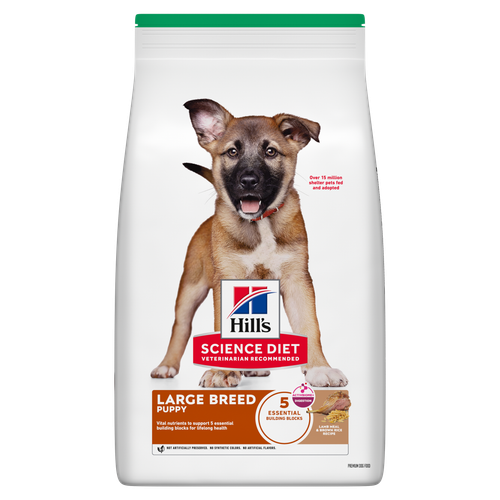
Ingredients and Nutrients

Feeding a complete and balanced food is the key to ensuring your dog is getting the nutrients they need. A food with omega-3 fatty acids from fish oil and omega-6 fatty acids will help support skin and coat health, as well as joint health. A complete and balanced dog food will include some type of protein; canine athletes may require a higher protein diet than pets.

Life Stage Considerations

Puppies

Golden retriever puppies will benefit from a complete and balanced puppy food to help them grow up into healthy adult dogs. A large-breed puppy formula is designed to support skeletal and joint health, since skeletal issues can be common in larger dogs.

Adults

Once your golden retriever reaches 12-18 months of age, they are considered an adult, even though they might not act like it. The switch from puppy food to adult food should occur over the course of a week to let your dog's digestive system adjust. Choose a food formulated for adult maintenance.

Seniors

Golden retrievers are considered senior at about 6 years old. Around this time, your vet may recommend switching to a senior dog food to help support a healthy weight and accommodate a slower metabolism.

Weight management

Maintaining an appropriate weight will support overall health in your golden retriever. Make sure to check with your vet about your dog's weight. If they need to lose a few pounds, your vet can guide you on a diet plan, which may include a weight control formula dog food.

To avoid unhealthy weight gain, always measure the amount you feed them on a kitchen gram scale, limit treats to 10% of the total daily calorie count and check your dog’s body condition monthly. Your veterinarian can help you determine a healthy weight for your dog and what food is best.

Golden Retriever Breed Characteristics

Golden retrievers continue to be one of the most popular breeds in the United States for a reason. Their golden coats match their sunny disposition; they seem to always be smiling and looking on the bright side of life. These intelligent, gentle-natured dogs thrive on human connection, making them an ideal choice as family pets, therapy dogs and fetch champions. Inside and out, golden retrievers shine bright wherever they go.

Appearance and Physical Traits

Golden retrievers are instantly recognizable with their shiny, lustrous coats that range from pale cream to deep red-gold. Their coats may be straight or slightly wavy, and they are often water repellent with a quality undercoat.5 They have an athletic build, expressive, friendly eyes and a feathered tail that seems to constantly be wagging.

Breed OverviewBreed Information
Breed SizeLarge
CoatDense, water‑repellent double coat with a thick undercoat and feathering on legs, chest and tail
ColorsVarious shades of golden, from light cream to deep gold
Tail and EarsTail is long and feathered, carried level with the back; ears are medium‑sized, pendant and set slightly above eye level
Height21.5 to 24 inches (males are taller)
Weight50 to 80 pounds (males are heavier)
Life Expectancy10 to 12 years

Golden Retriever Temperament and Personality Traits

Golden retrievers are perhaps best known for their stellar personalities. In terms of their usual temperament, these dogs have never met a stranger and have no enemies. Goldens are social butterflies, making friends with both dogs and humans wherever they go. They are smart as a whip, and their eagerness to please makes them easy to train. Their retrieving tendencies are often entertaining — you'll see them showing off their latest catch, from toys and balls to shoes, socks and sticks.

Personality and Temperament Trait Scale

Traits are on a scale of 1 to 5, with 1 being the least and 5 being the most.

Dog TraitTrait Scale Value
Energy Level4 (High Energy)
Prey drive3 (Moderate Drive)
Drooling2 (Low Drooling)
Shedding4 (High Shedding)
Grooming needs4 (High Maintenance)
Barking3 (Moderately Vocal)
Social tendencies with people5 (Extremely Social)
Trainability5 (Exceptionally Trainable)

Lifestyle Compatibility

Best for

Affectionate, active people who don't mind large amounts of dog hair.

Good with

Families, kids. Always monitor children around dogs.

Less suitable for

People with allergies, apartment dwellers

Before adopting any breed of dog, it's a good idea to speak to a veterinarian to determine if their health and care needs fit with your household, budget and lifestyle.

Exercise Needs and Appropriate Activities

Golden retrievers are easygoing, but they are still large dogs that require exercise. Plan on 1-2 hours of exercise daily. This could include daily walks, swimming, agility training and playtime with family. Playing fetch is in their DNA, so throwing a ball or toy and letting them retrieve is great exercise!

Training Tips

Golden retrievers respond best to rewards-based training. These dogs should never have any kind of vibrating or electric collar, as they sometimes can be very sensitive and stop learning. Most goldens are very sweet and eager to please — simply rewarding them for the correct behavior will typically have your golden trained quickly! Remember: treats are great, but a ball or toy can work as a reward, too.

Golden Retriever Health and Wellness

Golden retrievers are beautiful dogs with amazing personalities, but they are prone to a variety of health issues, some that can dramatically shorten their lives.

Potential Golden Retriever Health Issues

Allergies

Goldens are prone to both environmental and food allergies. These often show up as frequent ear infections, hair loss and skin infections. Of course, your local environment and exposure can affect the severity. Your vet is your biggest help at managing these clinical signs.

Cancer

Golden retrievers are very prone to many types of cancer, the most common being hemangiosarcoma. While it's not yet known why this breed gets cancer so frequently, research is underway. The Morris Animal Foundation is currently studying 3,000 goldens over the course of their lives, with the hope to pinpoint the cause of their high cancer risk.

Arthritis

As they age, goldens are prone to developing arthritis secondary to hip dysplasia, elbow dysplasia or knee injuries. Keeping your dog a healthy weight will not prevent these (they are genetic), but it can help reduce the clinical signs.

Grooming Needs

There's no sugar coating it: golden retrievers shed a lot! The good news is they typically do not need to be professionally groomed. Brushing them at least 2-3 times a week (and daily during heavy shedding periods) at home is sufficient. The best tool for this is a fine-toothed comb that can reach the undercoat. The golden retriever coat was designed to keep them warm in the winter and cool in the summer, so simply brushing and combing with a bath every few months is all you need.

Is a Golden Retriever Your New Furry Friend?

If joy had a face, it would be that of a golden retriever. These dogs are highly rewarding, friendly and intelligent. They’re the kind of dog that greets you like you’ve been gone for years, even if you've just stepped out for five minutes. While there are sure to be rough patches (especially during the busy puppy phase), with patience and love, you'll have a great family member for years to come.

Resources For New Pet Parents

Adopt a pet. Change a life.

Pet adoption

Get expert tips for a long and happy life with your new best friend.

Dog Guide

Golden Retriever Dog Breed FAQs

As puppies, and until they reach about 5 years old, golden retrievers are very high energy! They require regular physical activity and mental stimulation. Once they start to calm down, they can be couch potatoes. This, of course, depends highly on the individual dogs.

No, goldens shed significantly. A person with dog allergies would likely not be comfortable around a golden retriever.

Many goldens have retrieving woven into their DNA, and they will naturally want to play fetch, or just bring you random items from around the house.

All dogs must be allowed to meet strange people and pets at their own pace, but goldens tend to love meeting old and new friends.

References

  1. American Kennel Club, “Golden Retriever Dog Breed Information,” American Kennel Club, accessed November 17, 2025, https://www.akc.org/dog-breeds/golden-retriever/.

  2. American Kennel Club, “Breeds by Year Recognized,” American Kennel Club, accessed November 17, 2025, https://www.akc.org/press-center/articles-resources/facts-and-stats/breeds-year-recognized/.

  3. Golden Retriever Club of America, “AKC Breed Standard — Golden Retriever Club of America,” Golden Retriever Club of America, accessed November 17, 2025, https://grca.org/about-the-breed/akc-breed-standard/.

  4. American Kennel Club, “About Retriever Field Trials,” American Kennel Club, accessed November 17, 2025, https://www.akc.org/sports/retrievers/field-trials/about/.

Dr. Karen Louis Dr. Karen Louis

Dr. Karen Louis owns her low stress veterinary clinic near St. Louis. When she's not helping dogs and cats live their best lives, she maintains her blog, VetChick.com, and is an award winning nature photographer.