Malamutes are large-breed dogs with powerful muscles, heavy bones and a cardiovascular system built for stamina. They thrive on complete and balanced food that supports joint health, lean muscle, a shiny coat and their energy needs.

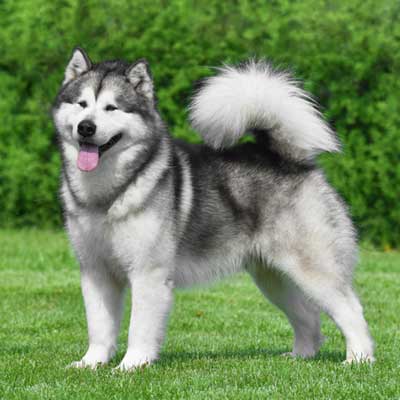
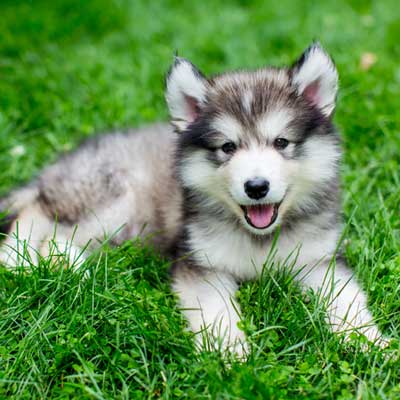
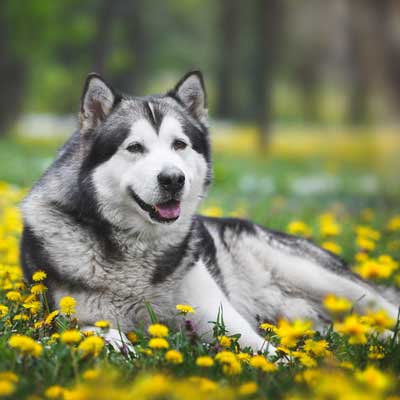
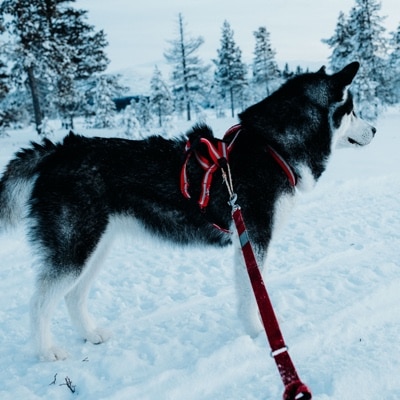
Alaskan malamutes look part snow bear and act like your best friend. These easygoing dogs are gentle giants: huge, fluffy and impressively unbothered by most of life's chaos. They were bred to pull heavy sleds, but are just as happy pulling your heartstrings or napping on the nearest cool floor.
Best for: Active pet parents who enjoy outdoor adventures, hiking or cold-weather sports.
Less suitable for: Apartment dwellers, hot climates or sedentary lifestyles.

Energy Level

Prey Drive

Drooling

Shedding

Barking

Trainability
The Alaskan malamute is one of the oldest Arctic sled dogs. It is thought that the ancestors of the Alaskan malamute crossed the Bering Strait, where the indigenous Inuit people of Alaska further developed the dogs. For centuries, these dogs hauled heavy freight across vast frozen landscapes, helping ancient humans survive in extreme conditions. Their strength, courage and stamina made them invaluable partners for hunting and travel.1
Arctic explorers and gold miners arrived in Alaska in the late 1800s and came to rely on Alaskan malamutes for transportation and survival. To keep up with demand, different dog breeds were bred with native sled dogs, almost destroying the breed. Thankfully, the indigenous Mahlemut people preserved the breed, and modern Alaskan malamutes remain a faithful reflection of their ancestors.1
| Breed Attribute | Attribute Details |
|---|---|
| Group/Class | Working Group (AKC), Northern Breed Group (UKC) |
| Club Recognition | American Kennel Club, United Kennel Club |
| Instincts, function and purpose | Alaskan malamutes were originally bred to haul freight and people across vast frozen landscapes. |
| Adaptability | Today, malamutes are celebrated for their strength, beauty and affectionate temperament. They do well with active families in cool climates. |
| Breed standards | Alaskan Malamute Club of America Standard, United Kennel Club Standard |
Malamutes are large-breed dogs with powerful muscles, heavy bones and a cardiovascular system built for stamina. They thrive on complete and balanced food that supports joint health, lean muscle, a shiny coat and their energy needs.
Look for a complete and balanced dog food that will provide your Alaskan malamute with all the nutrients they need and the right amount of energy to suit their lifestyle. Malamutes may benefit from foods enriched with omega-6 fatty acids to support their skin and coat, prebiotics with balanced fiber to support healthy digestion, and omega-3 fatty acids to support their brain and joints. Balanced minerals such as calcium and phosphorus contribute to strong bones.
Browse Our Products


Puppies: Large-breed puppies need to eat a large-breed puppy food with the proper ratio of calcium and phosphorus to support healthy skeletal growth. Talk to your veterinarian about when to transition your dog from puppy food to adult dog food.
Adults: Adult malamutes benefit from food that supports mobility and lean condition. This breed often has a slower metabolism than owners expect, so light foods — lower in calories, higher in fiber — are often recommended to keep them lean. Avoid offering supplements unless directed by your vet.
Seniors: Senior malamutes need food that supports a healthy metabolism and healthy joints to avoid weight gain. A complete and balanced food should contain everything your dog needs in most cases. Because malamutes are large and can be prone to obesity if under-exercised, work with your vet to determine daily calorie targets and help you learn how to monitor their body condition. If your dog struggles with excess weight, ask your vet about therapeutic weight management dog food. Keep treats under 10% of daily calories and measure meals carefully. Using a kitchen scale to ensure correct amount is the ideal.
Beneath the wolf-like appearance of the Alaskan malamute lies a grounded, affectionate companion who thrives on teamwork and shared adventure. Built for endurance and connection, the malamute brings both strength and spirit to every corner of family life.
The Alaskan malamute is large, solid and unmistakably northern in design. Thick fur, upright ears and a fluffy, plumed tail reflect the breed’s heritage as a cold-weather worker built to endure harsh climates and long days of travel.
| Physical Trait | Trait Details |
|---|---|
| Breed size | Large (there are some giant Alaskan malamutes, but they do not qualify for the breed standard)1 |
| Coat | Thick, double coat with coarse outer guard hairs and dense undercoat1 |
| Colors | Gray, sable, black or red with white face, legs and belly1 |
| Tail and Ears | Plumed tail carried over the back, erect triangular ears1 |
| Height | 23 to 25 inches (males are taller)1 |
| Weight | 75 to 85 pounds (males are heavier)1 |
| Life Expectancy | 10 to 14 years |
The Alaskan malamute is a calm, friendly and affectionate giant who tends to see everyone as part of their extended pack. They bond deeply with families rather than individuals, spreading their loyalty evenly among all members of the household. They’re happiest when they are included in daily life, and they don’t like being left out of the action, especially if food is involved.
When they are well socialized, malamutes are confident and even-tempered. They meet most strangers with polite curiosity and a chill tail wag rather than suspicion, though their size can make even their warmest greetings seem imposing. They are not ideal watchdogs, as their instinct leans toward companionship, not confrontation.
Although their wolf-like looks might suggest they are an intense dog, in general, malamutes are gentle, playful and patient. They’re known for “talking” with a signature woo-woo vocalization that sounds more like conversation than barking. Aggression is rare in well-socialized malamutes, but they do have a healthy prey drive. Many malamutes will chase small animals if they are given the chance, and off-leash freedom is risky unless in a securely fenced area. Malamutes typically coexist peacefully with other dogs but can be selective, which makes early socialization important.
Due to their sled dog heritage, malamutes have a strong instinct to pull and dig. Don’t fight it; channel it. Give them a pulling job (like a weighted harness walk or pulling a cart) and a designated dig-zone in the yard.
Alaskan malamutes are built for the cold and absolutely thrive in it. Their dense double coat, thick skin and slow metabolism make them happiest when the air is crisp and the ground is frosty. You’ll often find them sprawled upside down in the snow with a look of pure joy on their face.
Traits are on a scale of 1 to 5, with 1 being the least and 5 being the most.
| Physical Trait | Trait Details |
|---|---|
| Energy Level | 5 - Very High Energy |
| Prey Drive | 4 - High Drive |
| Drooling | 1 - Minimal Drooling |
| Shedding | 5 - Very High Shedding |
| Coat Maintenance | 4 - High Maintenance |
| Barking | 3 - Moderately Vocal |
| Social Tendencies | 3 - Balanced |
| Trainability | 2 - Somewhat Difficult |
Note: These rankings describe general tendencies. Dogs, like people, are individuals and their behavior and personality can vary based on genetics, environment, health, and training.
Before adopting any breed of dog, it's a good idea to speak to a veterinarian to determine if their health and care needs fit with your household, budget and lifestyle. Understanding common veterinary needs can also help you decide if they are a good fit for your home.
Best for: Active pet parents who enjoy outdoor adventures, hiking or cold-weather sports.
Good with: Families who include their dogs in daily life and training. Always monitor children around dogs.
Less suitable for: Apartment dwellers, hot climates or sedentary lifestyles.
Malamutes need at least 60 to 90 minutes of daily physical and mental activity. They were bred to work all day, and under-exercised dogs may develop undesirable habits like chewing, digging or escaping. Ideal activities include things that are done at a brisk walk: hiking, skijoring, cart pulling and backpacking. Puppies should avoid high-impact exercise until they are finished growing to allow for normal skeletal growth.
Mental exercise keeps boredom at bay, so keep their minds stimulated with puzzle toys, trick training, scent games and low-impact pulling activities. Ten minutes of scent work after a run keeps them calmer than another jog. A tired malamute is a happy one.
Malamutes are intelligent, strong-willed and sometimes a little too smart for their own good. They love learning but prefer to believe that every idea was theirs in the first place. Successful training with this breed relies on patience, a good sense of humor and teamwork.
For best results, start early with positive reinforcement and plenty of socialization. Introduce name recognition, sit, stay, down, and loose-leash walking while they’re still small enough not to pull you into next week. Consistency matters more than intensity. Keep sessions short, upbeat and purposeful, and always end on a win.
Because pulling is in their DNA, teaching leash manners from puppyhood is essential. Use a no-pull harness designed for large breeds, reward calm walking and make direction changes part of the fun. Expect to practice often, and for polite leash walking skills to take a while to perfect. Remember, malamutes were bred to haul freight, and old instincts die hard.
Crate training should focus on calm comfort, not confinement. Make the crate a safe, cozy den and never use it as punishment. Malamutes dislike being isolated for long periods, so balance alone time with family involvement.
Adolescence is the test phase for malamutes. Between 6 and 18 months, many of these dogs experiment with leadership, selectively obeying commands or pretending they can’t hear you. Stay calm, consistent and fair. This breed has a long memory, and if training turns harsh, they remember. Keep sessions positive and short or they may decide they have better (and more destructive) things to do.
Malamutes are generally healthy. But there are some breed-specific conditions to be aware of, so ask your vet about preventive care, which, along with good nutrition, goes a long way in promoting long-term health.
Hip and elbow dysplasia: Developmental joint disorders are common in large-breed dogs. Help support healthy joints by feeding an appropriate large-breed puppy food during growth, keeping dogs lean and avoiding high-impact exercise until they are fully grown.2,3
Inherited polyneuropathy: This is a rare neurologic condition that causes progressive weakness and paralysis; early screening is available.4
Hypothyroidism: Malamutes have a higher incidence of hypothyroidism, a hormonal disorder that causes weight gain, hair coat changes and low energy. This can be managed with medication.5
Cataracts: Heritable cataracts have been noted in malamutes, causing loss of vision. Early screening in puppies and yearly ophthalmic examinations help with early detection and treatment if needed.6
Day blindness: A heritable eye condition that results in poor vision in daylight. Genetic testing is available.7
The Alaskan malamute’s coat is a marvel of Arctic design. Shedding happens year-round, but twice a year they “blow” their coat — expect enough fluff to knit a second dog. Brush malamutes several times a week to remove loose hair, prevent mats and redistribute skin oils. During coat-blow season, brush daily, and do yourself a favor and have them professionally groomed. Malamutes are typically clean dogs and only need baths if they are dirty. Rinse them thoroughly to avoid soap residue, which can cause odor and irritate their skin.
Check their ears weekly, trim their nails every 3 to 4 weeks, and brush teeth daily with enzymatic toothpaste. They will need a dental cleaning under anesthesia by a vet once a year. Start grooming young and reward calm behavior to make it a pleasant ritual. Never shave a malamute’s coat; it damages their natural insulation.
Malamutes are equal parts sweet and strong. They're affectionate toward their people and enjoy cuddles on the couch just as much family playtime. Before adopting one, make sure your lifestyle is a good fit for their energy. A happy, well-loved malamute will fill your life with both devotion and laughter.
Yes, Alaskan malamutes are generally wonderful family dogs when they’re socialized early and supervised around small children. Their affectionate, tolerant nature makes them patient playmates, but their large size can lead to accidental bumps, so teach gentle manners. Always monitor children around dogs.
Most Alaskan malamutes enjoy the company of other dogs, especially those they’ve grown up with.
Alaskan malamutes are not excessive barkers, but they do love to “talk” using their famous woo-woo sounds.
An Alaskan malamute thrives on at least 60 to 90 minutes of physical and mental exercise each day, ideally split between outdoor adventures and brain games.
An Alaskan malamute thrives on at least 60 to 90 minutes of physical and mental exercise each day, ideally split between outdoor adventures and brain games.
American Kennel Club, “Alaskan Malamute Breed Standard,” https://images.akc.org/pdf/breeds/standards/AlaskanMalamute.pdf.
Amandine Baldinger et al., “Prevalence of canine hip dysplasia in 10 breeds in France, a retrospective study of the 1997-2017 radiographic screening period,” PLOS, 2020.
Roels, J., J. P. Genevois, M. Fostier-Humbert, C. Porsmoguer, M. Blondel, G. Chanoit, D. Fau, and T. Cachon, “Prevalence of elbow dysplasia in 13 dog breeds in France: a retrospective radiographic study (2002-2022).” American Journal of Veterinary Research 85, 2024, https://doi.org/10.2460/ajvr.23.12.0290.
Bruun C.S., Jäderlund K.H., Berendt M., Jensen K.B., Spodsberg E.H., Gredal H., et al, “A Gly98Val Mutation in the N-Myc Downstream Regulated Gene 1 (NDRG1) in Alaskan Malamutes with Polyneuropathy.” PLOS ONE, 2013.
O’Neill, D. G., A. P. Brodbelt, D. B. Church, and C. P. Moore, “Epidemiology of Hypothyroidism among 905,553 Dogs Attending Primary-Care Veterinary Practices in the UK,” Canine Genetics and Epidemiology 9, 2022, https://doi.org/10.1186/s40575-022-00123-8.
Ricketts, Sally L., Saija Ahonen, Louise Pettitt, Jamie Freyer, Stuart Ellis, Christopher A. Jenkins, Maria Kaukonen, Mike Boursnell, Ellen Schofield, Oliver P. Forman, Hannes Lohi, and Cathryn S. Mellersh, “Common Variants in the CPT1A Gene Are Associated with Cataracts in Northern Breeds of Domestic Dog,” PLOS, 2025, https://doi.org/10.1371/journal.pone.0320878.
Sidjanin, D. J., J. K. Lowe, J. L. McElwee, B. S. Milne, T. M. Phippen, D. R. Sargan, G. D. Aguirre, G. M. Acland, and E. A. Ostrander, “Canine CNGB3 Mutations Establish Cone Degeneration as Orthologous to the Human Achromatopsia Locus ACHM3," Human Molecular Genetics 11, 2022 https://doi.org/10.1093/hmg/11.16.1823.

View Related Breeds