Saint Bernard Dog Breed Guide

When you think of a Saint Bernard, many people visualize a large dog high up in the mountains with a small barrel around their neck, looking for people to rescue. This image is actually not far from their true roots! Today, Saint Bernards are beloved pets more than mountaineers, but many still draw on their original instincts as working dogs.

Best for: Large-dog aficionados who love a fun dog, moderate energy and a good time; pet parents with experience training large dogs.

Less suitable for: Small homes and apartments; people who cannot stand drool or messes.

Energy Level

Energy Level

Prey Drive

Prey Drive

Drooling

Drooling

Shedding

Shedding

Barking

Barking

Trainability

Trainability

The Origins of the Saint Bernard

Saint Bernards date back to the year 1050.1 Monks in the mountainous Alpine area that is now Switzerland originally bred the Saint Bernard to help rescue tired travelers making the pilgrimage to Rome. They were bred at the monastery and hospice that was named after the founder, Bernard de Menthon. When travelers were lost or injured, a Saint Bernard would use their incredible sense of smell to find a person under a snow drift and help them to safety.

Saint Bernards were not bred outside of the hospice until 1855.2 They were recognized by the American Kennel Club in 1885.

Breed AttributeAttribute Details
Group/ClassWorking Group (AKC), Guardian Dog Group (UKC)
Club Recognition American Kennel Club, Saint Bernard Club of America, United Kennel Club
Instincts, Function, and PurposeMost today are bred to be family pets, although they were originally bred for tracking and rescue.
AdaptabilitySaint Bernards are trainable, smart and quick to learn.
Breed StandardsUKC Official Standard, Saint Bernard Club of America Official Standard

Nutrition for Saint Bernards

Saint Bernards are a giant breed dog and require complete and balanced dog food formulated to support their unique needs. While these gentle giants consume more food than smaller dogs, it's important to ensure portion control by using a kitchen scale to weigh their meals.

Nutrients

Look for a complete and balanced dog food that will provide your Saint Bernard with all the nutrients they need. Saint Bernards may benefit from foods enriched with omega-6 fatty acids to support their skin and coat, prebiotics to support healthy digestion and omega-3 fatty acids to support their brain, joints and kidneys.

Life Stage Considerations

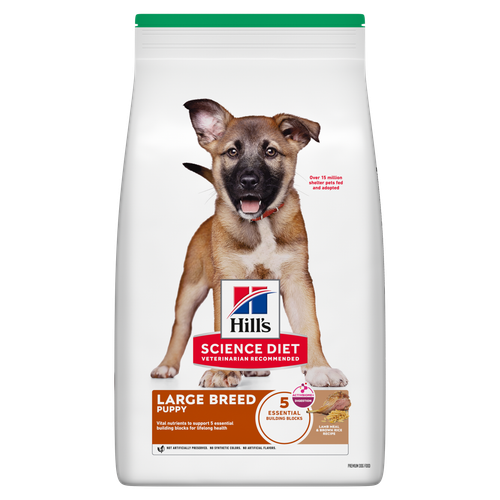
Puppies: Saint Bernard puppies grow very quickly. To help them grow at a healthy pace and support healthy joint and bone development, a large-breed puppy food is very important. Balanced calcium and phosphorus levels are critical at this stage, Many large-breed puppy foods have balanced levels of nutrients to promote healthy muscle and joints.

Adults: When your Saint Bernard reaches up to two years of age, they are considered an adult. Your vet can help you figure out the best time to transition. The process usually takes over a week, moving from large-breed puppy food to a large-breed adult dog food. These formulas can help maintain lean muscle.

Seniors: Saint Bernards are considered "senior" at about 6 years old. Some senior dog foods, especially for large-breed dogs, may contain fish oil to support brain, joint and kidney health.

Weight management: Saint Bernards are not overly active and are prone to weight gain if they are overfed. If your Saint Bernard needs to shed some pounds, your veterinarian can help you determine if therapeutic nutrition is right for your dog.

Saint Bernard Dog Breed Characteristics

Saint Bernards are, of course, large! But they are sweet, sometimes comical and can get along with people and pets. They do require a bit of care, both mentally and physically, to maintain good health. They are certainly not a breed for everyone, but those who have them love them fiercely.

Appearance and Physical Traits

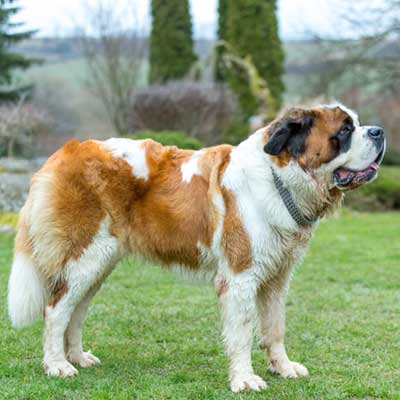
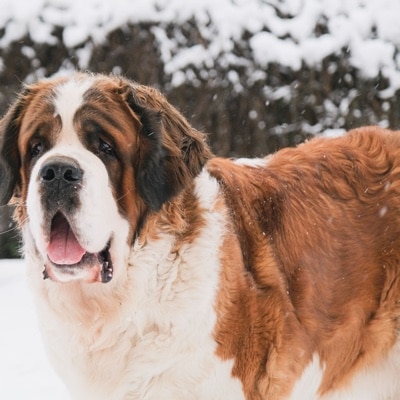
Because of their large jowls, Saint Bernards drool.  Their short coat and canine-walrus body make for an ideal snowy-climate companion. Their medium-sized ears, mighty paws and overall bulk earn them descriptions like "imposing," according to the AKC.

Physical TraitsTrait Details
Breed SizeLarge to Giant
CoatDense but short and smooth
ColorsVariations of brown/orange and white
Tail and EarsTail very heavy with powerful tip; ears medium and high-set with tender flap
Height26 to 30 inches (males are usually taller than females)
Weight120 to 180 pounds (males are usually heavier than females)
Life Expectancy8 to 10 years3

Saint Bernard Temperament and Personality Traits

Saint Bernards love their people and can warm up to strangers quickly. They are not the easiest to train, but it can certainly be done with consistency and patience. Saint Bernards can have a "class clown" personality and experiment with what silly things they can get away with. They mean well and are fun dogs who may not realize their size.

Personality and Temperament Trait Scale

Traits are on a scale of 1 to 5, with 1 being the least and 5 being the most.

Personality TraitTrait Scale
Energy Level2 - Low Energy
Prey Drive2 - Low Drive
Drooling5 - Very High Drooling
Shedding4 - High Shedding
Coat Maintenance4 - High Maintenance
Barking2 - Quiet
Social Tendencies4 - Outgoing
Trainability3 - Moderately Trainable

Note: These rankings describe general tendencies. Dogs, like people, are individuals and their behavior and personality can vary based on genetics, environment, health, and training.

Lifestyle Compatibility

Before adopting any breed of dog, it's a good idea to speak to a veterinarian to determine if their health and care needs fit with your household, budget and lifestyle. Understanding common veterinary needs can also help you decide if they are a good fit for your home.

Best for: Large-dog aficionados who love a fun dog, moderate energy and a good time; pet parents with experience training large dogs.

Good with: People of all ages, other dogs, kids. Always monitor children around dogs.

Less suitable for: Small homes and apartments; people who cannot stand drool or messes.

Exercise Needs and Appropriate Activities

Saint Bernards are large dogs but they require surprisingly less exercise than one might expect. Of course, puppies and young dogs need to run, play and get their energy out. But once they mature, Saint Bernards can hang out on the couch after a short walk. 

For organized activities, Saint Bernards can be trained to pull carts in competition — or simply pull the kids in a wagon around the block. Saint Bernards also can enjoy agility and obedience work. Try a few activities and see what clicks with your Saint Bernard.

Training

Saint Bernards can be either food- or praise-motivated, and clicker training tends to work particularly well for this breed. Positive reinforcement and consistency are also key to you and your Saint Bernard understanding each other.

Saint Bernard Health and Wellness

While breed standards provide a guide, remember that personality, physical traits, and health status are affected by many factors and vary within the same breed.

Saint Bernards are generally healthy, but their giant size makes them prone to certain conditions. Complete and balanced nutrition, regular veterinary exams, and weight management all support long-term wellness.

Potential Health Issues

Orthopedic problems and arthritis: Saint Bernards are prone to developmental joint disorders, including hip and elbow dysplasia. A high-quality breeder will screen their dogs to identify these conditions early. Maintaining a healthy weight is one of the best ways to help manage clinical signs and support joint health. To ensure accuracy, always measure the amount you feed them on a kitchen gram scale. If your dog is struggling with weight, your vet may recommend therapeutic nutrition.

Heart disease: Another potentially inherited disease is a specific heart disease called dilated cardiomyopathy. This condition can shorten a dog's life; therefore, it is vital to work with a responsible breeder who performs cardiac health screenings.

Osteosarcoma: Saint Bernards may be prone to an aggressive bone cancer called osteosarcoma. This painful disease typically affects the limbs. Early detection through regular veterinary exams is essential to improving outcomes and maintaining quality of life.

Grooming Needs

Saint Bernards will benefit from regular brushing, and many enjoy it. Brushing your fluffy kiddo is usually a good outdoor activity. Fortunately, many Saint Bernards don't need their hair cut or trimmed, except sometimes on the paws or if they happen to mat. Saint Bernards need regular nail trims. Large dogs have thick nails, so a large, strong nail trimmer would be a good and well-used investment.

Is a Saint Bernard Your New Furry Friend?

Saint Bernards are sweet and loving but are not for everyone. Many pet parents of Saint Bernards realize they can't have just one and eventually become families of multiple Saint Bernards. The breed has a tendency to grow on people. Low energy requirements and a loving personality make Saint Bernards overall great pets.

Resources For New Pet Parents

Get expert tips for a long and happy life with your new best friend.

New dog guide

Saint Bernard FAQs

With their Alpine heritage, Saint Bernards thrive in cold weather. A climate that is hot and humid will not be enjoyable for a Saint Bernard, and outdoor activities will be more limited. Many are happy to hang out in the air conditioning during the summer. Cooler weather brings out the best in Saint Bernards, and many love to play in snow.

Because of their large size, many people are concerned about smaller pets with Saint Bernards. With proper monitoring and introductions, many Saint Bernards do well with smaller dogs and cats. It's common for the cat to be the boss of the Saint Bernard.

Yes, but not excessively. While their energy level is not overly high, these are big dogs, and a tiny apartment will feel cramped. Things will be knocked over with the tail — accidents happen. Saint Bernards sometimes don't know how big they are, but that trait is also endearing.

References

  1. American Kennel Club, "Saint Bernard History," Last modified 2021, https://www.akc.org/expert-advice/dog-breeds/saint-bernard-history-rescue-dogs-swiss/.

  2. Saint Bernard Club of America, "Saint Bernard Breed History," Last modified 2025, https://saintbernardclubofamerica.club/breed-history/.

  3. American Kennel Club, "Saint Bernard Information Page," Last modified 2025, https://www.akc.org/dog-breeds/st-bernard/.

  4. American Kennel Club, "Saint Bernard Official Breed Standard," Last modified 1998, https://images.akc.org/pdf/breeds/standards/SaintBernard.pdf.

Dr. Karen Louis Dr. Karen Louis

Dr. Karen Louis owns her low stress veterinary clinic near St. Louis. When she's not helping dogs and cats live their best lives, she maintains her blog, VetChick.com, and is an award winning nature photographer.