Kuvasz Dog Breed Guide

The kuvasz is a large, luminous guarding dog breed known for courage, intelligence and a presence that somehow feels both regal and grounded. Centuries of protecting livestock in the hills of Hungary gave the kuvasz its clever mind and composed strength, and those same qualities make them wonderful companions today.

If you've ever imagined sharing your home with a dog who seems to have stepped out of the pages of a fairytale and probably could talk if they wanted to, the kuvasz may be your knight in shining fur.

Energy Level

Energy Level

Prey Drive

Prey Drive

Drooling

Drooling

Shedding

Shedding

Coat maintenance / grooming needs

Coat maintenance / grooming needs

Barking

Barking

Social tendencies with people

Social tendencies with people

Trainability

Trainability

The Origins of the Kuvasz

During the late ninth century, the Magyar conquest of the Carpathian Basin marked the beginning of Hungary. These tribes were accompanied by pale, powerful dogs who later evolved into the kuvasz dog breed. Some speculative theories trace the ancestral roots of the breed back even further to Mesopotamia or Central Asia, possibly 5,000 to 7,000 years ago. 

These dogs guarded sheep, cattle and households, and their white coats allowed shepherds to distinguish them from wolves at a glance. The kuvasz name is derived from the Turkish word kavas, or guardian. Kuvasz were not only a working dog but also gifts of honor from the king of Hungary to his nobles.

 Even though the world has changed around them, the thoughtful, protective nature of the kuvasz remains intact. The kuvasz was recognized by the American Kennel Club (AKC) in 1931, and its standard is preserved by the AKC and the Kuvasz Club of America.1,2

Breed InfoBreed Details
Group/classWorking Group (AKC), Guardian Dog Group (UKC)
Club recognitionAmerican Kennel Club, Kuvasz Club of America, United Kennel Club
Instincts, function and purposeKuvasz dogs were developed to guard livestock. They watched, reasoned and acted independently when danger approached.
AdaptabilityKuvasz dogs do best with people who understand the nature of guarding breeds, respect their boundaries and can provide structure and routine.
Breed standardsUnited Kennel Club, Kuvasz Club of America Official Standard, American Kennel Club

Nutrition for the Kuvasz

Kuvasz dogs are large, athletic dogs who should eat a complete and balanced food that supports muscle maintenance, appropriate energy levels, weight management and long-term joint health. How much you feed a kuvasz is as important as what you feed them, so work with your veterinarian to determine daily calorie targets that will support a lean body condition. Measure meals with a kitchen scale and keep treats and pet-safe people food under 10% of their daily calories.

Ingredients and Nutrients

When choosing a food for your kuvasz, look for a complete and balanced recipe made with high-quality ingredients that deliver precise nutrition. To support their lean muscle, look for foods featuring high-quality protein sources like chicken, lamb or salmon. For that signature white coat and healthy skin, ingredients like vegetable oils and chicken fat provide essential omega-6 fatty acids, while fish oil offers omega-3 fatty acids to support their brain, joints and kidneys. To keep their digestion on track, look for prebiotic fibers from ingredients like fructooligosaccharides (FOS) or beet pulp. 

Finally, balanced minerals like calcium and phosphorus help keep their large-breed bones and joints strong, ensuring your kuvasz stays happy, healthy and active by your side.

Life Stage Considerations

Puppies

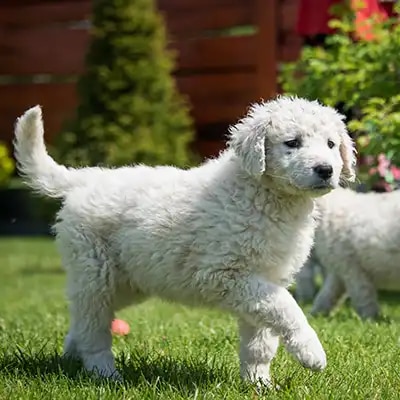
Kuvasz puppies grow quickly during the first year, transforming rapidly from a 10-pound puppy into a 100-pound juvenile adult. Avoid free-feeding and instead feed measured meals of a complete and balanced large-breed puppy food to support steady development of their long bones. Complete and balanced large-breed puppy formulas contain balanced levels of calcium, phosphorus and calories that promote healthy growth and development of big dogs.

Adults

Adult Kuvasz dogs benefit from consistent feeding routines and measured portions. Their large frames stay healthiest when they maintain a lean body condition. Regular body condition scoring, provided by your vet, can help determine if their food amount needs adjustment.

Seniors

Senior Kuvasz dogs may experience age-related changes in mobility and digestion. A senior-focused food that supports joint health, heart function and digestive comfort can help them enjoy their later years. Work with your vet to tailor a plan to your dog’s changing needs.

Kuvasz Dog Breed Characteristics

Living with a kuvasz feels a bit like sharing your home with an observant roommate who notices everything, from the sound of your shoes to the shift in the wind. Their broad chest, thick coat and expressive eyes make them look both strong and thoughtful at the same time. People often notice how quickly these dogs learn routines and how seriously they take their unofficial role as household protector, like a fluffy club bouncer.

Appearance and Physical Traits

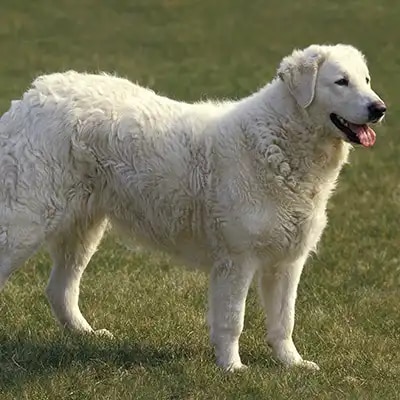
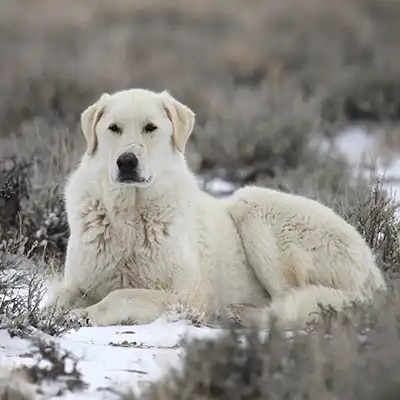
This breed is unmistakable. A kuvasz has a thick white double coat that insulates them in cold weather, a broad chest and strong limbs built for long hours of outdoor work. Their dark eyes are highly observant, and their expression is regal and calm. They produce a deep, far-carrying bark that reflects their guarding heritage. Their large size and striking white coat make the kuvasz stand out wherever they go.

Breed OverviewBreed Information
Breed SizeLarge
CoatDense double coat, straight or slightly wavy
ColorAlways white
Tail and EarsPlumed tail; V-shaped pendulous ears set high
Height26 to 30 inches (males are usually taller than females)
Weight75 to 115 pounds (males are usually heavier than females)
Life Expectancy10 to 12 years

Kuvasz Temperament and Personality Traits

A kuvasz quietly steps into family life with the confidence of a dog who's been watching over households for centuries. They bond with the whole family, although many form a special attachment to one person. Many will happily curl up beside you or place a big, reassuring head in your lap; but unlike clingy breeds, a kuvasz doesn’t want constant, physical contact. Instead, they choose moments of closeness based on trust and mood. 

Their protective instincts are proactive and hardwired, and they often position themselves where they can see doors and pathways. Aggression is not the default setting for a kuvasz, however, they are instinctively wary of strangers until proper introductions occur. Kuvasz dogs can interact safely with children when socialization, supervision and clear behavioral boundaries for kids and the dog are in place. 

Their prey drive is typically low to moderate, but movement from small animals can still draw their attention. Kuvasz dogs usually express mischief through subtle problem-solving, such as shifting items into new spots or opening a door so they can keep an eye on the rest of the house. Once a kuvasz decides you are their person, they become chill, low-drama guardians who keep the vibe without making a big deal about it.

Personality and Temperament Trait Scale

Traits are on a scale of 1 to 5, with 1 being the least and 5 being the most.

Dog TraitTrait Scale Value
Energy Level3 (Moderate Energy)
Prey drive/chase instinct3 (Moderate Drive)
Drooling4 (High Drooling)
Shedding4 (High Shedding)
Coat maintenance/grooming needs4 (High Maintenance)
Barking2 (Quiet)
Social Tendencies (affection toward family vs. strangers)2 (Slightly Reserved)
Trainability2 (Somewhat Difficult)

Lifestyle Compatibility

Best for

Rural or suburban homes, families who appreciate guard dog behavior, households with space and a secure yard.

Good with

Respectful children, calm dogs. Always supervise children around dogs.

Less suitable for

Apartments, homes with frequent visitors or people who want an off-leash dog park companion.

Before adopting any breed of dog, it's a good idea to speak to a veterinarian who can help you determine if the dog’s care needs fit with your home, budget and lifestyle.

Exercise Needs and Appropriate Activities

Kuvasz dogs have moderate exercise requirements and need about an hour of exercise each day. They enjoy walks, moderate hikes and opportunities to patrol their environment. Large, fenced yards or secure open space are their jam. They also need mental enrichment activities in the form of food puzzles, snuffle mats and other problem-solving games. 

Because a kuvasz likes to make its own decisions, give them jobs, such as stationing on a mat during mealtime or alerting you with a nudge when they hear the doorbell. 

Kuvasz puppies do best with short, controlled play sessions and gentle walks that protect their developing joints while still giving them room to explore and build confidence.

Training

Working with a kuvasz feels more like collaborating than commanding. They learn best in a calm atmosphere where instructions are offered with patience, and they stay engaged when the rewards are meaningful to them. 

Early exposure to the world is essential. Let puppies meet all types of people, well-mannered dogs (once your vet gives the OK), hear a wide range of sounds, see lots of different things and move across different surfaces so they grow comfortable in varied settings. 

Regularly practicing cooperative care at home, such as brushing, touch and gentle restraint, makes routine handling during veterinary exams and grooming far easier. It's also essential to teach cues, such as recall, "sit," "down/off," a reliable "stay," loose leash walking and a clear stationing behavior, since these give the kuvasz consistent guidance in busy or distracting moments.

Kuvasz Health and Wellness

Kuvasz dogs are generally healthy, but like many large breeds, certain conditions appear more often in the population. Keeping them well starts with routine veterinary visits, regular grooming, dental care, a strong nutritional plan and thoughtful management of their growth and body weight. When all of these pieces come together, a kuvasz has an excellent foundation for a long, comfortable life.

Kuvasz Potential Health Issues

Developmental joint disorders

Hip and elbow dysplasia can occur in large-breed dogs. Controlled growth through proper nutrition and low-impact exercise in puppies and early veterinary screening reduce risk.3

Thyroid disorders

Autoimmune thyroiditis and hypothyroidism have been identified at increased frequency in kuvasz dogs.4

Inherited eye disorders

Inherited eye disease, including progressive retinal atrophy and other heritable conditions, has been documented in the kuvasz. Annual eye examinations and veterinary screenings for puppies can catch problems early.5

Grooming Needs

Grooming a kuvasz starts with understanding their coat. They have a thick white double coat, which means they shed moderately year-round and heavily in the spring and fall. Invest in a good vacuum and lint roller. Brush this dog several times a week using a long-toothed slicker brush and a wide comb; brush daily during shedding season.

Baths are only needed when they get into something messy. Drying a kuvasz works best when you lift and separate sections of the coat instead of trying to dry the whole surface at once.

Trim nails every two to four weeks or as needed, check ears weekly for odor or redness and brush teeth daily with a dog-specific toothpaste.

Is a Kuvasz Your New Furry Friend?

If you're drawn to a dog who's wise, devoted and just a little bit mythical, the kuvasz may be for you. They watch over their families and enjoy a home where trust grows over time. Offer them purpose, kindness and a safe space to stretch their legs, and the great white kuvasz will become an unforgettable part of your story.

Resources For New Pet Parents

Adopt a pet. Change a life.

Pet Adoption Resources

Get expert tips for a long and happy life with your new best friend.

New dog guide

Kuvasz Dog Breed FAQs

Yes. Kuvasz dogs shed year-round and have noticeable seasonal shedding due to their double coat. Regular grooming is part of their care.

Kuvasz dogs can be patient with children when everyone interacts respectfully and under supervision.

Most kuvasz dogs enjoy 45 to 60 minutes of daily activity that blends physical movement with mental stimulation. They love long walks and problem-solving games. 

With proper introductions and socialization, many kuvasz dogs can peacefully coexist with other dogs and even cats. Because of their natural protective instincts, they often view other family pets as part of the flock they were born to guard — especially when they are raised together from a young age.

Kuvasz dogs often bark to alert or communicate, though many settle into moderate vocal habits as they mature.

References

  1. “Kuvasz Dog Breed Information,” American Kennel Club, Last modified 2024, https://www.akc.org/dog-breeds/kuvasz/.

  2. “Meet the Kuvasz,” Kuvasz Club of America, Accessed October 2025, https://kuvaszclubofamerica.org/meet-the-kuvasz/.

  3. “Kuvasz,” Livestock Guardian Dog Education Network, Accessed October 2025, https://livestockguardiandog.weebly.com/kuvasz.html.

  4. Nachreiner, Raymond F., Kent R. Refsal, Peter A. Graham, and Mark M. Bowman, “Prevalence of Serum Thyroid Hormone Autoantibodies in Dogs with Clinical Signs of Hypothyroidism,” Journal of the American Veterinary Medical Association 220, no. 4 (2002): 466–471, https://doi.org/10.2460/javma.2002.220.466.

  5. ECVO Hereditary Eye Disease Committee, “Known and Presumed Hereditary Eye Diseases (KP-HED) in Dogs and Cats: Kuvasz,” ECVO Manual: Breeds 2021, Accessed October 2025, https://www.ecvo.eu/media/kuvasz.pdf.