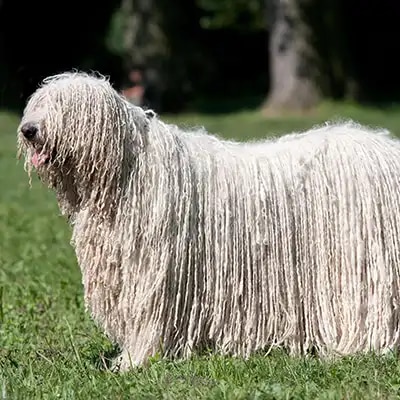
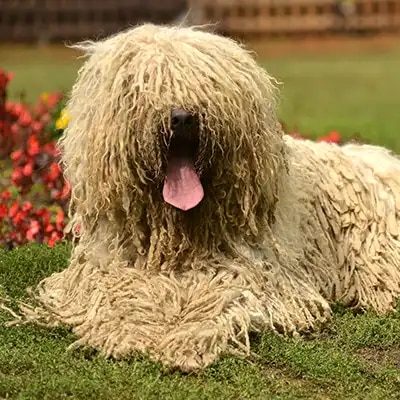
Living with a komondor is like living with a wise, loyal monk — if the monk also snored and occasionally refused to come inside when called. These independent dogs bond deeply with their families and prefer to keep their circle small. Their guarding instincts are strong, and they evaluate every sound, scent and visitor for threats.
With children, they’re patient and tolerant, though they may position themselves between the kids and anything unfamiliar. With strangers, they’re cautious but polite, watching for signs of trustworthiness. It's best to give them space until they consent to be touched. They’re selective about canine company and usually prefer familiar dogs to strangers, but with early socialization, they can live peacefully with other pets, including cats.
Their prey drive is moderate to low, as is their mischief level; however, they may ignore rules they find unnecessary. The best way to honor this instinct is to give them meaningful work. Let them watch over the yard, carry small items or “heel” by your side during walks. Purposeful work satisfies their ancient purpose and prevents boredom-associated behaviors, such as pacing fences, barking at shadows, selectively hearing or destroying your property.
Personality and Temperament Trait Scale
Traits are on a scale of 1 to 5, with 1 being the least and 5 being the most.
| Dog Trait | Trait Scale Value |
|---|
| Energy Level | 2 (Low Energy) |
| Prey drive/chase instinct | 3 (Moderate Drive) |
| Drooling | 4 (High Drooling) |
| Shedding | 5 (Very High Shedding) |
| Coat maintenance/grooming needs | 5 (Very High Maintenance) |
| Barking | 2 (Quiet) |
| Social Tendencies (affection toward family vs. strangers) | 2 (Slightly Reserved) |
| Trainability | 2 (Somewhat Difficult) |