Irish Wolfhound Dog Breed Guide

Imagine a dog that seems to show up in slow motion, floating by on massive paws, coat waving, looking like a friendly mythical creature. That’s the Irish wolfhound dog breed. This breed is huge in size but tender and sensitive in heart. The breed’s ancestors were raised by nobility to hunt dangerous wild game. Even though the modern-day Irish wolfhound has mostly traded rugged hill hunting for family companionship and couches, the dignity and athletic grace of this breed remain unmistakable.

Energy Level

Energy Level

Prey Drive

Prey Drive

Drooling

Drooling

Shedding

Shedding

Coat maintenance / grooming needs

Coat maintenance / grooming needs

Barking

Barking

Social Tendencies (affection toward family vs. strangers)

Social Tendencies (affection toward family vs. strangers)

Trainability

Trainability

The Origins of the Irish Wolfhound

The Irish wolfhound dog breed is ancient. Historical records show massive hounds who accompanied ancestral Celtic people on wolf and wild boar hunts. These majestic hunters were bred by crossing indigenous large dogs with Middle Eastern coursing hounds. By the time the Roman Empire had reached the British Isles, the giant hounds of Ireland were already established and were given as a gift to Roman invaders in 391 A.D. 

Wolfhounds specialized in bringing down large prey, including the extinct Irish elk and wolves. When the wolves were hunted out by the late 1700s, there was no longer any need for the services of the Irish wolfhound, and they almost went extinct themselves. Capt. George Augustus Graham made it his life’s work to protect and standardize the breed, who was inducted into the American Kennel Club in 1897 as part of the Hound Group. Today, the Irish wolfhound remains a symbol of courageous, calm dignity.1,2

Breed InfoBreed Details
Group/classHound Group (AKC), Sighthound and Pariah Dog Group (UKC)
Club recognitionAKC, United Kennel Club
Instincts, function and purposeThe Irish wolfhound stood beside ancient Celts in hunting. Today, they generally serve as family dogs
AdaptabilityIrish wolfhounds do best in consistent environments
Breed standardsIrish Wolfhound Club of America, UKC Official Standards

Nutrition for Irish Wolfhounds

Irish wolfhounds are towering and athletic giants that benefit from complete and balanced nutrition tailored to their specific requirements. Supporting their strong muscles and healthy joints is vital for their overall comfort and mobility. For growing Irish wolfhound puppies, a large-breed formula is recommended to help support a healthy growth rate and proper skeletal development. Additionally, a precise balance of vitamins and minerals, including antioxidants like vitamins C and E, helps support a healthy immune system and overall wellbeing throughout their lives.

Ingredients and Nutrients

Choosing a food with high-quality ingredients is key to supporting an Irish wolfhound’s daily vitality. Look for recipes featuring protein sources—like lamb, chicken, or salmon—to help maintain lean muscle on their powerful frame. To help support a healthy skin and coat, look for omega-6 fatty acids from sources such as vegetable oils and chicken fat.

Fish oil provides the omega-3 fatty acids needed to help nourish their brain, joints, and organs, while prebiotic fibers like fructooligosaccharides (FOS) or beet pulp help support healthy digestion. Finally, balanced levels of calcium and phosphorus help support the strong bone structure this giant breed depends on, helping ensure your Irish wolfhound stays comfortable and active

Life Stage Considerations

Puppies

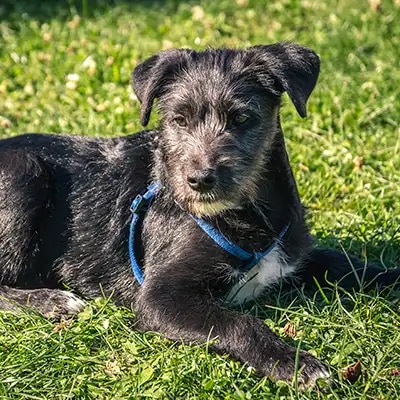
Irish wolfhound puppies mature slowly and can take up to two years to reach full adult weight. To support healthy growth and development, especially for joints, Irish wolfhound puppies need complete and balanced large-breed puppy food. Talk to your veterinarian about appropriate exercises and spay/neuter timing to support healthy skeletal development and maturity. 

Adults

Adult Irish wolfhounds thrive on food that maintains lean muscle, supports heart health and provides energy without excess calories. Look for diets rich in high-quality protein and essential fatty acids to help protect cardiovascular function. Regular weight checks and portion adjustments help support joints and maintain long-term wellness.

Seniors

Senior Irish wolfhounds benefit from nutrition that supports mobility, heart health and digestive comfort while managing calorie intake. Foods formulated with joint-supporting nutrients, antioxidants and highly digestible protein help preserve strength and vitality. Controlled fat levels and added omega-3 fatty acids promote comfort and overall quality of life in older dogs.

Weight Management and Joint Support

Unhealthy weight gain puts undue stress on an Irish wolfhound’s joints. To maintain a lean body condition, always measure the amount you feed them on a kitchen gram scale and limit treats to 10% or less of daily calories. If you notice weight gain, avoid guessing at portion reductions. Instead, work with your veterinarian to establish a safe, gradual weight-loss plan and determine if a therapeutic food can help support your dog's mobility.

Irish Wolfhound Dog Breed Characteristics

Irish wolfhounds blend athletic power with quiet intelligence and an expressive, noble look that turns heads wherever they go. Beneath that rugged coat is a calm, observant dog who loves quiet, routine structure and learns best through patient, positive training.

Appearance and Physical Traits

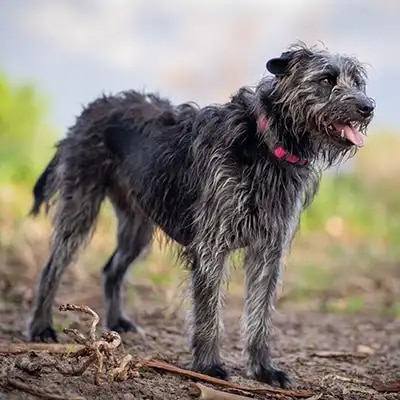
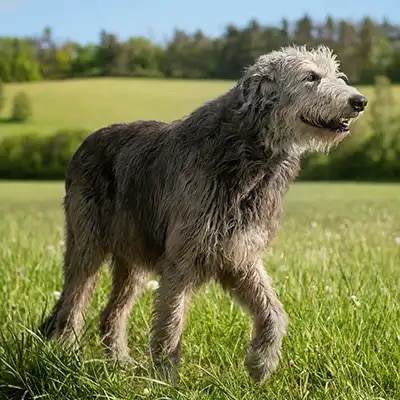
The Irish wolfhound is one of the tallest dog breeds in the world, combining a commanding presence with a gentle, noble demeanor. Its rough, wiry outer coat and soft undercoat protect it from harsh weather, while a long, slightly curved tail and small, greyhound-like ears complete its elegant silhouette. Built for power and endurance rather than speed alone, this giant breed’s size, deep chest and long limbs reflect its history as a capable hunter of large game and a loyal companion.

Breed OverviewBreed Information
Breed SizeGiant
CoatRough and wiry outer coat; soft undercoat
ColorGray, brindle, red, black, fawn or cream
Tail and EarsTail long and slightly curved; ears small, greyhound-like
Height32 inches (males are usually taller than females)
Weight120 pounds (males are usually heavier than females)
Life Expectancy6 to 8 years

Irish Wolfhound Temperament and Personality Traits

The Irish wolfhound dog breed is living proof that size and sweetness can share the same body. Majestic in height and calm in spirit, this lapdog in a hound’s frame bonds deeply with everyone in the household. They don’t play favorites; they’re equally happy watching a movie with the kids or shadowing Grandpa in the kitchen. 

Though wolfhounds were bred to hunt wolves, today they prefer chasing sunbeams to squirrels. The prey drive still flickers but rarely ignites. They may watch, maybe chase briefly, but they don’t fixate like sighthounds or terriers bred for active pursuit. Their mischief level sits in the moderate range. If left unsupervised too long, an Irish wolfhound might “redecorate” the living room out of curiosity. 

Aggression is rare — this breed would rather watch from a distance and peace out if conflict seems imminent. With children, Irish wolfhounds are protective and patient; around strangers, they are polite and a little reserved until trust is earned. The Irish wolfhound can live peacefully with other pets, as long as the wolfhound is socialized and introductions are slow and handled with mindfulness and kindness.

Irish wolfhounds are emotional sponges, and even a raised voice can hurt their feelings. Gentle, confident training earns better results than firmness. Lead with clear, calm authority and kindness, and this breed will meet you with unwavering trust and devotion. 

Caution: Irish wolfhounds are polite about food but tall enough to counter-surf anything left unattended. A sandwich at the edge of the table is a “maybe” in Irish wolfhound logic.

Personality and Temperament Trait Scale

Traits are on a scale of 1 to 5, with 1 being the least and 5 being the most.

Dog TraitTrait Scale Value
Energy Level3 (Moderate Energy)
Prey drive/chase instinct5  (Very High Drive)
Drooling1 (Minimal Drooling)
Shedding3 (Moderate Shedding)
Coat maintenance/grooming needs3 (Moderate Maintenance)
Barking1 (Very Quiet)
Social Tendencies (affection toward family vs. strangers)3 (Balanced)
Trainability1 (Very Difficult)

Lifestyle Compatibility

Best for

Quiet families or individuals who can offer consistent routine, training, moderate exercise and plenty of space for a gentle, people-oriented giant breed dog.

Good with

Older children, other pets when socialized early. Always monitor children around dogs.

Less suitable for

 Apartment dwellers, absent or chaotic households, people seeking a high-energy canine companion.

Before adopting any breed of dog, it's a good idea to speak to a veterinarian to determine if their health and care needs fit with your household, budget, and lifestyle.

Exercise Needs and Appropriate Activities

Although they are enormous, Irish wolfhounds prefer relaxed, low-impact exercise over intense aerobic high-impact activity. Around 45 to 60 minutes a day is usually ideal, divided between gentle movement and light mental engagement. Leisurely walks, hikes and off-leash play in safely fenced areas allow these dogs to stretch their legs. Irish wolfhounds also enjoy puzzle feeders, scent-tracking games and recall or basic obedience training sessions. According to the parent club, Irish wolfhounds often participate in and enjoy agility, rally, lure coursing, straight racing and therapy dog work

Even though they are tall and strong, Irish wolfhounds should never be ridden, even by children. They have long, flexible spines that are not designed to bear weight. Likewise, even though they are huge, they are not suitable for pulling carts. 

Training

Irish wolfhounds are very sensitive to tone, and harsh words will cause them to wilt faster than lettuce in July. Stay kind and you’ll see how quickly they try to please. Irish wolfhounds are mildly food-motivated — they aren’t the kind of dog who would sell their soul for a dog biscuit, but they also are not above making a deal for bits of roast chicken. Praise and love also work equally as well as treats. Short, fun, multiple training sessions work better than long marathon sessions. 

Irish wolfhounds are slow thinkers, not speed learners. When asked to do something, expect them to pause, assess and then decide whether the request sounds reasonable. Patience pays off, and they never forget lessons once they stick. Use everyday occurrences as opportunities to teach. Ask for a “wait” before opening doors or serving dinner. It builds focus, reinforces respect and reminds them that you’re the leader.

Early socialization is essential to help a young Irish wolfhound develop into a calm, confident adult who can handle busy sidewalks and vet visits without blinking. Introduce new sights, sounds and people while they’re still growing into those long legs. Additional skills to teach include settling on a mat, polite greetings and cooperative care for grooming and veterinary visits. Teach them to calmly tolerate handling of their paws, mouth and ears. Start leash manners immediately — when your dog eventually outweighs you, you’ll be grateful you did.

Irish Wolfhound Health and Wellness

Irish wolfhounds are fairly healthy dogs, but their giant size and breed-specific conditions bring unique risks. Regular veterinary care, good nutrition, early screening and weight management go a long way. 

Potential Irish Wolfhound Health Issues

Developmental joint disease

All large breeds, including the Irish wolfhound, are at risk for hip and elbow dysplasia, which can lead to osteoarthritis. Responsible breeding has reduced the risk over time, but pet parents can still help by maintaining a lean body condition and managing growth in puppies.

Cardiac disease

The Irish wolfhound is at higher risk of genetic heart disease than other giant breeds. Annual heart screening is recommended.4,5,6,7

Bone cancer

This breed is reported to be at elevated risk for osteosarcoma, a malignant bone cancer. Early detection is critical. Signs include acute limping and swelling.8

Seizures

Inherited epilepsy has been reported in the breed. Treatment is available.9

Respiratory infections

Increased risk for pneumonia has been reported in Irish wolfhounds. Seek veterinary attention if cough or lethargy develops.10

Grooming Needs

The Irish wolfhound’s coat is fairly low-maintenance. A weekly brushing session removes loose hair and distributes natural oils. Bathing should be infrequent, as repeated washing can strip the coat of its water-resistant features. 

Irish wolfhounds are moderate shedders. They don’t cover the house in hair like some double-coated breeds, but you’ll still find a light sprinkling of “wolfhound glitter” on dark items and clothing. Brush twice a week during seasonal shedding periods to manage loose hair. Irish wolfhounds love routine touch, so turn grooming into quiet bonding time rather than a chore. Try gentle brushing after walks when they’re relaxed. Over time, they’ll associate grooming as a positive experience, and you’ll notice how this ritual deepens trust while keeping that beautiful coat in top shape.

Check ears weekly for redness or odor, trim nails once or twice a month and brush teeth daily with a dog-specific toothpaste to limit tartar buildup. Because of their size, nail trimming can feel like a project for Irish wolfhounds, but keeping their nails short supports traction and foot health. Start training them for nail trims while they are a puppy to make it easier on everyone in the long run. You can further support by providing traction (nonslip rugs) on slick floors to prevent falls and make it easier for them to get up.

Is an Irish Wolfhound Your New Furry Friend?

Irish wolfhounds have a gentle heart wrapped in a giant body. Though their tails can clear a coffee table in seconds, they’re more likely to nudge for affection than cause chaos. Loyal, sensitive and impossibly kind, these dogs radiate a quiet devotion that feels grounding and grand. If your heart and soul longs for a companion who mirrors calm energy, enjoys long walks and greets the world with quiet dignity, the Irish wolfhound may be your match. Life with one brings laughter and the soft thud of giant paws reminding you that love sometimes arrives in very large packages.

Resources For New Pet Parents

Adopt a pet. Change a life.

Pet Adoption Resources

Get expert tips for a long and happy life with your new best friend.

New dog guide

Irish Wolfhound Dog Breed FAQs

Irish wolfhounds need moderate daily exercise to stay fit and content.

Irish wolfhounds are gentle and patient with children but should always be supervised because of their size.

Irish wolfhounds shed lightly throughout the year and benefit from weekly

Irish wolfhounds can do well with first-timers as long as they are calm and consistent and can provide structure and companionship.

Irish wolfhounds typically live six to eight years, though some live longer with excellent care.

References

  1. American Kennel Club. “Official Standard of the Irish Wolfhound.” Accessed October 30, 2025. https://images.akc.org/pdf/breeds/standards/IrishWolfhound.pdf.

  2. Irish Wolfhound Club of America. “Home – Irish Wolfhound Club of America.” Accessed November 3, 2025. https://iwclubofamerica.org/.

  3. Urfer, S. R., C. Gaillard, and A. Steiger. “Lifespan and Disease Predispositions in the Irish Wolfhound: A Review.” Veterinary Quarterly 29, no. 3 (2007): 102–111. https://pubmed.ncbi.nlm.nih.gov/17970287/.

  4. Irish Wolfhound Foundation. “Irish Wolfhound Foundation Cardiac Study.” Irish Wolfhound Foundation Newsletters, 2024. https://www.iwfoundation.org/images/newsletters/202412_1547263867_9326.pdf.

  5. Vollmar, A. “The Prevalence of Cardiomyopathy in the Irish Wolfhound: A Clinical Study of 500 Dogs.” Journal of the American Animal Hospital Association 36, no. 2 (2000): 125–132. https://pubmed.ncbi.nlm.nih.gov/10730622/.

  6. Vollmar, A. and H. Aupperle. “Cardiac Pathology in Irish Wolfhounds with Heart Disease.” Journal of Veterinary Cardiology 18, no. 1 (2016): 57–70. https://pubmed.ncbi.nlm.nih.gov/26700743/.

  7. Distl, O., A. Vollmar, C. Broschk, H. Hamann and P. R. Fox. “Complex Segregation Analysis of Dilated Cardiomyopathy (DCM) in Irish Wolfhounds.” Heredity 99, no. 4 (2007): 460–465. https://www.nature.com/articles/6801024.

  8. Urfer, Silvan R., Mehdi Momen, Nyah L. Kohler, Emily Binversie, Susannah J. Sample and William J. Gosling. “Heritability and Genetic Variance Estimation of Osteosarcoma (OSA) in the Irish Wolfhound.” Canine Genetics and Epidemiology 8 (2021): 14. https://doi.org/10.1186/s40575-021-00109-y.

  9. Casal, M. L., R. M. Munuve, M. A. Janis, P. Werner and P. S. Henthorn. “Epilepsy in Irish Wolfhounds.” Journal of Veterinary Internal Medicine 20, no. 1 (2006): 131–135. https://doi.org/10.1111/j.1939-1676.2006.tb02832.x.

  10. Viitanen, S. J., A. Lappalainen, M. M. Rajamäki, et al. “Recurrent Bacterial Pneumonia in Irish Wolfhounds.” Journal of Veterinary Internal Medicine 33, no. 2 (2019): 840–847. https://pubmed.ncbi.nlm.nih.gov/30666726/