Goldador Dog Breed Page

The goldador is a hybrid breed that combines the friendly golden retriever and the lovable Labrador into one sweet-as-pie pup. This purposeful cross creates a breed that's trainable with a strong work ethic, while maintaining the bright, best-friend personality that so many people love about these breeds.

Because goldadors are hybrids, keep in mind that personality, physical traits and health status may vary within the same breed.

Energy Level

Energy Level

Prey Drive

Prey Drive

Drooling

Drooling

Shedding

Shedding

Coat maintenance / grooming needs

Coat maintenance / grooming needs

Barking

Barking

Social tendencies with people

Social tendencies with people

Trainability

Trainability

The Story of the Goldador

As a hybrid, goldadors are not recognized as a breed by the American Kennel Club or any other major kennel clubs. They are an intentional cross between a golden retriever and a labrador retriever. Goldadors gained popularity as reliable, trainable, calm service dogs for Guide Dogs for the Blind. Breeders prioritized dogs who were highly social (goldens) with a strong drive to work (Lab). These dogs are great at learning fast, retrieving and providing emotional support. They are favorite choices for human-assistance roles and active families who want a sociable, empathetic furry friend.

Group/classN/A
Club recognitionN/A
Instincts, function and purposeGoldadors were originally bred as reliable, calm service dogs for Guide Dogs for the Blind.
AdaptabilityGoldadors are friendly and empathetic, but they are also very energetic. They do best with pet parents who can commit time to giving them daily enrichment.
Breed standardsN/A

Goldador Nutrition

Goldadors are athletic, large-breed dogs that benefit from nutrition tailored to their specific requirements. As a cross between two active breeds—the Golden Retriever and the Labrador Retriever—they thrive on a complete and balanced diet that supports their energy levels and lean muscle mass. Because goldadors are often highly food-motivated, helping them maintain a lean body condition is vital. Measuring their meals with a kitchen scale is an excellent way to help manage their intake and support their long-term health. For puppies, a large-breed formula helps support a healthy growth rate for developing bones and joints, while antioxidants like Vitamins C and E help support a healthy immune system.

Ingredients and Nutrients

Selecting a food with high-quality ingredients is key to supporting a goldador’s daily wellness. Look for recipes featuring protein sources—like chicken, lamb, or salmon—to help maintain lean muscle. To help support a healthy skin and coat, look for omega-6 fatty acids from sources such as vegetable oils and chicken fat.

Fish oil provides the omega-3 fatty acids needed to help nourish their brain, joints, and organs, while prebiotic fibers like fructooligosaccharides (FOS) or beet pulp help support healthy digestion. Finally, balanced levels of calcium and phosphorus help support the strong bone structure this active crossbreed depends on, helping ensure your goldador stays ready for every game of fetch.

Life Stage Considerations

Puppies

Goldador puppies benefit from complete and balanced nutrition that supports brain and eye development and skeletal growth. Large-breed puppy food provides precise levels of calcium, phosphorus and calories, all important for healthy growth and development. Ask your veterinarian about amounts to feed during this life stage.

Adults

Adult goldadors do best on a complete and balanced food that provides essential nutrients as well as maintaining a lean body condition. Goladors are known for having healthy appetites, and proactive weight management and joint support is critical for their health and longevity. Studies show that maintaining lean body condition and avoiding excess body fat can help dogs live longer and have a delayed onset of age-related disease.2

Seniors

Older goladors may need adjustments in calories, fiber and joint-supporting nutrients and benefit from a dog food that supports a healthy metabolism. They may also benefit from a highly digestible food, since some older dogs have trouble absorbing nutrients. Talk to your vet before making any adjustments to food or feeding schedule.

Weight and joint concerns

At any age, you can promote mobility and longevity by maintaining a lean body condition. Your vet can tell you what the best weight for your goldador is, help you calculate daily calories and adjust feeding amounts. Treats and people food should make up less than 10% of daily calories.

Skin allergies

Some goldadors suffer from itchy skin and/or ear infections due to skin allergies. The most common skin allergies in dogs are flea allergies, environmental allergies and food allergies.9, 10,11

Goldador Characteristics

Goldadors are the epitome of a happy, social companion dog. They're often loyal, intelligent, eager to please and endlessly affectionate. Their easygoing nature and deep desire to be part of a family make them wonderful pets for active households with children that can keep up with their energy, attention needs and love of participation.

Keep in mind that, because goldadors are hybrids, physical and personality traits can vary depending on which parent's genetics are more dominant.

Appearance and Physical Traits

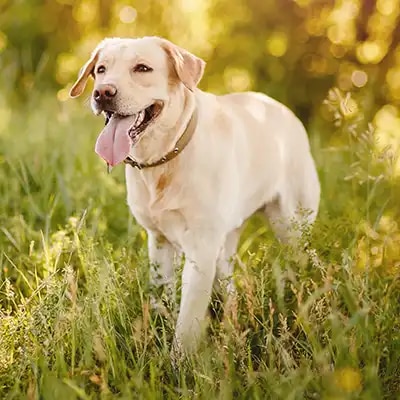
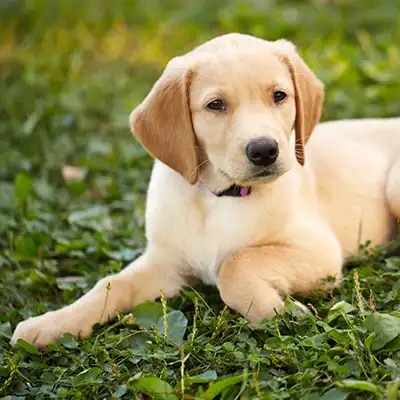
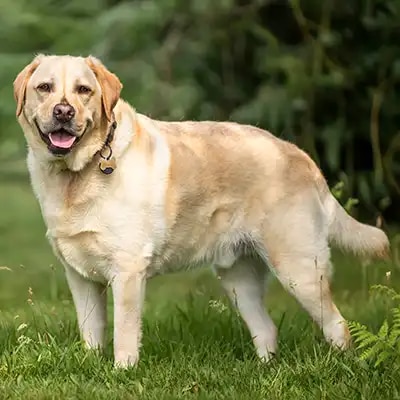
Goldadors have a sturdy frame wrapped in a soft coat that ranges from warm sunlight to rich chocolate tones. Their broad chest and strong legs hint at athletic days chasing balls or bounding through fields, while their wagging tail — often in constant motion — adds a touch of joyful punctuation to every step. They’re the kind of dog whose very presence feels like a warm embrace, blending the Labrador’s solid build with the golden retriever’s radiant glow.

Breed OverviewBreed Information
SizeLarge
CoatDense double coat; short to medium length
ColorBlack, yellow or shades of gold
Tail and EarsSturdy, tapered tail; medium-sized pendant ears
Height21.5 to 24.5 inches tall (males are taller)
Weight55 to 80 pounds (males are heavier)
Life Expectancy10 to 14 years

Personality

Goldador dogs are known for being affectionate and social. They typically bond equally with their whole family and love children. They will happily tolerate chaos and expect to always be included. Leaving them by themselves can result in an unhappy dog who takes their loneliness out on the yard or home.

Playdates with friendly dogs, supervised family time and predictable routines keep them emotionally regulated and out of mischief. Fail to give them enough engagement and you may end up with an over-excitable dog. Keep in mind that goldadors are not guard dogs, but they will bark to alert. Most are friendly with most people, especially if they are properly socialized during the critical socialization window of 8-15 weeks of age. Prey drive varies; some will only run after a thrown ball, others will lose their minds over a squirrel. Supervision, training focus and a strong recall will help these pups be well-behaved in the long run.

Personality and Temperament Trait Scale

Traits are on a scale of 1 to 5, with 1 being the least and 5 being the most.

Dog TraitTrait Scale Value
Energy Level4 (High Energy)
Prey drive3 (Moderate Drive)
Drooling1 (Minimal Drooling)
Shedding3 (Moderate Shedding)
Grooming needs3 (Moderate Maintenance)
Barking3 (Moderately Vocal)
Social tendencies with people5 (Extremely Social)
Trainability4 (Highly Trainable)

Lifestyle Compatibility

Best for

Active pet parents who enjoy outdoor adventures and have the time and consistency to provide daily exercise, training and mental stimulation for an energetic dog.

Good with

Families that can offer structure, space and plenty of interaction. Always monitor children around dogs.

Less suitable for

Owners with limited time, small living spaces or households with very young children and multiple pets unless careful socialization and supervision are prioritized.

Before adopting any breed of dog, it's a good idea to speak to a veterinarian to determine if their health and care needs fit with your household, budget and lifestyle.


Exercise Needs and Appropriate Activities

Goldadors need about 60+ minutes daily of exercise and mental work. Opportunities to safely explore outside, fetch games, sniff walks and hide-and-seek with treats provide joy and reduce boredom or bad behaviors. Most of them love water, and swimming can be a safe, joint-friendly activity to get their wiggles out. 

These dogs live to serve and are happiest when doing so. Give them tasks like carrying or fetching things or wearing a backpack. Adults make great therapy or service dogs, and they also enjoy sports. Enrichment alternatives on quiet days include puzzle feeders, frozen chew toys and low-intensity trick sessions that tickle their retriever brains. Avoid high-impact or long-distance running or jumping in growing individuals to protect joints. 

Training Goldador Dogs

Training a goldador is less about convincing them to try and more about guiding them toward the right goal as they are generally very eager to please. Start training early and make it fun. Use short, upbeat sessions to build skills like basic obedience cues, loose-leash walking, recall, calm greetings and settling on a mat. Handle their mouths, paws and ears regularly to build cooperative care skills for grooming and veterinary visits. Goldadors respond well to praise, play and gentle consistency. Teaching them to relax independently, such as chewing a safe toy away from the family for brief periods, reduces the chance of separation-related anxiety later.

Because they are eager to participate in everything, impulse-control games like “wait,” “leave it,” and greeting manners help them be polite in public. These dogs are highly trainable and when they are trained well, the sky is the limit on what you can do together. 

Goldadors, in general, need about 18 months to fully mature and do have an adolescent phase (from 6-18 months) where they may test boundaries and seem less focused. Be patient, stay consistent in training, use high-value treats only for training and know this period will end and you will get your well-behaved dog back. 

Goldador Health and Wellness

As hybrids, goldadors are generally healthy, but they do inherit risks found in golden retrievers and labs. Regular care with a vet you trust, healthy weight and screening for inherited disease help support lifelong wellness and early identification and treatment of any health-related concerns. 

Potential Health Issues

Hip and elbow dysplasia

Developmental joint disorders, such as hip and elbow dysplasia, are well documented in both labs and goldens. Appropriate exercise and nutrition, as well as early screening reduces risk. Correct spay/neuter timing can also impact joint health.3,4

Osteoarthritis

Degenerative joint disease is a progressive joint disorder seen in many large-breed dogs that negatively impacts mobility and comfort. Reduce risk by keeping your dog lean and treating any contributing joint issues early.

Cancer

Certain cancers seen in parent breeds may occur; regular exams help early detection.5,6,7,8

Allergies and skin issues

Goldens and Labs both may experience itchy skin from environmental, flea or food allergies. Keep your pet on appropriate flea control, and work with your vet if your dog has been diagnosed with environmental or food allergies.9,10,11

Ear inflammation

Underlying allergies or a wet ear from frequent swimming can cause external ear infections. Signs include redness, odor and/or debris in ear, combined with increased head shaking or scratching. If you notice any of these signs, contact your vet.

Grooming Needs

Goldadors shed year-round, often with seasonal peaks. Brush them several times per week with a slicker brush to remove loose hair, distribute natural oils and keep the coat shiny. During heavy shedding seasons, daily brushing helps keep the furniture visible. 

Bathe only if needed or when they get dirty. Check their ears twice a week for redness or odor, and get them treated by your vet if problems arise. Trim their nails every 3-4 weeks or as needed, and brush teeth daily with an enzymatic dog toothpaste. Have their mouth examined by a vet yearly and have their teeth professionally cleaned by a vet, if recommended. Routine care keeps their skin and coat healthy, reduces that “indoor tumbleweed” effect and gives you and your goldador some extra quality time.

Is a Goldador Your New Furry Friend?

If you want a dog who shows up with a work ethic and a sense of humor, then choose team goldador. They’re affectionate without being clingy, driven without being demanding and they always seem to know when to switch from play mode to calm presence. Keep their mind and body busy, and they’ll give you loyalty, levity and maybe an occasional stolen sock just to keep things interesting.

Resources For New Pet Parents

Adopt a pet. Change a life.

Pet Adoption Resources

Get expert tips for a long and happy life with your new best friend.

New dog guide

Goldador Breed FAQs

Yes. Goldadors need 60+ minutes of daily physical and mental activity to stay healthy and happy.

Many goldadors are excellent with children and other animals when socialized and supervised.

Yes, goldadors shed regularly. Brushing a few times per week helps manage loose fur.

Goldadors can be a great match for first-time families who are ready to train, provide structure and don’t mind the fur.

Most goldadors grow into large dogs, commonly 55-80 pounds at maturity.²

References

  1. American Kennel Club, “Golden Retriever Dog Breed Information,” https://www.akc.org/dog-breeds/golden-retriever/.

  2. American Kennel Club, “Labrador Retriever Dog Breed Information,” https://www.akc.org/dog-breeds/labrador-retriever/

  3. Hart, Benjamin L., Lynette A. Hart, Abigail P. Thigpen, and Neil H. Willits, “Long-Term Health Effects of Neutering Dogs: Comparison of Labrador Retrievers with Golden Retrievers,” PLOS ONE, 2014, https://doi.org/10.1371/journal.pone.0102241

  4. DeForge, T. L., et al, “Age of Neutering Contributes to Risk of Cruciate Ligament Rupture in Labrador Retrievers,” Journal of the American Veterinary Medical Association, 2024, https://pubmed.ncbi.nlm.nih.gov/39383890/

  5. Kent, Michael S., Jenna H. Burton, Gillian Dank, Danika L. Bannasch, and Robert B. Rebhun, “Association of Cancer-Related Mortality, Age and Gonadectomy in Golden Retriever Dogs at a Veterinary Academic Center (1989–2016),” PLOS ONE, 2018, https://doi.org/10.1371/journal.pone.0192578

  6. Hillman, Alison, Brenna Swafford, Camille Delavenne, Hille Fieten, Kim Boerkamp, and Kathy Tietje, “Descriptive Analysis of Haemangiosarcoma Occurrence in Dogs Enrolled in the Golden Retriever Lifetime Study,” Veterinary and Comparative Oncology, 2023, https://doi.org/10.1111/vco.12933

  7. Tonomura, Naoko, Ida Elvers, Rachael Thomas, et al, “Genome-wide Association Study Identifies Shared Risk Loci Common to Two Malignancies in Golden Retrievers,” PLOS Genetics, 2015, https://doi.org/10.1371/journal.pgen.1004922

  8. Biasoli, Deborah, Lara Compston-Garnett, Sally L. Ricketts, et al, “A Synonymous Germline Variant in a Gene Encoding a Cell Adhesion Molecule Is Associated with Cutaneous Mast Cell Tumour Development in Labrador and Golden Retrievers,” PLOS Genetics, 2019, https://doi.org/10.1371/journal.pgen.1007967

  9. Shaw, Stephen C., James L. N. Wood, Julia Freeman, Janet D. Littlewood, and Duncan Hannant, “Estimation of Heritability of Atopic Dermatitis in Labrador and Golden Retrievers,” American Journal of Veterinary Research, 2004, https://doi.org/10.2460/ajvr.2004.65.1014

  10. Lauber, Beatrice, Vivianne Molitor, Sabrina Meury, Marcus G. Doherr, Claude Favrot, Katarina Tengvall, Kerstin Bergvall, Tosso Leeb, Petra Roosje, and Eliane Marti, “Total IgE and Allergen-Specific IgE and IgG Antibody Levels in Sera of Atopic Dermatitis Affected and Non-Affected Labrador- and Golden Retrievers,” Veterinary Immunology and Immunopathology, 2012, https://doi.org/10.1016/j.vetimm.2012.05.018

  11. Harvey, Naomi D., Stephen C. Shaw, Peter J. Craigon, Sarah C. Blott, and Gary C. W. England, “Environmental Risk Factors for Canine Atopic Dermatitis: A Retrospective Large-Scale Study in Labrador and Golden Retrievers,” Veterinary Dermatology, 2019, https://doi.org/10.1111/vde.12782