Can Dogs Eat Eggs?
Expert Reviewed
Written By

Reviewed By


Dogs can eat eggs in moderation; they're a good source of protein, omega fatty acids and vitamins A, D and E.
Dogs should not eat raw eggs, as there's a risk of the bacteria Salmonella, which can sicken them and everyone in your household.
Dogs with kidney failure or liver disease should not eat eggs because the extra protein may be harmful to them.
Always consult your veterinarian to see whether eggs are good for your individual dog.
Eggs are a healthy source of protein for us, but what about our furry friends? Good news! In moderation, eggs can make a healthy snack for your dog as well. Here's everything you need to know about feeding eggs to your dog.
Yes, when fully cooked and fed in moderation, eggs can be a nutritious treat for dogs. While they are best known as an excellent source of high-quality protein, eggs also provide essential nutrients, such as omega fatty acids and vitamins A, D and E, which help support healthy bones, eyes and skin.
However, it’s important to remember that eggs are naturally high in fat. For dogs who require a strict low-fat meal plan — such as those with a history of gastrointestinal issues — extra fat can be problematic. Always consult your veterinarian to ensure new treats align with your pup's dietary needs.
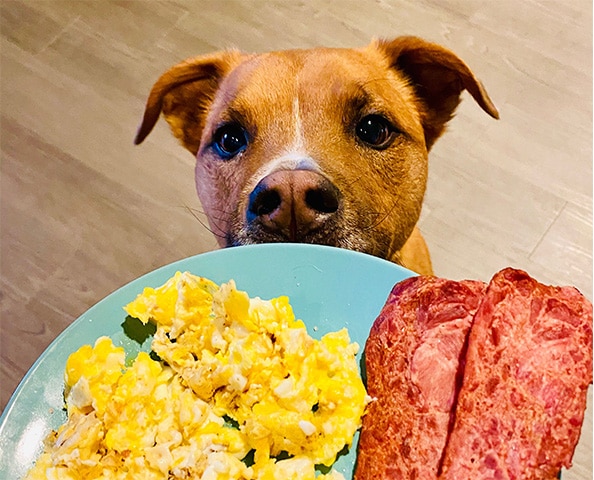


Any eggs fed to your dog should be cooked, not raw. But there are a variety of ways to serve them. Can dogs eat boiled eggs? Can dogs eat scrambled eggs? As long as they are fully cooked, yes and yes. Be sure to avoid using any seasonings or salt. Frying adds unnecessary oils and fat that can cause gastrointestinal upset or trigger conditions such as pancreatitis in sensitive dogs. Boiling or scrambling plain eggs works best.
Any eggs shared with your dog should be fully cooked, as raw eggs can carry Salmonella and pose a serious health risk. Your dog may or may not develop a foodborne illness after exposure, but even if your dog appears completely normal, they can pass the bacteria to humans and other animals in the house.1
Feeding raw egg whites to your dog can also cause a deficiency in biotin, a vitamin that’s critical for healthy cells and digestion.2 A glycoprotein called avidin in egg whites binds to biotin so that it’s not absorbed by the gastrointestinal tract. Affected dogs may have poor growth, dermatitis or neurologic issues.
Scrambling or boiling eggs is best to kill any potential bacteria and deactivate avidin for the safety of your dog and others in your household.
Dogs can eat eggs occasionally for a healthy treat, but they should not be a main part of their meal plan unless in a complete and balanced dog food. In general, at least 90% of a dog's nutrition should come from a high-quality, complete and balanced dog food. The other 10% can be healthy treats, and a bit of egg can be part of that.3
Eating eggshells is not necessary for dogs to get sufficient calcium, as a high-quality, complete and balanced food already provides what they need. Be sure to peel boiled eggs completely because pieces of eggshell can have sharp edges that irritate your dog’s digestive tract.
For dogs that are on a low-protein meal plan, such as dogs in kidney failure or those with certain types of liver disease, the extra protein in eggs is not helpful and may actually worsen their liver or kidney conditions.
In the rare case your dog has a specific allergy to eggs, do not feed them eggs.
Puppies can usually have cooked eggs in moderation, but it’s best to check with your vet first about your puppy’s nutritional needs.
If you do feed your puppy eggs, remember that treats and any food that isn’t their regular dog food should only account for 10% of their daily calories. If they are being fed a high-quality, age-appropriate puppy food, the extra protein in eggs may be an excess. The occasional bite of egg as a treat may be OK, but eggs shouldn’t be the shouldn’t be the main part of their meal plan except in a complete and balanced puppy food.
Eggs can be a healthy, high-protein, occasional snack for most dogs. It's important to cook the eggs completely and plainly, with no other added ingredients. (Remember that certain human foods are toxic to dogs, including the onion and garlic you may have mixed into your omelet.)
If you have any concerns about your dog trying a new food or how much of it they can have, check with your vet.
Raw eggs are off limits because of bacterial risk and the potential for biotin deficiency. It's important to cook the eggs fully before feeding. And remember, the majority of your pet's meal plan should be a complete and balanced dog food. Even healthy treats are best in moderation. A good rule is the 10% rule, meaning 90% of your dog's caloric intake should come from a high-quality, balanced dog food, and the other 10% can be treats or healthy snacks.
If a dog eats too many eggs, they may experience vomiting or loose stool. Contact your vet immediately if so. A dog who snacks on too many eggs may also exceed the guideline of having treats be no more than 10% of their daily calories. This can lead to a nutritional imbalance and unwanted weight gain.
Yes and yes, as long as the eggs are fully cooked. Raw egg yolks or egg whites may contain harmful bacteria, such as Salmonella, that can make your pet or others in your household ill. Cooking the eggs thoroughly can kill potentially dangerous bacteria.
1 American Veterinary Medical Association. "Raw Diets for Cats and Dogs." Accessed April 16, 2026. https://www.avma.org/resources-tools/avma-policies/raw-or-undercooked-animal-source-protein-cat-and-dog-diets
2 Sherry Lynn Sanderson. “Nutritional Requirements of Small Animals: Water-Soluble Vitamins: Biotin.” Updated September 2024. https://www.merckvetmanual.com/management-and-nutrition/nutrition-small-animals/nutritional-requirements-of-small-animals
3 University of California Davis School of Veterinary Medicine Nutrition Support Service. “Treat Guidelines for Dogs.” 2020. Accessed August 9, 2026. https://www.vetmed.ucdavis.edu/sites/g/files/dgvnsk491/files/inline-files/treats-guidelines-for-dogs-2020.pdf
Related Articles

Learn what gently cooked dog food is, how steam-cooked dog food works, and whether it’s safe, digestible, and right for your dog.
Single protein dog food is made with just one animal protein source and can support your pup's digestion and food sensitivities. Learn more about the benefits of single protein dog food.
Learn how dog nutrition changes from puppyhood to adulthood and the senior years, including when to switch foods and how to transition safely.

Confused by dog food options? Learn the differences between wet, dry, and fresh foods and how to choose what works best for your dog.

Read reviews from the experts and see why Hill's is the #1 Veterinarian Recommended brand.
Read reviews from the experts and see why Hill's is the #1 Veterinarian Recommended brand.
