Boxer Dog Breed Guide

The boxer is a dog breed known to be loyal, goofy, athletic and always ready for adventure. Boxers have an expressive face, bouncy energy and faithful devotion to their humans — their happy disposition will brighten up the room and put a smile on your face. With plenty of exercise, routine and attention, boxers make wonderful companions for active singles or families.

Energy Level

Energy Level

Prey Drive

Prey Drive

Drooling

Drooling

Shedding

Shedding

Grooming needs

Grooming needs

Barking

Barking

Social tendencies with people

Social tendencies with people

Trainability

Trainability

The History of the Boxer Dog Breed

The story of the boxer begins in 19th-century Germany, where they were bred by combining working dogs called bullenbeissers (bull biters) with bulldogs. Originally used for hunting and guarding, boxers were valued for their strength, courage and intelligence. 

Over time, breeders refined the boxer breed, which would eventually become the loyal, energetic companion we know and love today. After serving as messenger and guard dogs in both World Wars, the boxer began to gain popularity. In the 1950s, it rose into America’s top 10 most popular breeds, thanks in part to the widespread fame of Bang Away, a Westminster champion who became a household name. Today, these dogs are just as adaptable, equally happy keeping watch over the home or clowning around with family.


Group/classWorking Group (AKC), Guardian Dog Group (UKC)
Club recognitionAmerican Kennel Club, United Kennel Club
Instincts, function and purposeBoxers were originally bred as hunting and guard dogs, but they have been used throughout history as cattle dogs, police dogs, watch dogs, war dogs and guide dogs for people with blindness.
AdaptabilityBoxers are highly adaptable, but they thrive with daily routine and exercise.
Breed standardsAmerican Boxer Club Official Breed Standard, UKC Official Breed Standard

Nutrition for Boxers

Boxers are energetic, muscular dogs who thrive on a complete and balanced dog food that supports a lean body condition. Because they’re an active breed with a naturally athletic build, boxers do best when kept lean throughout life and benefit from consistent feeding routines that help maintain healthy digestion and weight.

Work with your veterinarian to determine daily calorie needs and an ideal body condition for your boxer. Use a kitchen gram scale to measure meals accurately and keep treats to less than 10% of their total daily calories.

Ingredients and Nutrients

Boxers are athletic, high-energy, muscular dogs that require food that is designed to fuel an active lifestyle as well as support heart, joint, skin and digestive health. Look for complete and balanced dog food formulas that are made specifically for large breed dogs.

Life Stage Considerations

Puppies

Boxer puppies benefit from a complete and balanced dog food that is formulated for large-breed puppies to support steady growth and healthy joints.

Adults

Adult boxers should eat a complete and balanced adult maintenance dog food formula that supports joint health. You can help them maintain their lean physique by feeding them an appropriate amount based on their weight.

Seniors

Choose an easy-to-digest senior pet food formulated with the energy density to meet their lifestyle. Food that contains antioxidants and omega-3 fatty acid will help support healthy aging. Balanced minerals help support a healthy heart and kidney.

To avoid unhealthy weight gain, always measure the amount you feed them on a kitchen gram scale, limit treats to 10% of the total daily calorie count and check your dog’s body condition monthly. Your veterinarian can help you determine a healthy weight for your dog and what food is best.

Weight Management and Joint Support

Because boxers often love food as much as fetch, it's important to monitor portion sizes and body condition. Ask your vet if your dog could benefit from therapeutic nutrition for weight or mobility support.

No matter what life stage your dog is in, your vet is your most valuable resource when it comes to choosing the right dog food and portion for your furry friend. Talk with them before making any feeding decisions for your pet.

Boxer Characteristics

Boxers are alert, muscular athletes with a goofy grin that gives away their playful hearts. They love their families fiercely and can make wonderful pups for both singles and families. Beneath the strong, muscular build that is a key identifier of the boxer breed is a spirited mix of brains and silliness.

Appearance and Physical Traits

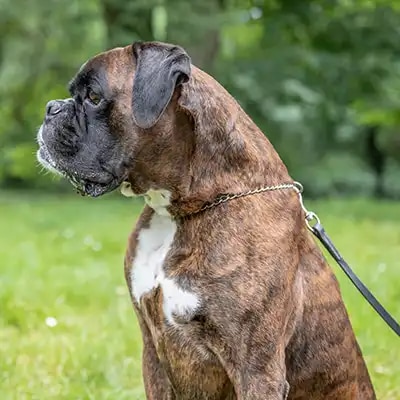
The boxer is a sleek, muscular dog with a square muzzle, expressive eyes and a coat of fawn, brindle or white. Their floppy ears and lively tail match their playful, athletic spirit that sets them apart from other breeds and their lean, sculpted body looks like it was built for the bouncy, clownish energy they're known for.

Breed OverviewBreed Information
Breed sizeMedium to large, muscular build
CoatShort, smooth, low-maintenance
ColorsFawn (light tan to dark red), brindle (either solid or with white markings and a black mask on their face)
Height21 to 25 inches (males are taller)
Weight50 to 80 pounds (males are heavier)
Tail and EarsNaturally long, tapering tail; medium-sized floppy ears (sometimes cropped)
Life ExpectancyAround 10 to 12 years

Boxer Personality and Temperament Traits

Because of their unlimited enthusiasm for life, boxers are affectionately known as eternal puppies. They are fun, social, and extremely devoted to their people. Boxers are gentle at heart, but they also have a natural guarding instinct, which makes these dogs simultaneously protective and affectionate. 

Even though boxers often choose one special person as their favorite, their affection spills over to everyone in the home. They live for playtime and are happiest when they can have fun with their humans or express their zoomies around the house. Their enthusiasm can be a bit much for small children, but with supervision, socialization and training, boxers can learn to be patient and gentle with children. 

This breed has a lot of energy that comes out in playtime, but afterwards, they press in close, sigh dramatically and look at you as if to say, “We did good today, didn’t we?” That mix of joyful energy, heart and humor is what makes life with a boxer unforgettable.

Personality and Temperament Trait Scale

Traits are on a scale of 1 to 5, with 1 being the least and 5 being the most.

Dog TraitTrait Scale Value
Energy Level5 (Very High Energy)
Prey Drive3 (Moderate Drive)
Drooling3 (Moderate Drooling)
Shedding3 (Moderate Shedding)
Grooming needs1 (Very Low Maintenance)
Barking4 (Very Vocal)
Social Tendencies with People 5 (Extremely Social)
Trainability4 (Highly Trainable)

Lifestyle Compatibility

Best for

Active families, runners and people who enjoy active outdoor time

Good with

Kids and other pets (with proper socialization)

Less suitable for

Sedentary households or people away from home most of the day.

Before adopting any breed of dog, it's a good idea to speak to a veterinarian to determine if their health and care needs fit with your household, budget, and lifestyle.

Exercise Needs and Appropriate Activities

Boxers need at least an hour (preferably two) of exercise every day. This can include running, agility, fetch, dog park time or long walks. Mental enrichment like puzzle toys and obedience games helps support cognition and give them an appropriate outlet for all that energy.

Training Tips

Boxers are intelligent dogs and eager to please. However, they can also be stubborn if training feels boring or repetitive. Keep training sessions short, varied, positive and reward-based. Socializing your boxer early builds their confidence and helps support good behavior with other dogs and people.

Boxer Health and Wellness

Boxers are generally sturdy dogs, however, some genetic lines have health risks. A 2023 study from the Royal Veterinary College and the U.K.’s Canine Genetics Epidemiology group found that ear infections, gum growths (epulides) and corneal ulcers are among the most common health issues seen in boxers.2  Other possible health concerns for boxers can include:

Potential Boxer Health Issues

Boxer cardiomyopathy (ARVC)

ARVC is a heart rhythm disorder that may not show symptoms until later in life.3  Regular exams from a vet, cardiac ultrasound and ECG studies can help with early detection.

Cancer (especially mast cell tumors)

Boxers have a higher cancer risk than other breeds.4 Regular veterinary examinations will help with early detection and treatment if necessary.

Ear infections

 A boxer's ear shape can trap moisture, leading to secondary ear infections.

Dental issues

Boxers are at increased risk for dental disease. Regular tooth brushing, dental examinations and professional cleanings support good oral health.

Hypothyroidism

May cause weight gain, dull coat or hair loss; this condition can be managed with medication.

Grooming Needs

Boxers have a short hair coat that sheds small amounts year-round. These dogs are considered to have relatively minimal grooming needs. However, they still require regular care to keep their skin and coat healthy, minimize shedding and have good dental health. 

To remove loose hair and distribute skin oils for healthy skin and coat, brush boxers once or twice a week. Wipe facial folds as needed with a baby wipe or wet cloth and check ears weekly for any redness or odor. Boxers don’t require bathing unless they are dirty. Trim toenails every couple of weeks and brush their teeth daily with a dog-specific enzymatic toothpaste.

As with any dog, your vet is your best resource if you have questions about care needs for your dog (or one you're planning to adopt).

Is the Boxer Your New Furry Friend?

If you were the kid in school who loved being the class clown and was voted best personality, the boxer might just be your spirit animal. This breed is athletic, loyal and overflowing with personality. They live to play, love to learn and believe that personal space is a myth (which means they are usually standing on your feet). 

Whether they are jogging with you, keeping watch over the backyard or curling up beside you after a long day, boxers are happiest when they can be part of the action. Boxers remind us that joy is best shared, preferably with a slobbery kiss.

Resources For New Pet Parents

Adopt a pet. Change a life.

Pet adoption

Get expert tips for a long and happy life with your new best friend.

Dog Guide

Frequently Asked Questions

Yes. Boxers are great with kids and other pets when they are properly socialized early, though their enthusiasm can be a bit much for small children or elderly. Always monitor children with dogs.

Some boxers do drool a lot, especially after drinking water or during play.

Most healthy boxers live around 10-12 years with good nutrition, exercise and veterinary care.

Yes. Expect a boxer to need at least an hour a day of physical activity and play.

Large-breed dog food formulas help maintain muscle tone and joint health, both important for longevity. Always check with your vet to find the right food for your dog’s specific needs.

References

  1. American Boxer Club, “HOME - American Boxer Club,” American Boxer Club, accessed November 17, 2025. https://americanboxerclub.org/.

  2. O’Neill, Dan G., et al, “Demography, Common Disorders and Mortality of Boxer Dogs,” Canine Genetics and Epidemiology, 2023. https://cgejournal.biomedcentral.com/articles/10.1186/s40575-023-00129-w.

  3. Kittleson, Mark D, “Arrhythmogenic Right Ventricular Cardiomyopathy in Dogs and Cats,” MSD Veterinary Manual, September 17, 2024, https://www.msdvetmanual.com/circulatory-system/cardiomyopathy-in-dogs-and-cats/arrhythmogenic-right-ventricular-cardiomyopathy-in-dogs-and-cats.

  4. Royal Veterinary College, “New RVC Study Identifies Cancers as a Health Priority in Boxer Dogs,” VetCompass News, 2023, https://www.rvc.ac.uk/vetcompass/news/new-rvc-study-identifies-cancers-as-health-priority-in-boxer-dogs.