Senior Dog Training: Can You Teach an Old Dog New Tricks?
Expert Reviewed
Written By
Reviewed By

Written By
Reviewed By


Can you teach an old dog new tricks? And why would you want to? There are many possible reasons for training an older dog. Perhaps you've adopted a senior dog who needs a refresher course on obedience training. Maybe your dog needs a reminder on house training since you've moved to a new home.
Whatever the reason, all older dogs benefit from new activities; it can keep both their mind and body engaged, and may support their overall health in the long run.


While physical changes might prevent older dogs from being able to perform certain tasks, such as navigating uneven terrain or reacting quickly to environmental cues, they still have the ability to learn new skills. However, you can expect your older dog to pick up on training at a slower rate than puppies and younger dogs.
In a study conducted at the University of Vienna's Clever Dog Lab, a test of dogs' ability to learn to distinguish between objects found that dogs around 10 years of age took more than twice as many repetitions and corrections than puppies six months to 1 year of age. However, the older dogs outperformed the young pups in logic and reasoning tasks. The study found no age difference in dogs' ability to retain their training.
While the study found no correlation between aging dogs' ability to learn based on dog breed, it stands to reason that breeds that are easier to train while young will remain easier to train as they age. Breeds that do best at learning new skills, according to the American Kennel Club, include the poodle, golden retrievers and herding breeds such as the German shepherd.


"Does your dog have any health concerns that might affect their ability to train? "

As dogs age, they may develop health conditions that limit their learning ability, including joint pain, vision or hearing loss or a decline in cognitive function. This might mean you should avoid trying to teach your senior dog more vigorous activities or tricks, but the good news is that older dogs can still learn — and enjoy — new things.
Can you teach an old dog new tricks? Yes — it simply takes more time and patience to train an older dog.
Going into training with the right mindset is just as important as the training itself. Be prepared to take your time and enjoy the bonding that comes from older adult dog training.
Remember that older dogs may need twice as much time and exposure than younger dogs to learn a new behavior or trick.
Do you want to teach skills, like crate training or leash walking? Or teach them to do tricks, which can help keep them engaged and strengthen your bond? You can do both, of course, and the same technique works for either.
For tricks, look for something your dog does naturally — like wave a paw — and then give it a name/command. Use short, single-syllable words, like shake, or crate, or speak. Keep it simple and stay consistent for best results.
For dogs who are easily distracted and have a hard time paying attention, a walk or a game of fetch prior to the training session will help them release pent-up energy, so they can relax and be more focused.
Schedule training sessions for brief periods at the same time each day. Try for ten to twenty minutes in the same training space each time, so your dog associates the location with training and understands what you expect. Choose a place with few distractions, like the backyard, before kids come home from school.
As your furry friend ages, they may experience certain health conditions that make learning certain skills more challenging. Keep these in mind, and personalize your training efforts to fit the needs of your dog.
Does your dog have any health concerns that might affect their ability to train? For example, a dog with arthritis may have trouble sitting comfortably, even if they understand what you want. A diabetic dog or one with kidney issues may need to "go" more often, and that impacts house training. Keep these in mind, and focus on other tricks or skills that are more in line with their capabilities.
If your senior dog is struggling to remember things or even showing signs of cognitive dysfunction, it may be hard for them to learn new skills. Be patient, speak gently, and don't expect more from them than they can give.
If your reason for training is to address a behavioral problem, talk to your veterinarian to make sure your dog is healthy enough for training; there may be underlying concerns that are impacting their behavior.
How to train an older dog basic commands starts with learning what motivates them. Different dogs are motivated by different things. They usually tell you what they love best with happy wags and excitement, so listen to them.
Also, understand that senses fade with age. What tasted or smelled good as pups might not be as exciting for them as they get older.
Reserve your dog's favorite treats for training. Giving them something they're excited about each time they do what you want creates positive associations between the command and the desired outcome.
However, be careful not to feed your dog too many treats (more than 10% of their daily caloric intake).
If your hunting breed pooch doesn't respond well to treats, or if you're watching their weight, a "sniff reward" may do the trick. For example, tiny soft cat treats may smell stronger when sniffed, which may intrigue and tickle your old dog's nose, even if not eaten.
Play, praise and petting is enough to motivate some dogs to perform a new skill. This might look like playing tug of war, catching a Frisbee, or chomping on a safe, stuffed toy. Always include verbal praise with any kind of reward — along with petting, if that's your dog's ideal reward.

It's easy to get frustrated when your dog doesn't seem to be catching on. Very likely, your old pup feels the same way. When this happens, stop the training and try again the next day.
It may sound counterintuitive, but calling attention to your dog if they get distracted, lie down, wander off or refuse to cooperate will only serve to reinforce that behavior. The best thing to do is ignore "bad" behavior and reward good responses.
Your old dog needs consistent repetition to learn a new skill. Skipping a day will only make it harder for your old friend. Keep rewarding incremental steps — for the dog looking at you, then coming toward you when called, or offering a paw to shake. Shower them with rewards when your dog gets it right.
Unless your dog suffers from dog dementia, there's a good chance they'll pick up the trick eventually. Even after they do, daily practice will help ensure that they retain the new skill.
Yes, you can. Senior dogs, like very young pups, may have a limited capacity to "hold it" so frequent breaks during crate training are best.
No. Even dogs that have lost some mobility relish exercising their brain. You can learn how to train an older dog basic commands. Also, the brain exercise helps keep senior dogs young as long as possible, something we all want for our best buddies.
Despite the old adage, teaching an old dog new tricks is possible. Training an older dog simply takes time and repetition along with a whole lot of patience and love.

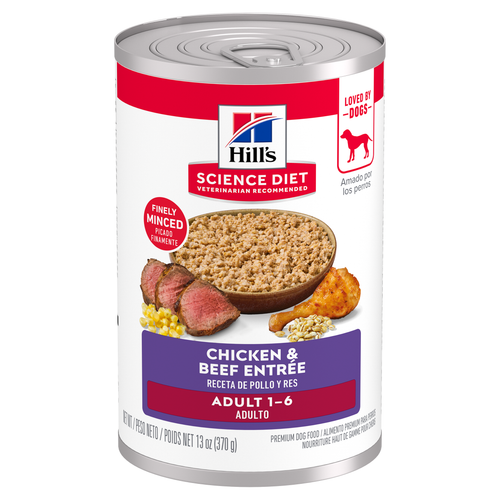
Chicken & Beef Entrée in a delicious loaf with complete & balanced nutrition to help keep adult dogs active and healthy
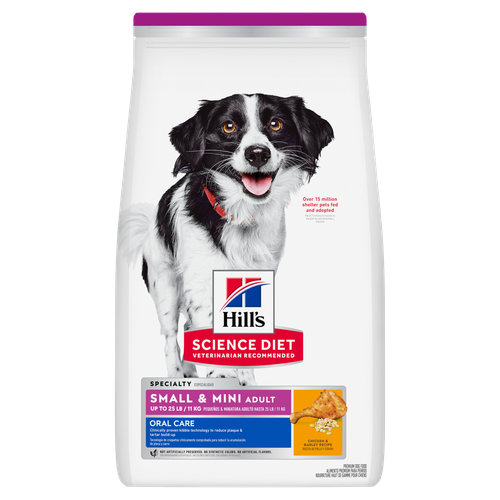
Clinically proven kibble technology to reduce plaque & tartar build-up, specially designed for small & mini dogs

Supports healthy joints, lean muscle, and beautiful coat for large breed dogs
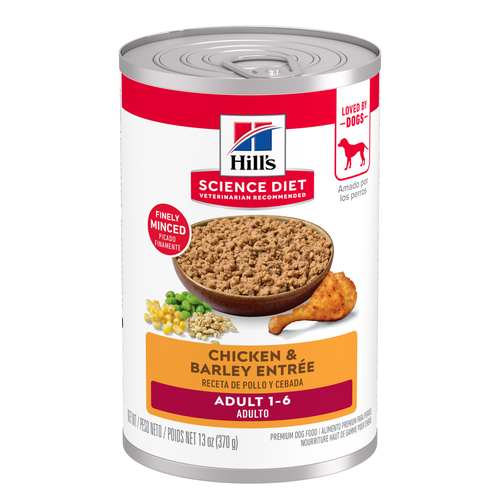
Chicken & Barley Entrée in a delicious loaf with precisely balanced nutrition to keep adult dogs active and healthy
Learn how today's wet dog food blends have gotten a face lift, and how you'll provide your dog the nutrition he needs in the form he loves.

Learn about Hill's puppy food and the nutritional benefit & high quality ingredients that it contains for your pup.
Understand the role that Omega-6 and Omega-3 fatty acids play in your dog's overall health, and how you can ensure they are getting enough.

Proper nutrition for your pregnant or nursing dog is vital to her and her puppy's health. Learn what you should do provide her with the proper nutrients.

Our low calorie formula helps you control your dog's weight. It's packed with high-quality protein for building lean muscles, and made with purposeful ingredients for a flavorful, nutritious meal. Clinically proven antioxidants, Vitamin C+E, help promote a healthy immune system.
Our low calorie formula helps you control your dog's weight. It's packed with high-quality protein for building lean muscles, and made with purposeful ingredients for a flavorful, nutritious meal. Clinically proven antioxidants, Vitamin C+E, help promote a healthy immune system.
