Putting science in every bite
Putting science in every bite
At Hill’s, we believe that science is the best way to care for pets. It drives every ingredient we choose, formula we create and benefit we stand behind. Trends come and go, but science continues to provide the nutrition pets need to live their very best life.

What’s changing on Hill’s labels

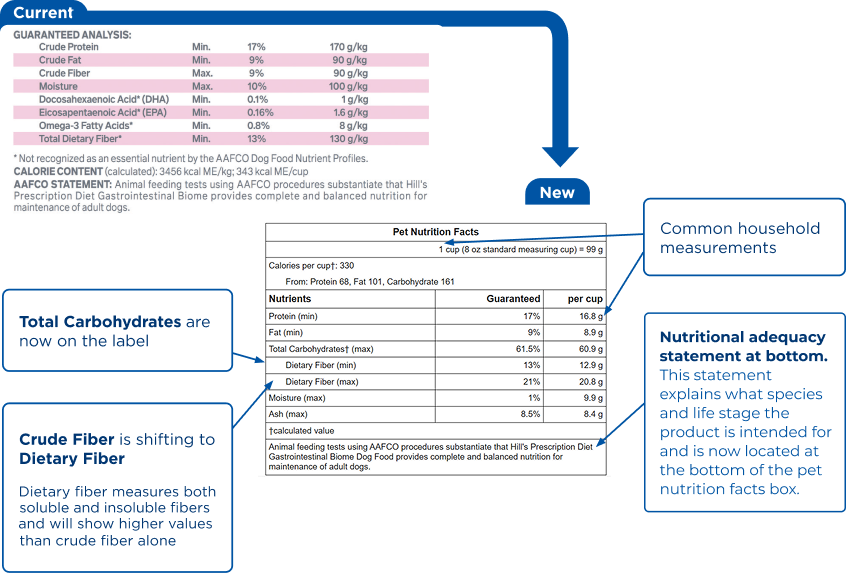
Our dedication to science-backed nutrition isn’t changing — only the labels.
Changes on pet food labels will take place gradually through 2030.
Frequently Asked Questions
Pet Food Label Modernization (PFLM) a new standard for pet food labels created by the Association of American Feed Control Officials (AAFCO). Labels will look more like human food labels — clearer, more consistent and easier to understand.
AFFCO develops model regulations for pet food in the U.S. and is adopted by Canada. It’s not a government agency, but its guidelines help shape industry standards.
This is an industry-wide update, All pet food companies must update their labels, for dry food, wet food, supplements, and treats.
Prescription Diet labels will update first in 2026. All Hill’s products will be updated by January 1, 2030.
No. Recipes may sometimes be updated alongside label changes, but not due to PFLM. For any questions regarding changes to your pet’s food, please contact our customer service team.
Product Purpose Statement:
- Clearer wording and present on front of pack (e.g., “Veterinary Diet for Dogs” instead of “Therapeutic Dog Food”).
Pet Nutrition Facts Box:
- Replaces “Guaranteed Analysis.” It will now show:
- Calories per cup or can (with protein, fat and carbohydrate breakdown)
- Nutrient amounts per gram in household measures (like a cup)
- Total carbohydrates, dietary fiber, and sugar guarantees (instead of "Crude Fiber")
It’s not about quantity — it’s about quality. Hill’s food has high-quality protein rich in amino acids, requiring more carbs to optimize nutrient absorption.
Too much protein can cause digestive issues, and excess phosphorus in some high-protein diets can strain kidneys.
"Dietary Fiber" measures both soluble and insoluble fiber, making it more complete than the "Crude Fiber” measure.
Starches, sugars and dietary fiber. It’s calculated by subtracting protein, fat, moisture and minerals from 100%.
Yes. Carbs provide quick energy, support digestion and can help with weight management by keeping pets satisfied.
Wholesome ingredients like barley, brown rice, oats, whole grain corn, sweet potatoes, peas and carrots.
A Hill’s-exclusive blend of prebiotic fibers developed with over a decade of research, ActivBiome+ nourishes each pet’s unique gut microbiome to support:
- Digestive health
- Healthy stool
- Immune system health
- Energy
- Overall organ function
We have different ActivBiome+ blends tailored for specific needs, such as Digestion, Kidney Defense and Multi-Benefit.
Moisture plays a critical role in the food's taste, stability and overall quality. All pet foods contain some amount of moisture. In dry pet foods, the moisture level is typically between 5-12%.
To help with hydration, taste, texture, and offer a lower calorie density, which can help with satiety.
No. Only protein, fat, total carbohydrates, dietary fiber and moisture are mandatory. Additional nutrients only need to be there if the nutrient claim is on the package. For example, if the bag says "Omega-6s & Vitamin E for beautiful skin and coat," then both nutrients must be in the Pet Nutrition Facts box.
- Watch Pet Food Institute’s webinar series
- Explore Hill’s ingredient and nutrient profiles