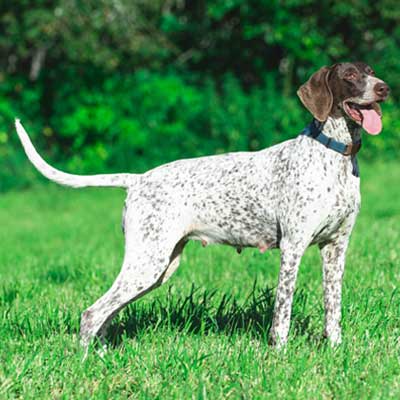
Ear Infections: Floppy ears and frequent swimming can predispose them to ear infections. Severe head shaking or scratching from an untreated ear infection can cause a painful ear condition called an aural hematoma (a painful, blood-filled swelling of the ear flap). Regularly inspect your dog’s ears regularly for redness, dark debris, or odor, and thoroughly dry them after swimming or bathing. Seek veterinary care promptly if problems or concerns arise.
Joint disorders: GSPs are at risk for hip dysplasia, elbow dysplasia and cranial cruciate ligament injury. Growth management in puppies, proper nutrition and maintaining a lean body condition is vital. For larger GSPs, consult your vet about whether delayed spaying or neutering is appropriate for your dog.3,4
Gastric dilatation-volvulus (GDV): Due to their deep-chested anatomy, GSPs are at high risk for GDV, also known as bloat, a rapidly progressing, life-threatening emergency where the stomach twists. Signs can include a hard, distended abdomen, excessive drooling, restlessness and sometimes nonproductive retching. Consult your vet about whether a prophylactic gastropexy (a surgical procedure to “tack” the stomach and prevent twisting) is right for your dog. It is generally recommended to split their daily food ration into two or three smaller meals rather than one large feeding, and to avoid heavy exercise for at least one hour before and after eating.
Von Willebrand disease: This is a genetic bleeding disorder that prevents blood from clotting properly. Signs include skin bleeding, even from minor wounds, and bleeding from gums, for example, while teething or chewing on toys. DNA testing is available5 and strongly recommended before surgical or dental procedures.