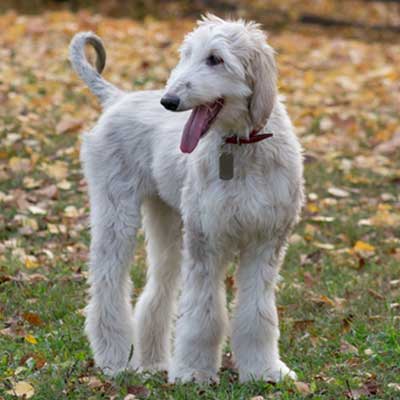
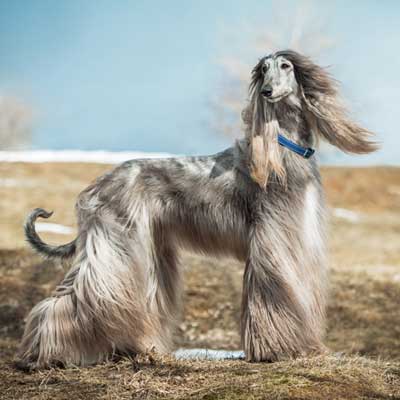
Afghan hounds sit around a 2 out of 5 for trainability — not because they lack intelligence, but because they apply it selectively. They were bred as independent hunters who made decisions at high speed without waiting for human input, so obedience for obedience’s sake is not built into their wiring.
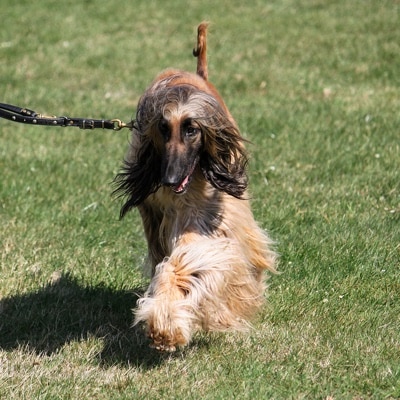
Training an Afghan hound works best when the process feels more like a partnership and less like a set of demands. Afghan hounds respond reasonably well to patient, thoughtful, short, upbeat training sessions and rewards that actually matter to them.
Early socialization plays a major role in long-term confidence. Once your vet gives the okay, exposure to different surfaces, environments, sounds, people and calm dogs helps an Afghan hound grow into a well-adjusted adult. Useful cues to prioritize training include recall, loose-leash walking, a reliable "stay, down" or "off" and a stationing behavior that gives them a clear, comfortable job during busier household moments.
Because Afghan hounds can be sensitive to handling, teaching them to accept nail trimming and brushing and remaining still during gentle restraint makes grooming and veterinary care much easier.