
Weight management for cats
Weight management for cats
Your cat’s a little on the chunkier side. So what?
Excess weight can lead to less play time, depression and increased risk of several serious health conditions. Unfortunately, weight gain often takes place gradually over time, so it’s not always obvious when it’s time to take action.
Overweight cats can have an increased risk of developing serious health conditions.
Is my cat overweight?
Your cat may look just fine to you, but the ideal weight varies by size and breed. Your veterinarian will be able to tell you if your cat is overweight.

Still not sure? Take our L.O.V.E. test to find out — and get a handy weight report to share with your vet.
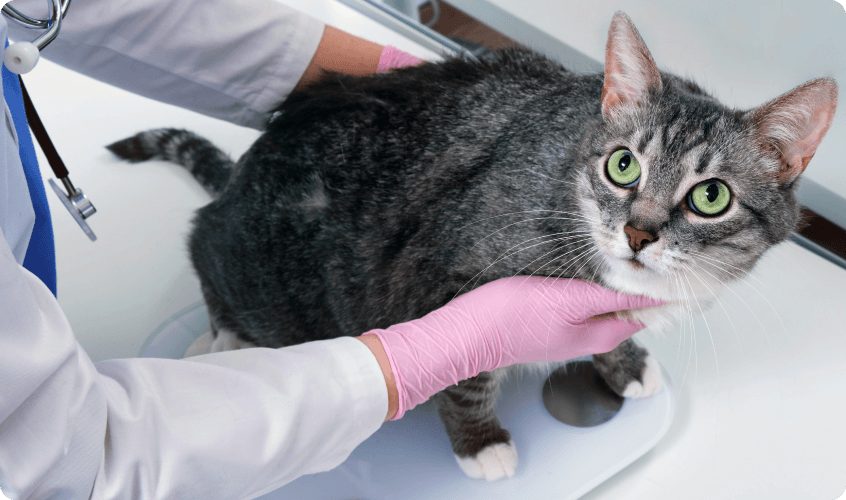
What makes cats gain weight?
Cat weight gain is the result of an increase in body fat. This is usually caused by eating too much, especially when combined with a lack of exercise, but there can be other contributing factors:
Older cats are often less active and require fewer calories, which is why nutrition formulated for their age is vital to their weight and overall health.
Different breeds have different metabolisms, which means some cat breeds are more likely to become overweight.
Clinical studies have shown that the energy requirements of neutered cats are lower, and they require fewer calories.
Consuming more calories than necessary can contribute to weight gain. This can be due to unlimited or inconsistent portions of food.
Feeding table scraps and “people food,” or too many treats, can lead to obesity.
Very occasionally, weight gain is associated with a medical disorder that may require specific treatment.
Healthy weight makes a difference
Excess weight gain can significantly shorten your cat’s life expectancy as compared to a healthy weight pet.
Overweight cats can also have an increased risk of developing serious health conditions, such as diabetes mellitus, osteoarthritis, urinary stones, heart disease, breathing difficulty and even bladder cancer.
See what those foods really mean for your pet
What can you do?
As well as feeding your cat the correct nutrition, promoting regular exercise will help with the process of healthy weight loss.
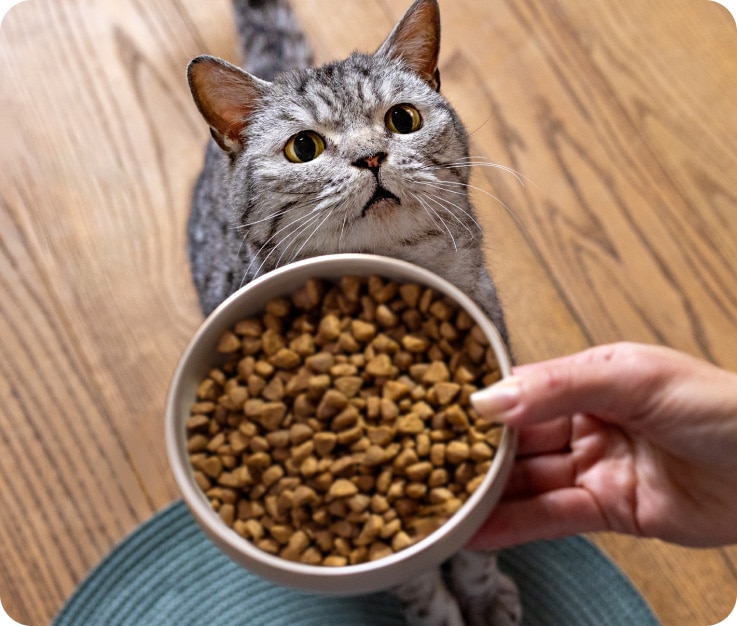
Nutrition
Your cat’s diet is perhaps the single most important factor in helping them maintain an ideal weight. Ask your vet for a food recommendation for weight loss, including what food and how much, and do your best to stick to it.
This is key because once your cat has been overweight, they may be prone to weight gain. Your cat should have an ongoing weight management plan based on good nutrition, exercise, regular check-ups and weigh-ins.
Exercise
Now comes the fun part. Getting more exercise into your cat’s routine doesn’t have to be boring — try mixing it up with climbable cat shelves, chaseable flashlight beams or slow feeder toys. Cats play best in short, frequent spurts, so getting exercise in doesn’t have to take up much time.
Nutrition
Your cat’s diet is perhaps the single most important factor in helping them maintain an ideal weight. Ask your vet for a food recommendation for weight loss, including what food and how much, and do your best to stick to it.
This is key because once your cat has been overweight, they may be prone to weight gain. Your cat should have an ongoing weight management plan based on good nutrition, exercise, regular check-ups and weigh-ins.
Exercise
Now comes the fun part. Getting more exercise into your cat’s routine doesn’t have to be boring — try mixing it up with climbable cat shelves, chaseable flashlight beams or slow feeder toys. Cats play best in short, frequent spurts, so getting exercise in doesn’t have to take up much time.
Ask your veterinarian how nutrition can help
Schedule an appointment for your pet and see how a therapeutic pet food can help your pet feel better.
Ask your veterinarian how nutrition can help
Schedule an appointment for your pet and see how a therapeutic pet food can help your pet feel better.
Related products
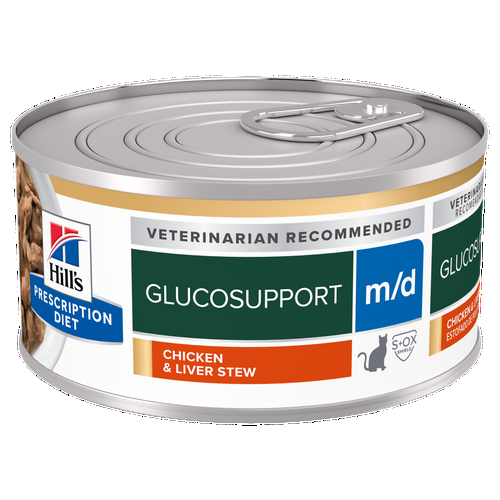
m/d GlucoSupport Wet Cat Food
Clinical nutrition formulated to help cats lose weight and help manage blood sugar

m/d GlucoSupport Wet Cat Food
Clinical nutrition formulated to help cats lose weight and manage blood sugar

Metabolic Cat Treats
Metabolic Treats to help support healthy weight loss and weight maintenance, and are a great complement for cats being fed other Prescription Diet weight loss or maintenance feline food.

Hypo Cat Treats
Treats for cats with food sensitivities, related skin conditions and sensitive stomachs
Related Articles
Your Cat Doesn't Drink Water but Eats Wet Food: Is It Enough?
Is wet food enough water for cats? Here's what to know about cats and hydration if your cat doesn't drink water but eats wet food.
Understanding Immune System Support for Cats
Learn all about immune system support for cats, including the best vitamins for cats' immune systems, essential antioxidants for cats and more.
Understanding Cat Vitamins and Their Role in Well-Being
You know balanced nutrition is important, but what vitamins do cats need? Discover essential cat vitamins and their role in health and well-being.
Can Kittens Eat Adult Cat Food?
Can kittens eat adult cat food? Discover kitten nutrition basics and what to do if your kitten's eating adult cat food to put them on the right track.