
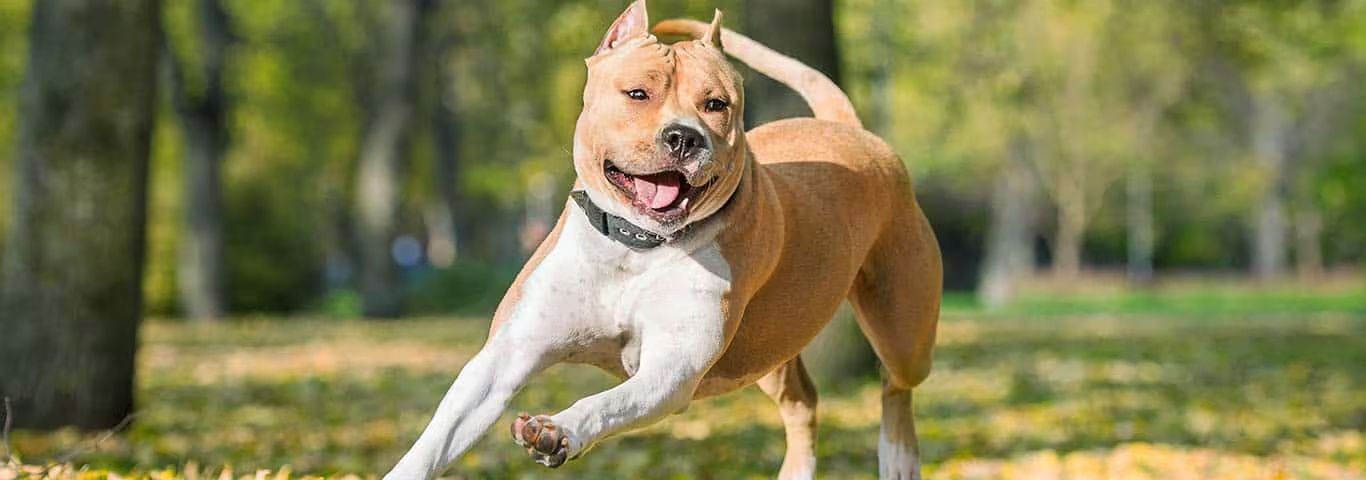
American Staffordshire Terrier
The American Staffordshire terrier is a bundle of muscles in an agile package.

Weight
Male 50-70 lbs.
Female 45-60 lbs.
Height (at withers)
Male 19 in.
Female 18 in.

Length
Short
Texture
Flat
Color
Any color, solid, parti or patched

Exercise
20-40 minutes/day
Energy Level
Average
Longevity
12-14 yrs.
Needs
High

Barking

Snoring

Drooling
Grooming
Social Needs
Digging

AKC Class.
Terrier
UKC Class.
Terrier
Prevalence
So-so
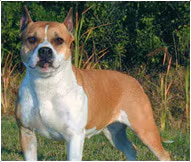
The American Staffordshire terrier is a bundle of muscles in an agile package.
About
Every inch the athlete, this breed has remarkable strength. Despite its brawn, it is quick and nimble. The broad head with powerful jaws can be intimidating, but fortunately the face usually bears a happy expression and is usually followed by a wagging tail that is short, but not docked. Although the ears may be cropped, it is preferred that they be left in their natural rose shape. This dog is heavy for its size, weighing in at about 45 to 70 pounds (20 to 32 kilograms). It stands between 17 and 19 inches tall. The coat is short and sleek. Any color is acceptable, although a coat with more than 80 percent either white, black and tan, or liver are least preferred.
Personality
Responsible breeders have focused on creating a dog with a sound, reliable temperament around humans. That breeding history is why many AmStaffs (as their friends call them) have incredibly trustworthy temperaments with their families. The average AmStaff is playful, gentle and tolerant. Most well-socialized AmStaffs are good with children, but as with any dog, AmStaffs and children should always be supervised when together. Interaction with other animals, especially other dogs, should be closely monitored.
The AmStaff wasn't meant to be a hop-to-it obedience whiz, and he isn't. If you try to force him, he will always win. If you try to make it a game, he will always play, and you will both win. Despite its tough dog persona the AmStaff is a breed that loves to love.
What to Expect
This breed needs a vigorous daily workout, along with some mind games, in order to be at its best. A good long run or a rollicking game of ball is a great way to bond with an American Staffordshire terrier. Obedience training is also good mental exercise.
Its short coat makes it unsuited as an exclusively outdoor dog, and besides, this breed wants to be a part of all family activities. Coat care could not be easier: simply wash and wear.
History
In the late 1800s, these dogs were brought to America for use as farm dogs, where a slightly larger version than its English counterpart was preferred. AmStaffs became extremely popular as family pets by the 1930s; one of the most beloved was Pete the Pup (Petey) of Our Gang (The Little Rascals) fame. This American version eventually was registered in 1936 as the Staffordshire terrier (changed in 1972 to the American Staffordshire terrier).
Adopt a pet. Change a life.
Are you prepared to adopt a pet? Use these tools to make sure you are ready for the commitment.
Adopt a pet. Change a life.
Are you prepared to adopt a pet? Use these tools to make sure you are ready for the commitment.
Related articles
Tips for the First Few Weeks with Your New Puppy
Ensure that you're meeting all of your new puppy's needs by learning typical puppy behaviors in the home.

Weight Management Dog Food: Balanced Nutrition for Dogs
Dog weight control is a key part of caring for your pup. Learn about weight management dog food and other ways to help keep your dog at a healthy weight.

What Are the Signs And Causes Of Diarrhea In Dogs
What is dog diarrhea, exactly? Discover the signs, causes and potential treatment options depending on your dog's diagnosis.
How to Help Aging Dogs: Supporting the Senior Years
Wondering how to help aging dogs? You can help your dog age gracefully with regular vet visits, proper nutrition and a few accommodations.


Find the right food for your pet
The right nutrition is essential to pets living happy, healthy lives. See which foods fit your pet's unique nutrition needs here.