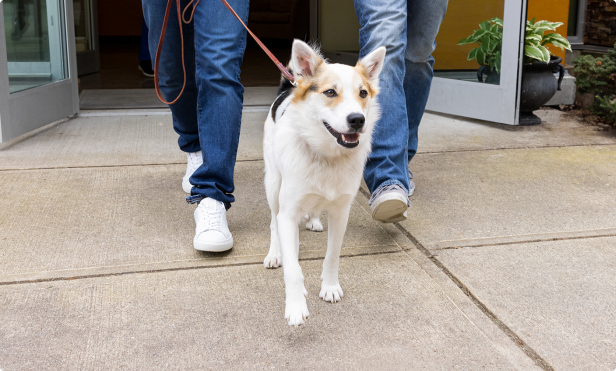
Most pit bulls are fun, gentle companions and patient with family members. As with all breeds, however, there are bad seeds, and pit bulls are no exception.
American Pit Bull Terrier At a glance
Size:
Weight Range:
Male: 30-80 lbs.
Female: 30-80 lbs.
Height at Withers:
Male: 19 in.
Female: 18 in.
Expectations:
Exercise Requirements: 20-40 minutes/day
Energy Level: Average
Longevity Range: 11-13 yrs.
Tendency to Drool: Low
Tendency to Snore: Low
Tendency to Bark: Low
Tendency to Dig: Low
Social/Attention Needs: High
Bred For:
Dog fighting and hunting
Drive livestock
Coat:
Length: Short
Characteristics: Flat
Colors: Any color
Overall Grooming Needs: Low
Club recognition:
UKC Classification: Terrier
Prevalence: Common
The American pit bull is strong and stocky, probably packing more muscles per pound of body weight than any other breed.
Strong and stocky, yet light on its feet, the pit bull may pack more muscles per pound of body weight than any other breed.
It has a low center of gravity, and appears slightly longer than tall. The muscles of the neck and head are especially well developed. The eyes are small, and the ears may be cropped or uncropped (the latter are rose-shaped).
This dog is heavy for its size, weighing about 55 to 70 pounds (25 to 32 kilograms). It stands between 17 and 19 inches. The coat is short and sleek. Any color is acceptable, although coats with more than 80 percent either white, black and tan, or liver are least preferred.
Personality:
Perhaps no other dog has endured the public misperceptions that the pit bull has. The misperceptions go two ways. Some people consider the pit bull to be the safest, gentlest, companion ever created for a toddler. Others consider them to be very aggressive and dangerous. Neither viewpoint is correct, but both viewpoints have some basis.
Most pit bulls are fun-loving companions, gentle and patient with all their family members (with the very likely exception of other pit bulls). As with all breeds, however, there are bad seeds, and pit bulls are no exception.
Pit bulls were bred to be courageous and game, to continue whatever they are doing in the face of adversity. These qualities make them stubborn, tenacious and fearless. They were also bred never to act aggressively toward humans. Whether through poor breeding or socialization, this characteristic has not always been the case. As with any large dog, a pit bulls should be supervised when with children.
Living With:
Life with a pit bull is always an adventure. These are fun-loving dogs that are always up for a game. They must have a vigorous exercise period every day. Although they are tough dogs, they are not cold weather dogs and should be shielded from the elements.
Pit bulls should be obedience trained not only because it is a good bonding activity but also to combat the public's perception of pit bulls as maniacal beasts. Because they are very often not good with other dogs, they should be kept on a leash when around them.
Most bad guys would not be foolish enough to face a pit bull. Half of the pit bulls would lick them to death, and the other half would protect their territory — and the bad guys could never guess which one it was going to be just by looking at them.
History:
The ancient Greek Mollossian war dogs gave rise to several tough strains of dogs, including dogs that specialized as gladiators. By the 16th century, baiting spectacles in which dogs tormented bulls, bears and other animals provided entertainment for people of all classes. When blood sports were outlawed in England in 1835, gamblers instead staged dog fights to avoid detection. Dog fighting favored a smaller, more agile dog. ; Some breed historians believe crosses to smaller terriers were made to create a better dog-fighting dog.
These dogs flourished in both Britain and America. With the advent of dog shows and registries in the late 1800s, the fighting breeds were largely excluded. The AKC refused to endorse dog fighting, so a pit bull owner formed the United Kennel Club (UKC) as an alternative registry that recognized fighting as a legitimate function. The UKC remains to this day a strong registry for the American Pit Bull Terrier, but it no longer endorses dog fighting in any manner. Similarly, the American Dog Breeder's Association was formed in 1909 just to register pit bulls. That organization also no longer condones dog fighting.
Most pit bulls today live as family members, but the breed has gained a bad reputation and been the subject of breed-specific bans, mostly thanks to the irresponsible actions of people who do not know the difference between courage and aggressiveness. The former is a hallmark of the breed; the latter should never be.
“Like” Hill’s on Facebook
• Share special offers
• Chat about your passion for pets
• 350,000 pet parents and growing
Join us in giving 7 million
more pets a home
Discover how pets benefit
daily from Hill’s Food Shelter
& LoveTM program.